Corazon Mining (CZN:AU) has announced Notice of General Meeting
Download the PDF here.
Shares in the Trump family’s latest cryptocurrency made its stock market debut Wednesday, triggering more ethical concerns as the Trumps look to cash in on crypto as the president’s administration weakens regulations for the nascent industry.
American Bitcoin, a firm co-founded this spring by Eric Trump, the president’s son, saw its share price climb as much as 39% by early afternoon to about $9.60.
It ended the day at $8.04, lower than its opening price of $9.22.
According to a release, the company is set up to accumulate bitcoin through computer “mining” of the cryptocurrency, as well as “opportunistic bitcoin purchases.” By owning a share of American Bitcoin, investors are betting that the company will be able to grow its bitcoin holdings faster than competitors. It also assumes bitcoin’s price will keep going up.
American Bitcoin’s stock debut is renewing ethics concerns about the Trump family’s ability to benefit from the president’s influence on the crypto industry, where it is increasingly seeing windfalls.
On Monday, the first public sales of a digital token minted by World Liberty Financial, a crypto firm co-founded by the Trump family, created as much as $5 billion in paper wealth for them and other insiders based on existing holdings. Last week, Trump Media and Technology Group, the parent company of President Donald Trump’s Truth Social platform, announced it had struck a deal with Crypto.com to accumulate Crypto.com’s native token Cronos, or CRO. Since the announcement, the value of CRO has climbed about 69%.
Shortly before 1 p.m, the value of Eric Trump’s American Bitcoin stake had climbed to as much as $600 million, according to calculations by Bloomberg News. Donald Trump Jr. also owns a stake, though its extent was not immediately clear. A representative for Trump Jr. did not respond to a request for comment.
“There’s no question there’s a conflict of interest here,” said Virginia Canter, chief counsel for ethics and anticorruption with the Democracy Defenders Action group, a bipartisan advocacy group that seeks to oppose authoritarianism. Canter served as a legal adviser in four different presidential administrations. Beyond having the ability to appoint regulators charged with overseeing the crypto industry, Trump can also create an uneven playing field for other crypto market participants who might believe they may pay a price for competing with his entities — or failing to engage with them, Canter said.
In a post on X last night, Sen. Elizabeth Warren, D-Mass., said of the start of American Bitcoin’s stock trading: “it’s corruption, plain and simple.”
A representative for the Trump Organization did not respond to a request for comment about the ethics concerns.
Estimates about how much President Trump and his family have earned from their crypto ventures vary. Reuters calculated that they made as much $500 million from the World Liberty decentralized finance platform, which debuted last year.
The figure is a moving target. In May, Zach Witkoff, a World Liberty co-founder and the son of White House Middle East envoy Steve Witkoff, announced that an Abu Dhabi-based firm had purchased $2 billion-worth of World Liberty’s stablecoin as part of an investment in the Binance crypto exchange. In July, Trump Media announced it had accumulated roughly $2 billion in bitcoin and related assets, accounting for about two-thirds of Trump Media’s total liquid assets. The Donald J. Trump Revocable Trust, a financial instrument Trump created in advance of returning to the Oval Office, owns 52% of Trump Media.
The group that created Trump’s memecoin, $TRUMP, earned $350 million from initial sales, the Financial Times reported in March, though its ownership structure and Trump family members’ direct stakes are unclear.
The White House has maintained that the president is not involved in the day-to-day affairs of Trump family businesses. Some ethics experts have argued that presidents are exempt from conflict-of-interest laws because they oversee too many areas to make enforcement practical.
In a statement, the White House blasted any insinuation of a conflict of interest.
“The media’s continued attempts to fabricate conflicts of interest are irresponsible and reinforce the public’s distrust in what they read,” White House press secretary Karoline Leavitt said. “Neither the President nor his family have ever engaged, or will ever engage, in conflicts of interest.” She said the administration “is fulfilling the President’s promise to make the United States the crypto capital of the world by driving innovation and economic opportunity for all Americans.”
At a conference last week, Eric Trump said the bitcoin community had embraced his father “unlike anything I had ever seen before.” Since then, the crypto industry has become one of the most influential players in politics: Its super PAC, Fairshake, was the largest-single donor group during the 2024 election and has already accumulated $140 million in advance of next year’s midterms, Politico reported.
The Trump brothers have announced a flurry of business moves since their father took office that parallel the president’s policies and agenda. Last month, they announced they would serve as advisers to New America, a firm that aims to buy businesses that “play a meaningful role in revitalizing domestic manufacturing, expanding innovation ecosystems, and strengthening critical supply chains.”
The brothers are receiving a combined 5 million shares in the company, which seeks to raise $300 million from investors in advance of going public.
When Tim Cook gifted President Donald Trump a gold and glass plaque last month, the Apple CEO was hailed by Wall Street for his job managing the iPhone-maker’s relationship with the White House.
Cook, Wall Street commentators said, had largely navigated the threat of tariffs on Apple’s business successfully by offering Trump an additional $100 billion U.S. investment, a win the president could tout on American manufacturing. But despite the 24-carat trophy Cook handed Trump, the true costs of those tariffs may finally show up for Apple customers later this month.
“Thank you all, and thank you President Trump for putting American innovation and American jobs front and center,” Cook said at the event, which brought Apple’s total planned spend to $600 billion in the U.S. over the next five years. Trump, at the event, said that Apple would be exempt from forthcoming tariffs on chips that could double their price.
But as Apple prepares to announce new iPhones on Tuesday, some analysts are forecasting the company to raise prices on its devices even after all Cook has done to avoid the worst of the tariffs.
“A lot of the chatter is: Will the iPhone go up in price?” said CounterPoint research director Jeff Fieldhack.
Although smartphones haven’t seen significant price increases yet, other consumer products are seeing price increases driven by tariffs costs, including apparel, footwear, and coffee. And the tariffs have hit some electronics, notably video games — Sony, Microsoft and Nintendo, have raised console prices this year in the U.S.
Some Wall Street analysts are counting on Apple to follow. Jeffries analyst Edison Lee baked in a $50 price increase into his iPhone 17 average selling price projections in a note in July. He’s got a hold rating on Apple stock.
Goldman Sachs analysts say that the potential for price increases could increase the average selling price of Apple’s devices over time, and the company’s mix of phones have been skewing toward more expensive prices.
Analysts expect Apple to release four new iPhone models this month, which will likely be named the “iPhone 17” series. Last year, Apple released four iPhone 16 models: the base iPhone 16 for $829, the iPhone 16 Plus at $899, the iPhone 16 Pro at $999 and the iPhone 16 Pro Max at $1,199.
This year, many supply chain watchers expect Apple to replace the Plus model, which has lagged the rest of the lineup, with a new, slimmer device that trades extra cameras and features for a thinner, lighter body.
The “thinner, lighter form factor may drive some demand interest,” wrote Goldman analysts, but tradeoffs like battery life may make it hard to compete with Apple’s entry-level models.
Analysts have said they expect the slim device to cost about $899, similar to how much the iPhone 16 Plus costs, but they haven’t ruled out a price bump. That would still undercut Samsung’s thin Galaxy Edge, which debuted earlier this year at $1,099.
Apple did not respond to a request for comment.
When Trump announced sweeping tariffs on China and the rest of the world in February, it seemed like Apple was in the crosshairs.
Apple famously makes the majority of its iPhones and other products in China, and Trump was threatening to place tariffs that could double Apple’s costs or more. Some of Trump’s so-called “reciprocal” tariffs would hit countries like Vietnam and India where Apple had hedged its production bets.
But seven months later, Apple has weathered the tariffs better than many had imagined.
The U.S. government has paused the most draconian Chinese tariffs several times, smartphones got an exemption from tariffs and Cook in May told investors that the company was able to rearrange its supply chain to import iPhones to the U.S. from India, where tariffs are lower.
Cook also successfully leaned on his relationship with Trump, visiting him in White House and taking his side in August, when Cook presented the shiny keepsake to Trump. That commitment bolstered Trump’s push to bring more high-tech manufacturing to the U.S. In exchange, Trump said he would exempt Apple from a forthcoming semiconductor tariff, too. And Trump’s IEEPA tariffs were ruled illegal in late August, although they are still in effect.
Apple hasn’t completely missed the tariff consequences. Cook said the company spent $800 million on tariff costs in the June quarter, mainly due to the IEEPA-based tariffs on China. That was less than 4% of the company’s profit, but Apple warned it could spend $1.1 billion in the current quarter on tariff expenses.
After months of eating the tariff costs itself, Apple may finally pass those costs to consumers with this month’s launch of the iPhone 17 models.
Apple has been judicious about hardware price increases in the U.S. The smaller Pro phone, for example, hasn’t gotten a price increase since its debut in 2017, holding at $999. But Apple has made some price changes.
The company raised the price of its entry level phones from $699 to $829 in 2020. And in 2022 when Apple eliminated the smaller iPhone Mini that started at $699, the company replaced it with the bigger-screen Plus that costs $899. The Pro Max also got a hike in 2023 when Apple bumped it from $1,099 to its current price of $1,199.
If Apple does increase prices on its phones this year, don’t expect management to blame tariffs.
The average selling price of smartphones around the world is rising, according to IDC. The price of smartphone components, such as the camera module and chips, have been increasing in recent years.
Apple is much more likely to focus on highlighting its phones’ new features and quietly note the new price. Analysts expect the new iPhones to have larger screens, increased memory and new, faster chips for AI.
“No one’s going to come out and say it’s related to tariffs,” said IDC analyst Nabila Popal.
One way that Apple could subtly raise prices is by eliminating the entry-level version of its phones, forcing users to upgrade to get more storage at a higher starting price. Apple typically charges $100 to double the amount of the iPhone’s storage from 128GB to 256GB.
That’s what JPMorgan analysts expect Apple to announce next week.
They forecast that Apple will leave the prices of the entry level and high-end Pro Max models alone, but they wrote that they expect the company to eliminate the entry-level version of the Pro, meaning that users will have to pay $1,099 for an iPhone 17 Pro that has more starting-level storage than its predecessor. That’s how Apple raised the price of the entry-level Pro Max in 2023.
“However, with Apple’s recent announcements relative to investments in US, the assumption is that the company will largely be shielded from tariffs, driving expectations for limited pricing changes except for those associated with changes in the base storage configuration for the Pro model,” wrote JP Morgan analyst Samik Chatterjee.
When Cook was asked about potential Apple price increases on an earnings call in May, he said there was “nothing to announce.”
“I’ll just say that the operational team has done an incredible job around optimizing the supply chain and the inventory,” Cook said.
David Ellison continues to put his stamp on Paramount after its acquisition by Skydance.
The CEO and chairman told employees Thursday that they will be expected to work in the office five days a week starting Jan. 5, 2026, according to a memo obtained by CNBC. Employees who do not wish to make the transition can seek a buyout starting Thursday and until Sept. 15.
“To achieve what we’ve set out to do — and to truly unlock Paramount’s full potential — we must make meaningful changes that position us for long-term success,” Ellison wrote to staffers. “These changes are about building a stronger, more connected, and agile organization that can deliver on our goals and compete at the highest level. We have a lot to accomplish and we’re moving fast. We need to all be rowing in the same direction. And especially when you’re dealing with a creative business like ours, that begins with being together in person.”
The move could help Paramount thin the herd ahead of looming staffing cuts.
Variety reported last month that the company is expected to lay off between 2,000 and 3,000 employees as part of its postmerger cost-cutting measures. These cuts are slated for early November, Variety reported.
Paramount is looking to take $2 billion in costs out of the conglomerate amid advertising losses and industrywide struggles with traditional cable networks.
Phase one of Ellison’s back-to-work plan will see employees in Los Angeles and New York returning to a full five-day workweek in the new year.
Phase two will focus on offices outside LA and New York, including international locations. A similar buyout program will be offered in 2026 for those who operate in these locations.
“We recognize this represents a significant change for many, and we’re committed to supporting you throughout this transition,” Ellison wrote. “We will work closely with managers to ensure you have the time and flexibility to make the necessary adjustments.”
In this video, Mary Ellen spotlights the areas driving market momentum following Taiwan Semiconductor’s record-breaking earnings report. She analyzes continued strength in semiconductors, utilities, industrials, and AI-driven sectors, plus highlights new leadership in robotics and innovation-focused ETFs like ARK. From there, Mary Ellen breaks down weakness in health care and housing stocks, shows how to refine trade entries using hourly charts, and compares today’s rally to past market surges. Watch as she explores setups in silver and examines individual stocks like Nvidia, BlackRock, and State Street.
This video originally premiered on July 18, 2025. You can watch it on our dedicated page for Mary Ellen’s videos.
New videos from Mary Ellen premiere weekly on Fridays. You can view all previously recorded episodes at this link.
If you’re looking for stocks to invest in, be sure to check out the MEM Edge Report! This report gives you detailed information on the top sectors, industries and stocks so you can make informed investment decisions.
The S&P 500 ($SPX) just logged its fifth straight trading box breakout, which means that, of the five trading ranges the index has experienced since the April lows, all have been resolved to the upside.
How much longer can this last? That’s been the biggest question since the massive April 9 rally. Instead of assuming the market is due to roll over, it’s been more productive to track price action and watch for potential changes along the way. So far, drawdowns have been minimal, and breakouts keep occurring. Nothing in the price action hints at a lasting change — yet.
While some are calling this rally “historic,” we have a recent precedent. Recall that from late 2023 through early 2024, the index had a strong start and gave way to a consistent, steady trend.
From late October 2023 through March 2024, the S&P 500 logged seven consecutive trading box breakouts. That streak finally paused with a pullback from late March to early April, which, as we now know, was only a temporary hiccup. Once the bid returned, the S&P 500 went right back to carving new boxes and climbing higher.
If there’s been one gripe about this rally, it’s that the number of new highs within the index has lagged. As we’ve discussed before, among all the internal breadth indicators available, new highs almost always lag — that’s normal. What we really want to see is whether the number of new highs begins to exceed prior peaks as the market continues to rise, which it has, as shown by the blue line in the chart below.
As of Wednesday’s close, 100 S&P 500 stocks were either at new 52-week highs or within 3% of them. That’s a strong base. We expect this number to continue rising as the market climbs, especially if positive earnings reactions persist across sectors.
Even when we get that first day with 100+ S&P 500 stocks making new 52-week highs, though, it might not be the best time to initiate new longs.
The above chart shows that much needs to align for that many stocks to peak in unison, which has historically led to at least a short-term consolidation, if not deeper pullbacks — as highlighted in yellow. Every time is different, of course, but this is something to keep an eye on in the coming weeks.
The GoNoGo Trend remains in bullish mode, with the recent countertrend signals having yet to trigger a greater pullback.
We still have two live bullish upside targets of 6,555 and 6,745, which could be with us for a while going forward. For the S&P 500 to get there, it will need to form new, smaller versions of the trading boxes.
In the chart below, you can view a rising wedge pattern on the recent price action, the third since April. The prior two wedges broke down briefly and did not lead to a major downturn. The largest pullbacks in each case occurred after the S&P 500 dipped below the lower trendline of the pattern.
The deepest drawdown so far is 3.5%, which is not exactly a game-changer. Without downside follow-through, a classic bearish pattern simply can’t be formed, let alone be broken down from.
We’ll continue to monitor these formations as they develop because, at some point, that will change.
Eight fighter jets will conduct a flyover when Polish President Karol Nawrocki arrives at the White House Wednesday morning, Fox News Digital has learned.
President Donald Trump’s meeting with Nawrocki, whom Trump backed in the Polish elections earlier in 2025, comes amid ongoing negotiations between Poland’s neighboring Russia and Ukraine to end the conflict between the two countries.
‘President Trump is looking forward to welcoming President Nawrocki to the White House, who recently won a historic election in Poland,’ White House spokeswoman Anna Kelly said in a Tuesday statement to Fox News Digital. The ‘spectacular flyover will honor the memory of a brave Polish fighter pilot whose life was tragically taken too soon and capture the special relationship between our two countries.’
Four F-16 fighter jets are slated to perform a missing man formation Wednesday to honor a Polish army F-16 pilot who died in an August crash during a rehearsal for an airshow in Radom, Poland.
Additionally, four F-35 fighter jets will also fly over the White House to recognize the relationship between the U.S. and Poland. The U.S. sells F-35 fighter jets to allies, including Poland, and the State Department signed off on a potential $1.85 billion sale of sustainment equipment for the F-35 to Poland in August.
Likewise, the U.S. started training Polish aviators to operate the F-35 in May at Ebbing Air National Guard Base in Arkansas.
All crew members participating in the flyover are American. Those flying the F-16 aircraft are from the D.C. Air National Guard based out of Joint Base Andrews in Maryland, and the F-35 pilots are from Tyndall Air Force Base in Florida.
A missing man formation occurs during a flyover when one aircraft breaks off from the rest, recognizing the missing or fallen service member.
This isn’t the first time a flyover has occurred when the Polish president has visited the White House. One was also conducted in 2019 during Trump’s first term when then-Polish President Andrzej Duda arrived in Washington.
Nawrocki’s visit comes as Russian President Vladimir Putin has escalated his attacks against Ukraine, despite a meeting in August with Trump in Anchorage, Alaska, in an attempt to advance a peace deal.
Meanwhile, the Trump administration has sought to work with European allies in recent weeks on nailing down various security guarantees for Ukraine to safeguard against Russian aggression again.
While Trump initially said a trilateral meeting with both Putin and Ukrainian President Volodymyr Zelenskyy was in the works following his meeting with Putin, Russia has shown disinterest in such a meeting.
As a result, Trump said Tuesday there would be consequences if Putin failed to meet with Zelenskyy.
‘We’re going to see what happens,’ Trump told reporters Tuesday. ‘We’re going to see what they do and what happens. I’m watching it very closely … I want to see it end.’
Nawrocki is slated to arrive at the White House at 11 a.m. Eastern Daylight Time.
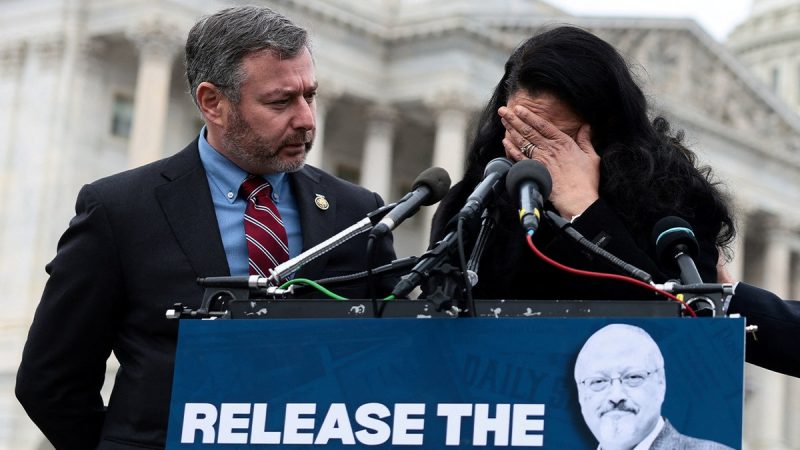
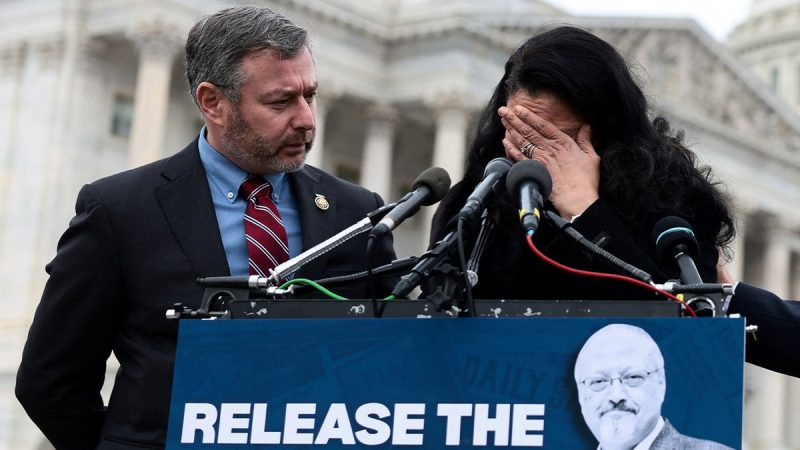
A lawyer representing victims of Jeffrey Epstein said Wednesday that the American public is ‘going to be appalled’ about documents relating to the disgraced late financier that have not been released by the federal government.
‘The government has mistreated them after Jeffrey Epstein mistreated them,’ Bradley Edwards said of the victims in Washington, D.C.
Edwards spoke during a news conference that is part of an effort by Reps. Ro Khanna, D-Calif., and Thomas Massie, R-Ky., to pass through the House a procedural motion known as a discharge petition, which could force a House vote urging the Justice Department to release the Epstein files.
‘We filed lawsuits against Jeffrey Epstein, against his estate and against two financial institutions – JP Morgan and Deutsche Bank – that prove that they provided, knowingly provided the financial infrastructure for a sex trafficking operation. Unfortunately, all of the documents and evidence that we have worked so hard to gather hide behind protective orders, confidentiality agreements and bank secrecy laws,’ Edwards said.
‘That is why this discharge petition is so important. While we have seen the documents, you haven’t, and when you see the documents, you’re going to be appalled, and the American people deserve to see everything,’ he added.
‘When you sign this discharge petition, it should mean nothing is off limits. The documents in the possession of the CIA should be made available. Those in the possession of the FBI going back decades should be made available. The SEC financial records… should be made available,’ Edwards continued, as he stood alongside the victims.
‘Everybody knows that evil flourishes in the darkness. Corruption flourishes in secrecy. It is time right now to make a difference for the women that are behind me right now,’ Edwards added.
President Donald Trump on Wednesday called the push to release files relating to Jeffrey Epstein ‘a Democrat hoax because they’re trying to get people to talk about something that’s totally irrelevant to the success that we’ve had as a nation since I’ve been president.’
‘I understand that we were subpoenaed to give files, and I understand we’ve given thousands of pages of files. And I know that no matter what you do, it’s going to keep going,’ Trump told reporters at the White House. ‘And really I think it’s enough because I think we should talk about the greatness of our country and the success that we’re having. I think we’re probably having, according to what I read, even from two people in this room, we’re having the most successful eight months of any president ever. And that’s what I want to talk about. That’s what we should be talking about, not the Epstein hoax.’
Epstein died in prison six years ago while awaiting federal charges related to sex trafficking.
‘This is not a hoax. This is real. There are real survivors,’ Massie said earlier. ‘There are real victims to this criminal enterprise, and the perpetrators are being protected because they’re rich and powerful and political donors to the establishment here in Washington, D.C. So today we’re standing with the survivors, and we’re giving them a voice.’
Rep. Marjorie Taylor Greene, R-Ga., also said Wednesday that ‘the women behind me have never received justice.’
‘And do you want to know why? It’s because Jeffrey Epstein somehow was able to walk among the most rich, powerful people, not only in America, but foreign countries. Yesterday I heard countries like Saudi Arabia, Russia and even Israel and other countries,’ Greene said. ‘The truth needs to come out, and the government holds the truth that the cases that are sealed hold the truth. Jeffrey Epstein’s estate holds the truth. The FBI, the DOJ, and the CIA holds the truth. And the truth we are demanding.’
Epstein victim Jena-Lisa Jones said Wednesday that she ‘was only 14 years old when my friend brought me over to Jeffrey Epstein’s house in Palm Beach in 2003.’
‘I always did my best in school, and I had such a positive outlook on life,’ she said. ‘Until that day that I met Jeffrey, I have never been more scared in my life than I was that first time that he hurt me. I remember crying the entire way home, thinking about how I couldn’t ever tell anyone about what actually happened in that house.’
‘It was really hard for me to find my voice and to become strong enough to speak about my abuse,’ she also said, thanking Massie and Khanna for hosting her. ‘Together, we can finally make a change. And that is thanks to the people like these two Congressmen and their teams who actually care about the victims.’
Jones also appealed to President Donald Trump directly.
‘If you are a member of Congress and you are listening to all of us speak here today, please really listen to us. Please vote for this bill to be passed,’ Jones said. ‘Please, President Trump, pass this bill and help us. Make us feel like our voices are finally being heard.’
Another Epstein victim, Lisa Phillips, said Wednesday that ‘us Epstein survivors have been discussing creating our own list.’
‘We know the names. Many of us were abused by them. Now, together as survivors, we will confidentially compile the names we all know, who were regularly in the Epstein world. And it will be done by survivors and for survivors. No one else is involved. Stay tuned for more details,’ she said.
Another victim, Anouska de Georgiou, said she ‘was abused by Jeffrey Epstein and Ghislaine Maxwell for over ten years.
‘Ghislaine Maxwell was present for some of my abuse at the hand of Jeffrey Epstein. She was present. She was complicit. She was enabling. And it is appalling and disgusting. And it’s one of my worst nightmares… the possibility that is very much going around that she might be pardoned. This is not okay, guys. This is not okay.’
Fox News Digital’s Paul Steinhauser and Elizabeth Elkind contributed to this report.
The House Budget Committee has begun having early discussions on a second Republican megabill, eyeing more potential reforms to Medicaid, sources told Fox News Digital.
Republicans on the panel are expected to hold closed-door talks in the coming days, as lawmakers return from the August recess, three people familiar with the matter said.
Two sources familiar with discussions said the committee has begun early talk on mapping out further reforms to Medicaid, including revisiting and modifying measures that did not make the Senate’s final version of the bill.
‘I think you can kind of put this puzzle together, but I think we were talking about things that last time didn’t go through,’ one person said.
Rep. Ralph Norman, R-S.C., said committee Republicans would meet this week to discuss ‘Medicaid reform.’
‘Same thing we debated before, same thing that we were fighting for,’ Norman told Fox News Digital. ‘I don’t know that the appetite is there right now, but we’ll see.’
Rep. Jodey Arrington, R-Texas, chair of the House Budget Committee, confirmed to Fox News Digital that his panel had begun laying the groundwork for a second reconciliation package.
‘Reversing the curse is a continuous effort when you’re $36-plus trillion in the hole,’ Arrington said, referencing the national debt. ‘It’s going to take more than one reconciliation bill to get out of it. So that process is underway.’
He added that details remain fluid, with ongoing talks between his committee and leaders of other House panels on what should be included.
When asked about Medicaid specifically, Arrington said he supported proposals potentially blocking federal dollars from covering transgender medical procedures and from going to illegal immigrants.
‘I’d be shocked if those don’t go back in, in some form,’ he said. ‘They also happen to be 80-20 issues, like 80% of the American people would expect that that already happens and are shocked that it’s not happening.’
Arrington suggested that more contentious ideas, such as altering the federal-state cost sharing ratio for Medicaid — known as FMAP — would likely not be central to the new bill. Conservative Republicans had pushed for changes to FMAP during the first reconciliation effort, but the proposal divided the party.
‘I guess the two big ones would be the transgender procedures and then prohibiting states from using federal funding, which is fungible, to support their extending Medicaid services to illegals. Those are absolutely two that should be included,’ Arrington said.
‘The FMAP is, it’s unfortunately an unfair situation set up by Democrats through the Obamacare expansion, and I think a lot of members feel like it should be addressed. But again, it was debated, and it wasn’t included in the first one, so I don’t know how much time we’ll be spending on it.’
Republicans have long argued that Medicaid is plagued by waste, fraud, and abuse, framing reforms as necessary to protect benefits for the most vulnerable.
Any final decisions on policy related to Medicaid would have to go through the House Energy & Commerce Committee, which has jurisdiction over federal healthcare programs.
A spokesperson for that committee told Fox News Digital, ‘Energy and Commerce Republicans have not proposed policies to be considered for a potential second reconciliation effort.’
The first reconciliation bill — signed into law on July 4 — advanced several of President Donald Trump’s campaign priorities, including tax cuts on tipped and overtime wages, increased immigration enforcement, and rollbacks of green energy initiatives.
Trump branded the package his ‘one big, beautiful bill,’ though he later sought to shift that to reflect its middle- and working-class tax relief. The legislation also imposed 20-hour-per-week requirements for some able-bodied adults on Medicaid and strengthened work requirements for federal food benefits.
The White House has not been making a public push for a second bill, however.
Democrats have seized on the GOP’s Medicaid proposals as a political weapon, accusing Republicans of pushing millions off the program to fund tax breaks for the wealthy. GOP lawmakers have pushed back on that charge and even accused Democrats of lying about the bill.
The path forward remains uncertain, however, with skepticism about whether both chambers have the appetite for another reconciliation bill.
The first package, though a major GOP victory, took months of negotiation and internal wrangling.
House Minority Leader Hakeem Jeffries, D-N.Y., declined to directly assess the odds of a second reconciliation bill when asked Tuesday.
‘If we’re going to go down the road of a second reconciliation bill, we suggest cancel the healthcare cuts and save our hospitals,’ Jeffries said. ‘That should be the focus of a second reconciliation bill. It’s something that Democrats will broadly support.’
Budget reconciliation allows the party in power to pass vast pieces of policy legislation while sidelining opposition, in this case Democrats, by lowering the Senate’s passage threshold from 60 votes to 51. It can only be used three times in a single congressional term.
Leading members of President Donald Trump’s political team met Wednesday behind closed doors with House Republicans to offer what’s being described as a ‘clear and simple’ message to sell the GOP’s sweeping domestic policy package to Americans.
The sales pitch, from top Trump pollster Tony Fabrizio, senior Trump political aide James Blair, and White House press secretary Karoline Leavitt, is part of an ongoing effort by the president and his team to rebrand the massive tax cuts and spending measure, which polls indicate isn’t popular with Americans.
‘The best marketer out there is our president,’ National Republican Congressional Committee (NRCC) chair Rep. Richard Hudson of North Carolina told Fox News’ Aishah Hasnie following the meeting.
Hudson noted that Trump ‘used the name One Big Beautiful Bill to help get it passed. And now, to try and explain to the American people, he’s suggesting we call it the Working Families Tax Cut, which is exactly what it is. It’s a big component of it.’
But the Democratic Congressional Campaign Committee (DCCC) argued that ‘the so-called rebrand of the Big, Ugly Law is an admission that the GOP’s signature legislative ‘achievement’ is a toxic failure.’
‘Only Republicans seem surprised that ripping away health care and gutting rural hospitals just to hand billionaires a massive tax break is completely out of step with what the American people want,’ DCCC spokesperson Justin Chermol claimed in a statement to Fox News Digital.
The package narrowly passed through the Republican-controlled Congress earlier this summer, nearly entirely along party lines, and Trump signed it into law during a July 4 ceremony at the White House.
For months, Trump touted his Big Beautiful Bill, but at a Cabinet meeting last week he seemed to acknowledge the difficult sales job he and his party face.
‘I’m not going to use the term great, big, beautiful – that was good for getting it approved, but it’s not good for explaining to people what it’s really about,’ Trump said.
And he described the package as a ‘major tax cut for workers.’
The measure is stuffed full of Trump’s 2024 campaign trail promises and second-term priorities on tax cuts, immigration, defense, energy and the debt limit.
It includes extending the president’s signature 2017 tax cuts, which were set to expire later this year, and eliminating taxes on tips and overtime pay.
The shift in branding that Trump noted last week has already been reflected by Vice President JD Vance, who has been stopping in key 2026 midterm states to sell the measure.
At his earlier stops on his tour, Vance called the package the ‘One Big Beautiful Bill.’ But the vice president now refers to the measure repeatedly as the ‘Working Families Tax Cut.’
The package also provides billions for border security and codifies the president’s sweeping and controversial immigration crackdown.
And the new law also restructures Medicaid — the almost 60-year-old federal program that provides health coverage to roughly 71 million low-income Americans.
The changes to Medicaid, as well as cuts to food stamps, another one of the nation’s major safety net programs, were drafted in part as an offset to pay for extending Trump’s tax cuts. The measure includes a slew of new rules and regulations, including work requirements for many of those seeking Medicaid coverage.
The nonpartisan Congressional Budget Office estimates the new law could result in roughly 10 million people losing health coverage, and $3.4 trillion added to the nation’s already massive federal deficit. Republicans dispute those projections.
Regardless, some Republican House members who’ve held town halls this summer have faced vocal constituents angry over the social safety net cuts in the GOP’s measure.
And Democrats for months have repeatedly blasted Republicans over those social safety net changes. They charge it will gut Medicaid, forcing rural hospitals and nursing homes to close their doors.
‘Rural hospitals were already on the brink of collapse thanks to Donald Trump, but now he has put the last nail in the coffin for rural hospitals with his billionaire budget bill,’ Democratic National Committee (DNC) chair Ken Martin claimed.
Republicans have pushed back on the Democrats’ criticism.
‘Overall, most people’s awareness comes from the lies they’ve heard from Democrats and our mainstream media. But when they hear the details of what’s in the actual bill, it’s very, very popular,’ Hudson told Fox News.
According to sources in the room, the president’s political advisers urged House Republicans to court low-propensity Trump voters who supported the president in 2024 but traditionally don’t turn out for midterm elections.
The GOP is aiming to defend its fragile House majority in next year’s midterms, when the party in power normally faces political headwinds and ends up losing congressional seats.
‘We got a lot of good information about where voters are on the working families tax cuts,’ Hudson said.
And the NRCC chair highlighted, ‘There’s a segment of our voting population that only vote in presidential elections. There’s also a very specific group that show up for President Trump.’
‘I don’t need all of them to show up, but I need some of them to show up. And the good news is, we know who they are. We know what they care about. And the message today was, communicate with them and let them know what we’re doing,’ Hudson said.