Aurum Resources (AUE:AU) has announced Boundiali indicated gold resources grows by 53% in two month
Download the PDF here.
This post appeared first on investingnews.com



Aurum Resources (AUE:AU) has announced Boundiali indicated gold resources grows by 53% in two month
Download the PDF here.

Questcorp Mining Inc. (CSE: QQQ,OTC:QQCMF) (OTCQB: QQCMF) (FSE: D910) (the ‘Company’ or ‘Questcorp’) announces that it has revised the terms of its previously announced non-brokered private placement (the ‘Offering’). The Company will now offer up to 7,500,000 units (each, an ‘AI Unit’) at a price of $0.20 per AI Unit for gross proceeds of up to $1,500,000 pursuant to the accredited investor exemption (the ‘Accredited Investor Exemption’) under Section 2.3 of National Instrument 45-106 – Prospectus Exemptions (‘NI 45-106’). In addition, the Company will also offer up to 11,111,112 units (each, a ‘LIFE Unit’) at a price of $0.18 per LIFE Unit for gross proceeds of up to $2,000,000 pursuant to the listed issuer financing exemption under Part 5A of NI- 45-106 (the ‘Listed Issuer Financing Exemption’).
Each AI Unit will consist of one common share of the Company (each, a ‘Share‘) and one-half-of-one share purchase warrant (each whole warrant, an ‘AI Warrant‘). Each AI Warrant will entitle the holder to acquire an additional common share of the Company at a price of $0.30 for a period of twenty-four months following closing of the Offering, subject to accelerated expiry in the event the closing price of the Shares is $0.50 or higher for ten consecutive trading days.
Each LIFE Unit will consist of one Share and one-half-of-one share purchase warrant (each whole warrant, an ‘LIFE Warrant‘). Each LIFE Warrant will entitle the holder to acquire an additional common share of the Company at a price of $0.24 for a period of twenty-four months following closing of the Offering.
The Company expects to utilize the proceeds of the Offering for advancement of ongoing exploration and drill work at the La Union Gold and Silver Project, upcoming exploration work at the North Island Copper Property, and for general working capital purposes. The Company anticipates that UK-based institutional investor, Sorbie Bornholm LP, will participate in a portion of the Offering.
There is an offering document related to the Offering that will be made available under the Company’s profile on SEDAR+ at www.sedarplus.ca and on the Company’s website at: www.questcorpmining.ca. Prospective investors should read this offering document before making an investment decision.
In connection with completion of the Offering, the Company will pay finders’ fees to eligible third-parties who have introduced subscribers to the Offering. All securities issued in connection with the Accredited Investor Exemption will be subject to restrictions on resale for a period of four-months-and-one-day in accordance with applicable securities laws. All securities issued in connection with the Listed Issuer Financing Exemption will not be subject to a hold period. Completion of the Offering remains subject to receipt of regulatory approvals.
About Questcorp Mining Inc.
Questcorp Mining Inc. is engaged in the business of the acquisition and exploration of mineral properties in North America, with the objective of locating and developing economic precious and base metals properties of merit. The Company holds an option to acquire an undivided 100% interest in and to mineral claims totaling 1,168.09 hectares comprising the North Island Copper Property, on Vancouver Island, British Columbia, subject to a royalty obligation. The Company also holds an option to acquire an undivided 100% interest in and to mineral claims totaling 2,520.2 hectares comprising the La Union Project located in Sonora, Mexico, subject to a royalty obligation.
Contact Information
Questcorp Mining Corp.
Saf Dhillon, President & CEO
Email: saf@questcorpmining.ca
Telephone: (604) 484-3031
This news release includes certain ‘forward-looking statements’ under applicable Canadian securities legislation. Forward-looking statements include, but are not limited to, statements with respect to the intended use of proceeds from the Offering. Forward-looking statements are necessarily based upon a number of estimates and assumptions that, while considered reasonable, are subject to known and unknown risks, uncertainties, and other factors which may cause the actual results and future events to differ materially from those expressed or implied by such forward-looking statements. Such factors include, but are not limited to: the ability of Riverside to secure geophysical contractors to undertake orientation surveys and follow up detailed survey to confirm and enhance the drill targets as contemplated or at all, general business, economic, competitive, political and social uncertainties, uncertain capital markets; and delay or failure to receive board or regulatory approvals. There can be no assurance that the geophysical surveys will be completed as contemplated or at all and that such statements will prove to be accurate, as actual results and future events could differ materially from those anticipated in such statements. Accordingly, readers should not place undue reliance on forward-looking statements. The Company disclaims any intention or obligation to update or revise any forward-looking statements, whether as a result of new information, future events or otherwise, except as required by law.
To view the source version of this press release, please visit https://www.newsfilecorp.com/release/269182
News Provided by Newsfile via QuoteMedia

The platinum price broke US$1,600 per ounce on Monday (September 29), its highest level since April 2013.
What’s moving the platinum price? A number of factors are at play in this notoriously volatile market.
As a precious metal, nearly a quarter of demand for platinum comes from the jewelry sector. When the gold price is high, as it is now at nearly US$3,900 per ounce, platinum jewelry becomes an attractive, lower-cost alternative.
With more than 70 percent of demand for platinum metal coming from the industrial and automotive sectors, the market is highly price sensitive to economic cycles. However, despite the current economic uncertainty that’s driving gold higher, the platinum price is being buoyed by stable demand in the auto sector, emerging demand in the hydrogen fuel cell industry and persistent supply challenges out of major platinum-producing nations like South Africa.
Supply constraints are an ongoing trend in the platinum market and a major driver of prices in 2025.
In its Q2 Platinum Quarterly, the World Platinum Investment Council (WPIC) predicts that global platinum mine supply will drop by 6 percent to 5.43 million ounces for this year.
Heavy rainfall and flooding in top producer South Africa in the first quarter of the year had a major impact on an industry already reeling from high-cost electricity and dwindling reserves.
In late August, Paul Dunne, CEO of Northam Platinum Holdings (JSE:NPH) in South Africa, told Reuters that a higher platinum price in 2025 will likely not do much to alleviate the pressures facing production in the country.
“Recent price appreciation is offering some relief to the (platinum-group metals) sector,” he said in a statement. “However, it is still not yet at levels that will support sustainable mining across the industry and certainly not the much-needed development of new operations.”
Suffice it to say that problems in the supply side will continue to support platinum over the longer term.
As for platinum demand, Mykuliak sees a few key important drivers, including autocatalysts for hybrid vehicles, increased hydrogen adoption for industrial uses and Chinese demand for platinum jewelry as an alternative to gold.
In the automotive industry, platinum is used in catalytic converters for vehicle exhaust systems for emissions control. The rise of electric vehicles (EVs), which do not require catalytic converters to control emissions, is expected to cut into platinum demand over time.
However, high costs and range anxiety are leading auto buyers to choose hybrids over battery EVs. Because hybrid engines still require catalytic converters, the auto sector continues to be a reliable source for platinum demand.
In the hydrogen sector, platinum has a role as a catalyst in the proton exchange membrane electrolyzers used for green hydrogen production and in hydrogen fuel cells. The WPIC has noted that the hydrogen market be ‘a meaningful component of global demand by 2030 and potentially the largest segment by 2040.’
As for jewelry demand, the WPIC is predicting an increase of 11 percent year-on-year to 2.23 million ounces in 2025. China is expected to represent more than one quarter of that growth as the fabrication of platinum jewelry in the region is expected to grow by 42 percent to 585,000 ounces.
The platinum price has since pulled back from the US$1,600 level, coming in at US$1,558 in midday trading on Thursday (October 2). But a correction is expected in the short term, explained Mykuliak, who believes the fundamental outlook for the precious metal is still positive.
“Looking ahead, I expect volatility. My base case is a US$1,650-US$1,750 range by the year-end, with possible dips toward US$1,450 if profit-taking intensifies,” she said. “On the upside, if South African power disruptions worsen or hydrogen policies accelerate, US$1,850-US$1,950 is realistic, with US$2,000 also within reach.”
Securities Disclosure: I, Melissa Pistilli, hold no direct investment interest in any company mentioned in this article.

Jerry Greenfield, co-founder of the Ben & Jerry’s ice cream brand, has stepped down from the company he started 47 years ago citing a retreat from its campaigning spirit under parent company Unilever.
Greenfield wrote in an open letter late Tuesday night — shared on X by his co-founder Ben Cohen — that he could no longer ‘in good conscience’ remain an employee of the company and said the company had been ‘silenced.’
He said the company’s values and campaigning work on ‘peace, justice, and human rights’ allowed it to be ‘more than just an ice cream company’ and said the independence to pursue this was guaranteed when Anglo-Dutch packaged food giant Unilever bought the brand in 2000 for $326 million.
Cohen’s statement didn’t mention Israel’s ongoing military operation in Gaza, but Ben & Jerry’s has been outspoken on the treatment of Palestinians for years and in 2021 withdrew sales from Israeli settlements in what it called ‘Occupied Palestinian Territory.’
Greenfield’s resignation comes five months after Ben & Jerry’s filed a lawsuit accusing Unilever of firing its chief executive, David Stever, over his support for the brand’s political activism. In November last year Ben & Jerry’s filed another lawsuit accusing Unilever of silencing its public statements in support of Palestinian refugees.
‘It’s profoundly disappointing to come to the conclusion that that independence, the very basis of our sale to Unilever, is gone,’ Greenfield said.
‘And it’s happening at a time when our country’s current administration is attacking civil rights, voting rights, the rights of immigrants, women, and the LGBTQ community,’ he added.
Richard Goldstein, the then president of Unilever Foods North America, said in a statement after the sale in 2000 that Unilever was ‘in an ideal position to bring the Ben & Jerry’s brand, values and socially responsible message to consumers worldwide.’
But now Greenfield claims Ben & Jerry’s ‘has been silenced, sidelined for fear of upsetting those in power.’ He said he would carry on campaigning on social justice issues outside the company.
The financial performance of the Ben & Jerry’s brand isn’t made public but Unilever’s ice cream division made 8.3 billion Euros ($9.8 billion) in revenue in 2024. Unilever is in the process of spinning off its ice cream division, however, into a separate entity which involves cutting some 7,500 jobs across its brands globally.
Cohen and Greenfield founded the business in 1978 in Burlington, Vermont, where it is still based.
NBC News has contacted Unilever for comment overnight but had not received any at the time of publication.

The S&P 500 ($SPX) just logged its fifth straight trading box breakout, which means that, of the five trading ranges the index has experienced since the April lows, all have been resolved to the upside.
How much longer can this last? That’s been the biggest question since the massive April 9 rally. Instead of assuming the market is due to roll over, it’s been more productive to track price action and watch for potential changes along the way. So far, drawdowns have been minimal, and breakouts keep occurring. Nothing in the price action hints at a lasting change — yet.
While some are calling this rally “historic,” we have a recent precedent. Recall that from late 2023 through early 2024, the index had a strong start and gave way to a consistent, steady trend.
From late October 2023 through March 2024, the S&P 500 logged seven consecutive trading box breakouts. That streak finally paused with a pullback from late March to early April, which, as we now know, was only a temporary hiccup. Once the bid returned, the S&P 500 went right back to carving new boxes and climbing higher.
If there’s been one gripe about this rally, it’s that the number of new highs within the index has lagged. As we’ve discussed before, among all the internal breadth indicators available, new highs almost always lag — that’s normal. What we really want to see is whether the number of new highs begins to exceed prior peaks as the market continues to rise, which it has, as shown by the blue line in the chart below.
As of Wednesday’s close, 100 S&P 500 stocks were either at new 52-week highs or within 3% of them. That’s a strong base. We expect this number to continue rising as the market climbs, especially if positive earnings reactions persist across sectors.
Even when we get that first day with 100+ S&P 500 stocks making new 52-week highs, though, it might not be the best time to initiate new longs.
The above chart shows that much needs to align for that many stocks to peak in unison, which has historically led to at least a short-term consolidation, if not deeper pullbacks — as highlighted in yellow. Every time is different, of course, but this is something to keep an eye on in the coming weeks.
The GoNoGo Trend remains in bullish mode, with the recent countertrend signals having yet to trigger a greater pullback.
We still have two live bullish upside targets of 6,555 and 6,745, which could be with us for a while going forward. For the S&P 500 to get there, it will need to form new, smaller versions of the trading boxes.
In the chart below, you can view a rising wedge pattern on the recent price action, the third since April. The prior two wedges broke down briefly and did not lead to a major downturn. The largest pullbacks in each case occurred after the S&P 500 dipped below the lower trendline of the pattern.
The deepest drawdown so far is 3.5%, which is not exactly a game-changer. Without downside follow-through, a classic bearish pattern simply can’t be formed, let alone be broken down from.
We’ll continue to monitor these formations as they develop because, at some point, that will change.

In this video, Mary Ellen spotlights the areas driving market momentum following Taiwan Semiconductor’s record-breaking earnings report. She analyzes continued strength in semiconductors, utilities, industrials, and AI-driven sectors, plus highlights new leadership in robotics and innovation-focused ETFs like ARK. From there, Mary Ellen breaks down weakness in health care and housing stocks, shows how to refine trade entries using hourly charts, and compares today’s rally to past market surges. Watch as she explores setups in silver and examines individual stocks like Nvidia, BlackRock, and State Street.
This video originally premiered on July 18, 2025. You can watch it on our dedicated page for Mary Ellen’s videos.
New videos from Mary Ellen premiere weekly on Fridays. You can view all previously recorded episodes at this link.
If you’re looking for stocks to invest in, be sure to check out the MEM Edge Report! This report gives you detailed information on the top sectors, industries and stocks so you can make informed investment decisions.

Iran reportedly executed six prisoners Saturday who the regime claimed carried out deadly attacks in the country’s oil-rich southwest on behalf of Israel, marking the latest surge in executions that rights groups say have reached levels unseen in decades.
The six executions were reported by The Associated Press, as well as Iranian news agency Mizan.
A seventh prisoner, accused of killing a Sunni cleric in 2009, along with other crimes, was executed in Kurdistan province.
Saturday’s executions follow the 12-day Iran-Israel war in June, which ended with Tehran vowing it would target its enemies at home and abroad.
According to Amnesty International, Iranian authorities have executed more than 1,000 people so far in 2025, the highest annual figure recorded by the group in at least 15 years.
Iran said the six men linked to Israel killed police officers and security forces, as well as orchestrated bombings targeting sites around Khorramshahr in Iran’s restive Khuzestan province. Iranian state television aired footage of one of the men talking about the attacks, saying it was the first time the details were being made public.
A Kurdish group called the Hengaw Organization for Human Rights said the six were actually Arab political prisoners who had been arrested during the 2019 protests. Hengaw said Iran accused them of having links to the Arab Struggle Movement for the Liberation of Ahvaz, a separatist group blamed for pipeline bombings and other attacks in the region.
The group insisted the men were tortured and forced into giving televised confessions under duress.
The seventh prisoner, Saman Mohammadi Khiyareh, a Kurd, was convicted over the 2009 assassination of Mamousta Sheikh al-Islam, a pro-government Sunni cleric in the Kurdish city of Sanandaj.
Activists have questioned Khiyareh’s case, noting he was only 15 or 16 at the time of the assassination, was arrested at 19 and was held for more than a decade before his execution. His conviction, they said, relied on confessions extracted under torture — a practice activists accuse Iranian courts of using regularly.
The number of state executions has drastically escalated since President Massoud Pezeshkian took office in July 2024. At least 975 people were executed in 2024, according to figures from the United Nations. Pezeshkian answers to Supreme Leader Ayatollah Ali Khamenei, who holds ultimate authority in the country.
Iran has been putting prisoners to death at a pace unseen since 1988, when it executed thousands at the end of the Iran-Iraq war.
Independent U.N. human rights experts have sounded the alarm about the sheer number of executions, calling it ‘a dramatic escalation that violates international human rights law,’ according to a recent press release from the Office of the High Commissioner for Human Rights.
‘With an average of more than nine hangings per day in recent weeks, Iran appears to be conducting executions at an industrial scale that defies all accepted standards of human rights protection,’ the body said.
The Associated Press and Reuters contributed to this report
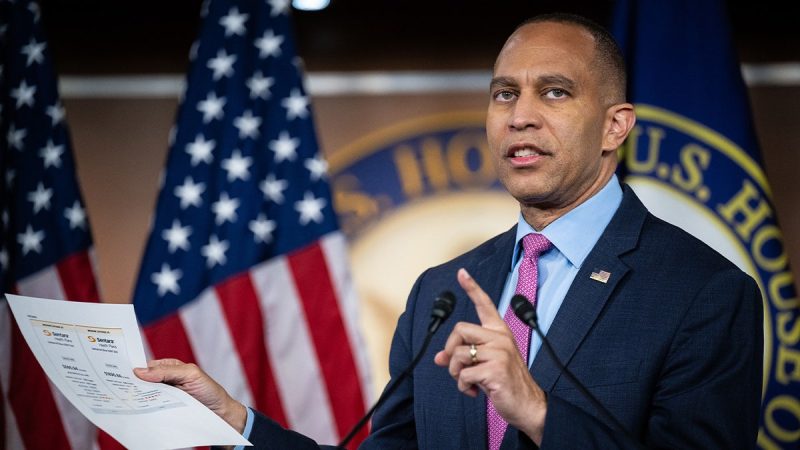
House Democrats’ campaign arm is rolling out new ads to pressure Republicans to return to the negotiating table as the 2025 government shutdown is poised to enter its second week.
Democrats have sought to make the ongoing standoff into a healthcare fight, with House Minority Leader Hakeem Jeffries, D-N.Y., and Senate Minority Leader Chuck Schumer, D-N.Y., insisting their caucuses will not vote for a funding bill that does not include an extension of expiring Obamacare subsidies enhanced during the COVID-19 pandemic.
The Democratic Congressional Campaign Committee (DCCC) is investing in a four-figure ad buy across 13 districts where Democrats believe they can hold or flip seats in the 2026 midterms.
The ads point out that ‘Republicans control the government’ and say, ‘They just shut it down.’ The ads in Democrat-held districts say lawmakers there are ‘protecting affordable health care.’
Three of those districts are held by Republicans, while 10 are held by Democrats.
Both the House and Senate are out this weekend after the upper chamber tried and failed for a fourth time on Friday to advance the GOP’s plan to fund federal agencies through Nov. 21.
The bill, called a continuing resolution (CR), is an extension of fiscal year (FY) 2025 federal funding levels, which also include $88 million in security spending for lawmakers, the White House and the judicial branch amid a heightened political threat environment.
Democrats have argued that Americans who rely on the enhanced Obamacare subsidies are in imminent threat of seeing their health care premiums skyrocket if not dealt with in this measure.
The Obamacare subsidies were given a temporary enhancement during the COVID-19 pandemic under former President Joe Biden’s American Rescue Plan, and later extended through 2025 under his Inflation Reduction Act.
Republican leaders have said they are willing to discuss reforming and extending the subsidies at a later date, while accusing Democrats of holding the government hostage at the expense of vulnerable Americans who rely on federal services.
‘Vulnerable House Republicans shut down the government because they don’t care about working Americans having access to affordable health care,’ DCCC spokesperson Nebeyatt Betre told Fox News Digital. ‘While Republicans create a health care crisis, House Democrats will keep working to lower Americans’ health care costs. Make no mistake: vulnerable House Republicans own this shutdown, and the DCCC is making sure voters know who to blame.’
House Republicans’ campaign arm, meanwhile, released an ad earlier this week on the heels of the government shutting down at midnight on Wednesday.
Their own ads, also a four-figure investment, accused Democrats of refusing to ‘fund the government’ at the expense of military paychecks, veterans, farmers and small businesses.
Republicans have been pointing to Democrats’ counter-proposal for a CR as proof that Democrats are fighting to restore health care for illegal immigrants. The left’s plan called for repealing the health care changes made in the GOP’s ‘One Big, Beautiful Bill,’ which, among other measures, tightened restrictions on who can access Medicaid.
Democrat leaders have denied fighting for illegal immigrants, however.
‘Out of touch Democrats shut down the government to bankroll handouts for illegal immigrants and appease their radical base. Voters won’t forget who betrayed them, and the NRCC will make sure Democrats pay the price,’ NRCC spokesman Mike Marinella told Fox News Digital at the time.
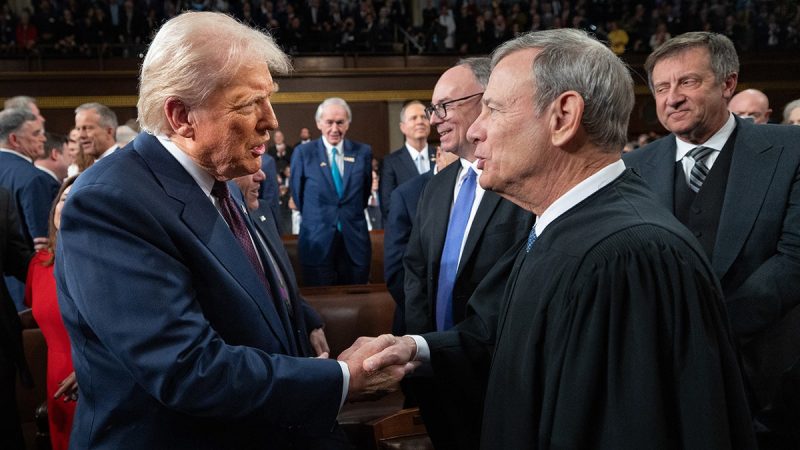
President Donald Trump has an almost flawless record on the Supreme Court’s emergency docket this year, a streak that has delivered crucial moments of relief to the government as it fights hundreds of lawsuits challenging the president’s agenda.
The Supreme Court has ruled in Trump’s favor on government cuts, nationwide injunctions, immigration policies and more, leading the White House to tout what it recently counted as 21 victories before the high court.
Those victories are, however, temporary. The upcoming term, which begins Monday, will allow the justices to begin weighing the full merits of some of these court disputes and ultimately cement or undo key parts of the Trump agenda.
Jonathan Adler, a William & Mary Law School professor, attributed the interim wins to the Supreme Court’s desire to narrow the judicial branch’s role in policymaking.
Speaking during a Federalist Society panel this week, Adler said the high court’s thinking might be that ‘lower courts are doing too much. We’re going to scale that back because it’s not our place, and it’s for the executive branch and the legislative branch to figure that out.’
The Trump administration has only challenged about one-fifth of the adverse rulings it has received from the lower courts. Adler said Solicitor General John Sauer, who represents the government, is strategically selecting which cases to bring to the high court.
‘If you go through them, setting Humphrey’s Executor stuff slightly to the side, what they all have in common is that there’s a kind of clear argument that … district courts were a little too aggressive here,’ Adler said.
He acknowledged that some might have a different view, that the Trump administration has been ‘too muscular’ and that court intervention is a necessary check.
The emergency docket, sometimes known as the shadow or interim docket, allows the Trump administration or plaintiffs to ask the Supreme Court to quickly intervene in lawsuits and temporarily pause lower court rulings. The process can take a couple of days, weeks or months, and is viewed as a much speedier, albeit temporary, way to secure court relief than if the high court were to fully consider the merits of a case, which can include a long briefing schedule and oral arguments.
The Supreme Court’s emergency docket this year has been extraordinarily active. Attorney Kannon Shanmugam, who has argued dozens of cases before the high court, said Trump’s high volume of executive actions is partly the reason for that.
‘[An increase in emergency motions] coincides with the rise of executive orders and other forms of unilateral executive action really as the primary form of lawmaking in our country with the disappearance of Congress, and that has posed enormous challenges for the court,’ Shanmugam said.
Through the emergency docket, the Supreme Court has greenlit Trump’s mass firings of career employees and high-profile terminations of Democratic appointees. It has curtailed nationwide injunctions and cleared the way for controversial deportations and immigration stops. The high court has said the government can, for now, withhold billions of dollars in foreign aid and discharge transgender service members from the military.
In other instances, parties on both sides in a court fight have construed Supreme Court outcomes as wins.
In one such order, the Supreme Court said the Trump administration must attempt to return Salvadoran migrant Kilmar Abrego Garcia, whom the government admitted in court to improperly deporting to a Salvadoran prison. But at the same time, the high court noted that district court judges must also be deferential to the executive branch’s authority over foreign policy.
Similarly, the high court said the administration must allow deportees under the Alien Enemies Act a reasonable chance to fight their removal through habeas corpus petitions. The justices have not yet weighed in on the merits of Trump’s invocation of the Alien Enemies Act, one of his most aggressive deportation tactics, which the president employed to swiftly remove alleged Tren de Aragua members.
Conservative lawyer Carrie Severino, president of the legal watchdog JCN, said one criterion the Supreme Court considers when making fast decisions is whether parties are at risk of irreparable harm.
As an example, Severino pointed to the Supreme Court recently allowing Trump to fire Biden-appointed FTC Commissioner Rebecca Slaughter, a case that the high court is now using as a vehicle to revisit in the coming months the 90-year precedent set by Humphrey’s Executor v. United States.
Severino said, ‘If one assumes, ‘Okay, if Trump’s right,’ then this is a serious burden on the government to have a good chunk of their four years being taken up with not being able to actually staff the government as they want to. If Trump’s wrong, then Commissioner Slaughter should have been in that position, and they can remedy that by providing her back pay.’
‘When you’re balancing those types of harms, this is the kind of case where the government’s going to have a leg up,’ Severino said.
In a small defeat for Trump on Wednesday, the Supreme Court declined to allow the president to fire Federal Reserve Governor Lisa Cook and instead said it would hear her case in January. The move was a deviation from the court’s typical posture and underscored its unique view on the Federal Reserve compared with other agencies.
The Supreme Court’s majority has often split along ideological lines and offered little reason for its emergency decisions. This differs from final orders from the court, which can be lengthy and include numerous concurring opinions and dissents.
Attorney Benjamin Mizer, who served as a top DOJ official during the Biden administration, cautioned during the panel that the Supreme Court could reverse its shadow docket positions down the road.
‘As cases reach the court on the merits, we shouldn’t presume that the administration will win them all,’ Mizer said.
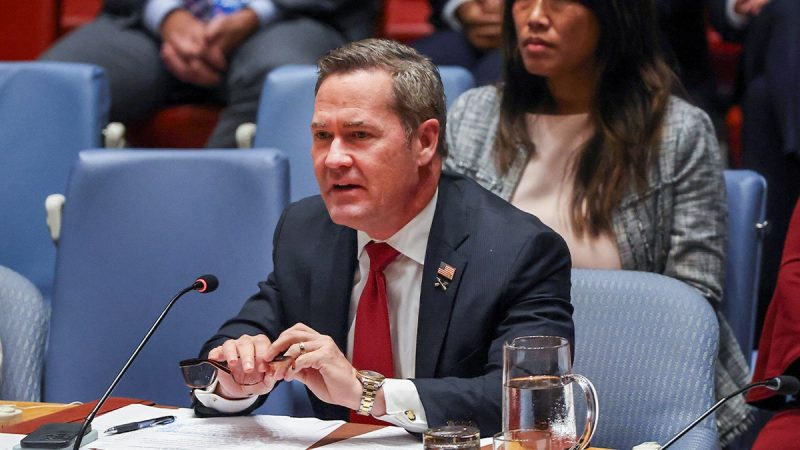
U.S. ambassador to the United Nations Mike Waltz said he believes President Donald Trump’s new Gaza peace plan could represent a ‘once-in-a-generation opportunity for Middle East peace.’
On Monday, Trump released his Gaza peace plan, which Israel agreed to. Despite U.S. criticism of the U.N.’s actions in Gaza, the plan relies on the international body’s assistance. When asked how this would work, Waltz said that the U.S., while working with the U.N. in Gaza, will ‘continue to call it out’ and will ‘demand reforms.’
In an interview with Fox News Digital, Waltz highlighted a key issue with the U.N.: aid delivery in Gaza. The U.N.’s numbers show that nearly 90% of its aid trucks were intercepted by armed groups or crowds of hungry people between May 19 and Aug. 5. The U.S. has pointed to Hamas as the main culprit, saying operatives of the terrorist organization steal the aid to make money by selling it.
‘We can’t have a situation where U.N. agencies — the U.S. pays for about a quarter of their costs — are actually delivering aid in a way that Hamas takes it over. Hamas uses it to make money reselling it on the black market,’ Waltz told Fox News Digital.
The U.S.- and Israel-backed Gaza Humanitarian Foundation, which has been heavily criticized by the U.N., said on Friday that it had delivered more than 178 million meals since starting its operation in May.
Waltz hit the ground running after his appointment to the role on Sept. 19, just days before the international body held its ‘High-level Week.’ During that week, leaders from around the world, including Trump, addressed fellow member states in New York City.
Trump has made it clear that his goal is to be a peacemaker, something Waltz emphasized during his sit-down with Fox News Digital. However, that doesn’t mean he isn’t bringing his own experience to the role.
‘Green Berets are called ‘warrior diplomats.’ We often have a big stick behind us,’ Waltz, who was the first Green Beret elected to Congress, told Fox News Digital.
He compared this ethos to Trump’s handling of Iran over the summer.
‘He gave them opportunity after opportunity to walk away from a weaponized nuclear program, to handover their enriched materials, to engage in diplomacy and when they didn’t, our amazing B-2s went and took it out,’ he said.
Waltz said he was looking to follow Trump and Secretary of State Marco Rubio’s visions to carry out America First policies and ‘make the U.N. great again.’ He said the institution had moved away from its roots and was not acting as a place where everyone from around the world could work out issues, but the U.S. is looking to bring that back.
The other major priority for the U.S. at the U.N., according to Waltz, is to get rid of ‘the bloat.’
‘Like any bureaucracy over 80 years, it has gotten too big, too bureaucratic, and therefore less effective. So I’m not going to say that we’re going to pull the DOGE up here, but we definitely need to make some cuts,’ he told Fox News Digital.
Waltz pointed to a recent vote on Haiti as an example of the U.S. working to achieve results at the U.N. As a former congressman from Florida, he noted that the lawlessness in Haiti has spilled onto U.S. shores. However, Waltz believes the U.N.-backed gang-suppression force will restore law and order, without making the U.S. foot the bill.
‘In line with what the president has demanded, we’re going to share the burden,’ Waltz said. ‘Other countries are involved. Kenya has taken the lead, El Salvador is taking a key role. Other countries are paying for it. It’s not just all on the United States’ shoulders.’
Waltz acknowledged Americans’ skepticism about the U.N., but he argued that it’s essential for the world’s leaders to meet on U.S. soil, and for Washington to remain at the table. He also pointed to the growing influence of international bodies on the American economy through regulation.
‘There’s all these international bodies that can directly affect our economy and our way of life that touch aviation and how we fly around the world, space, telecommunications, radio, data,’ he said. ‘And just as we fight for deregulation in our own federal government, we certainly don’t want global overregulation on many of our industries.’
Waltz stressed that staying engaged globally is critical to protecting U.S. interests and preventing bad actors from filling the void.
‘We have to say engaged, I think, to fight for the values that we hold dear. And if anything, this president is a fighter. We’re going to keep fighting for our way of life,’ Waltz said.