Sarama Resources (SRR:AU) has announced Sarama Provides Update on Arbitration Proceedings
Download the PDF here.
This post appeared first on investingnews.com



Sarama Resources (SRR:AU) has announced Sarama Provides Update on Arbitration Proceedings
Download the PDF here.
Fortune Bay Corp. (TSXV: FOR) (FWB: 5QN) (OTCQB: FTBYF) (‘Fortune Bay’ or the ‘Company’) is pleased to announce that it has entered into a definitive option agreement (the ‘Agreement’), dated July 25, 2025, with Neu Horizon Uranium Limited ACN 653 749 145 (the ‘Optionee’), a private Australian arms-length party. Pursuant to the Agreement, the Optionee will be granted the option (the ‘Option’) to acquire an eighty percent interest in The Woods Uranium Projects (‘The Woods’ or the ‘Projects’) located on the northern margin of the Athabasca Basin, Saskatchewan (Figure 1).
Figure 1: The Woods Uranium Projects – District-Scale Opportunity (CNW Group/Fortune Bay Corp.)
The Woods Highlights:
Dale Verran, CEO of Fortune Bay, commented: ‘We are pleased to have executed a Definitive Option Agreement with Neu Horizon for the advancement of The Woods Uranium Projects. This partnership combines strong technical capabilities and capital markets expertise to accelerate exploration efforts on these high-potential projects at a time of strengthening uranium market fundamentals. The transaction reflects our disciplined approach to capital allocation—prioritizing spend on our core gold assets at Goldfields and Poma Rosa—while unlocking blue-sky potential from earlier-stage projects through partnerships that preserve upside for our shareholders.’
Martin Holland, Executive Chairman of Neu Horizon Uranium, added: ‘We’re pleased to have successfully closed the earn-in agreement with Fortune Bay and to partner with an experienced in-country team, complementing Neu’s strong technical expertise. With this foundation in place, we’re eager to hit the ground running and carry out substantial work to position the project for drilling ahead of our planned ASX IPO in Q1 2026.’
Key Terms
Consistent with the Letter of Intent (the ‘LOI’) signed in May, 2025, the Option is exercisable by the Optionee completing staged cash payments and share issuances, and incurring the following exploration expenditures on the Project:
|
Cash |
Consideration |
Exploration |
Interest Earned |
|
|
Signing of Definitive Agreement |
A$50,000 |
A$50,000 |
Nil |
80 % |
|
31 December 2025 |
Nil |
A$200,000 |
A$700,000 |
|
|
31 December 2026 |
Nil |
A$500,000 |
A$2,300,000 |
|
|
Total |
A$50,000 |
A$750,000 |
A$3,000,000 |
The Company will act as the operator during the Option period and will be entitled to charge a management fee of 10% of expenditures incurred on the Projects. A participating Joint Venture (‘JV’) will be formed at the end of the Option period, consistent with customary JV Terms. The JV will allow for dilution and should the Company’s interest fall below 10% the Company will be granted a 2% net smelter returns (‘NSR’) royalty. One-half (1%) of the NSR may be purchased at any time prior to commercial production for a cash payment of A$5 million, subject to Consumer Price Index increase.
Further Projects details are provided in the Company’s News Release dated May 29, 2025.
Qualified Person
The technical and scientific information in this news release has been reviewed and approved by Gareth Garlick, P.Geo., Technical Director of the Company, who is a Qualified Person as defined by NI 43-101. Mr. Garlick is an employee of Fortune Bay and is not independent of the Company under NI 43-101.
Technical Disclosure on Historical Results
The historical uranium and REE occurrences referenced in the ‘Woods Highlights’ section derive from the Saskatchewan Mineral Deposits Index. The lake sediment uranium anomalism referred to in the same section refers to historical results derived from the Saskatchewan Mineral Assessment Database file number 74O09-0004, in comparison with the open-source regional Saskatchewan lake sediment geochemistry database available on the Government of Saskatchewan Mining and Petroleum GeoAtlas. Historical results are not verified and there is a risk that any future confirmation work and exploration may produce results that substantially differ from these. The Company considers these unverified historical results relevant to assess the mineralization and economic potential of the property.
About Fortune Bay
Fortune Bay Corp. (TSXV:FOR, FWB:5QN, OTCQB:FTBYF) is an exploration and development company with 100% ownership in two advanced gold projects in Canada, Saskatchewan (Goldfields Project) and Mexico, Chiapas (Poma Rosa Project), both with exploration and development potential. The Company is also advancing seven uranium exploration projects on the northern rim of the Athabasca Basin, Saskatchewan, which have high-grade potential. The Company has a goal of building a mid-tier exploration and development Company through the advancement of its existing projects and the strategic acquisition of new projects to create a pipeline of growth opportunities. The Company’s corporate strategy is driven by a Board and Management team with a proven track record of discovery, project development and value creation. Further information on Fortune Bay and its assets can be found on the Company’s website at www.fortunebaycorp.com or by contacting us as info@fortunebaycorp.com or by telephone at 902-334-1919.
About Neu Horizon
Neu Horizon is a public unlisted Australian company focused on discovering and developing Tier 1 uranium deposits in premier exploration jurisdictions. Through this exciting new partnership with Fortune Bay, the company has access to a dominant land package with over 100,000ha of prime exploration ground covering three projects in Sweden and five projects in Canada.
Sweden is Europe’s leading mining nation and also hosts the world’s largest low-grade uranium resource within the Alum-shale, where Neu Horizon has a significant landholding. The company aims to take advantage of the Swedish Government’s plans to lift the 2018 moratorium on uranium exploration and mining to delineate a significant European uranium deposit.
Canada’s Athabasca Basin is the world’s leading source of high-grade uranium. Access to this land package along the northern rim of the basin provides Neu Horizon direct access to this underexplored uranium exploration frontier.
These strategic projects align Neu Horizon with the global demand for clean, sustainable and low-carbon energy, by taking advantage of both countries’ rich uranium resources and supportive mining legislation.
On behalf of Fortune Bay Corp.
‘Dale Verran’
Chief Executive Officer
902-334-1919
Cautionary Statement Regarding Forward-Looking Information
Information set forth in this news release contains forward-looking statements that are based on assumptions as of the date of this news release. These statements reflect management’s current estimates, beliefs, intentions, and expectations. They are not guarantees of future performance. Words such as ‘expects’, ‘aims’, ‘anticipates’, ‘targets’, ‘goals’, ‘projects’, ‘intends’, ‘plans’, ‘believes’, ‘seeks’, ‘estimates’, ‘continues’, ‘may’, variations of such words, and similar expressions and references to future periods, are intended to identify such forward-looking statements.
Since forward-looking statements are based on assumptions and address future events and conditions, by their very nature they involve inherent risks and uncertainties. Although these statements are based on information currently available to the Company, the Company provides no assurance that actual results will meet management’s expectations. Risks, uncertainties and other factors involved with forward-looking information could cause actual events, results, performance, prospects and opportunities to differ materially from those expressed or implied by such forward-looking information. Forward looking information in this news release includes, but is not limited to, the Company’s objectives, goals, intentions or future plans, statements, exploration results, potential mineralization, timing of the commencement of operations and estimates of market conditions. Factors that could cause actual results to differ materially from such forward-looking information include, but are not limited to failure to identify targets or mineralization, delays in obtaining or failures to obtain required governmental, environmental or other project approvals, political risks, inability to fulfill the duty to accommodate First Nations and other indigenous peoples, inability to reach access agreements with other Project communities, amendments to applicable mining laws, uncertainties relating to the availability and costs of financing or partnerships needed in the future, changes in equity markets, inflation, changes in exchange rates, fluctuations in commodity prices, delays in the development of projects, capital and operating costs varying significantly from estimates and the other risks involved in the mineral exploration and development industry, and those risks set out in the Company’s public documents filed on SEDAR+. Although the Company believes that the assumptions and factors used in preparing the forward-looking information in this news release are reasonable, undue reliance should not be placed on such information, which only applies as of the date of this news release, and no assurance can be given that such events will occur in the disclosed time frames or at all. The Company disclaims any intention or obligation to update or revise any forward-looking information, whether as a result of new information, future events or otherwise, other than as required by law. For more information on Fortune Bay, readers should refer to Fortune Bay’s website at www.fortunebaycorp.com.
Neither TSX Venture Exchange nor its Regulation Services Provider (as that term is defined in policies of TSX Venture Exchange) accepts responsibility for the adequacy or accuracy of this release.
Source

LAS VEGAS — When Susana Pacheco accepted a housekeeping job at a casino on the Las Vegas Strip 16 years ago, she believed it was a step toward stability for her and her 2-year-old daughter.
But the single mom found herself exhausted, falling behind on bills and without access to stable health insurance, caught in a cycle of low pay and little support. For years, she said, there was no safety net in sight — until now.
For 25 years, her employer, the Venetian, had resisted organizing efforts as one of the last holdouts on the Strip, locked in a prolonged standoff with the Culinary Workers Union. But a recent change in ownership opened the Venetian’s doors to union representation just as the Strip’s newest casino, the Fontainebleau, was also inking its first labor contract.
The historic deals finalized late last year mark a major turning point: For the first time in the Culinary Union’s 90-year history, all major casinos on the Strip are unionized. Backed by 60,000 members, most of them in Las Vegas, it is the largest labor union in Nevada. Experts say the Culinary Union’s success is a notable exception in a national landscape where union membership overall is declining.
“Together, we’ve shown that change can be a positive force, and I’m confident that this partnership will continue to benefit us all in the years to come,” Patrick Nichols, president and CEO of the Venetian, said shortly after workers approved the deal.
Pacheco says their new contract has already reshaped her day-to-day life. The housekeeper no longer races against the clock to clean an unmanageable number of hotel suites, and she’s spending more quality time with her children because of the better pay and guaranteed days off.
“Now with the union, we have a voice,” Pacheco said.
These gains come at a time when union membership nationally is at an all-time low, and despite Republican-led efforts over the years to curb union power. About 10% of U.S. workers belonged to a union in 2024, down from 20% in 1983, the first year for which data is available, according to U.S. Bureau of Labor statistics.
President Donald Trump in March signed an executive order seeking to end collective bargaining for certain federal employees that led to union leaders suing the administration. Nevada and more than two dozen other states now have so-called “right to work” laws that let workers opt out of union membership and dues. GOP lawmakers have also supported changes to the National Labor Relations Board and other regulatory bodies, seeking to reduce what they view as overly burdensome rules on businesses.
Ruben Garcia, professor and director of the workplace program at the University of Nevada, Las Vegas law school, said the Culinary Union’s resilience stems from its deep roots in Las Vegas, its ability to adapt to the growth and corporatization of the casino industry, and its long history of navigating complex power dynamics with casino owners and operators.
He said the consolidation of casinos on the Las Vegas Strip mirrors the dominance of the Big Three automakers in Detroit. A few powerful companies — MGM Resorts International, Caesars Entertainment and Wynn Resorts — now control most of the dozens of casinos along Las Vegas Boulevard.
“That consolidation can make things harder for workers in some ways, but it also gives unions one large target,” Garcia said.
That dynamic worked in the union’s favor in 2023, when the threat of a major strike by 35,000 hospitality workers with expired contracts loomed over the Strip. But a last-minute deal with Caesars narrowly averted the walkout, and it triggered a domino effect across the Strip, with the union quickly finalizing similar deals for workers at MGM Resorts and Wynn properties.
The latest contracts secured a historic 32% bump in pay over the life of the five-year contract. Union casino workers will earn an average $35 hourly, including benefits, by the end of it.
The union’s influence also extends far beyond the casino floor. With its ability to mobilize thousands of its members for canvassing and voter outreach, the union’s endorsements are highly coveted, particularly among Democrats, and can signal who has the best shot at winning working-class votes.
The union’s path hasn’t always been smooth though. Michael Green, a history professor at UNLV, noted the Culinary Union has long faced resistance.
“Historically, there have always been people who are anti-union,” Green said.
Earlier this year, two food service workers in Las Vegas filed federal complaints with the National Labor Relations Board, accusing the union of deducting dues despite their objections to union membership. It varies at each casino, but between 95 to 98% of workers opt in to union membership, according to the union.
“I don’t think Culinary Union bosses deserve my support,” said one of the workers, Renee Guerrero, who works at T-Mobile Arena on the Strip. “Their actions since I attempted to exercise my right to stop dues payments only confirms my decision.”
But longtime union members like Paul Anthony see things differently. Anthony, a food server at the Bellagio and a Culinary member for nearly 40 years, said his union benefits — free family health insurance, reliable pay raises, job security and a pension — helped him to build a lasting career in the hospitality industry.
“A lot of times it is an industry that doesn’t have longevity,” he said. But on the Strip, it’s a job that people can do for “20 years, 30 years, 40 years.”
Ted Pappageorge, the union’s secretary-treasurer and lead negotiator, said the union calls this the “Las Vegas dream.”
“It’s always been our goal to make sure that this town is a union town,” he said.
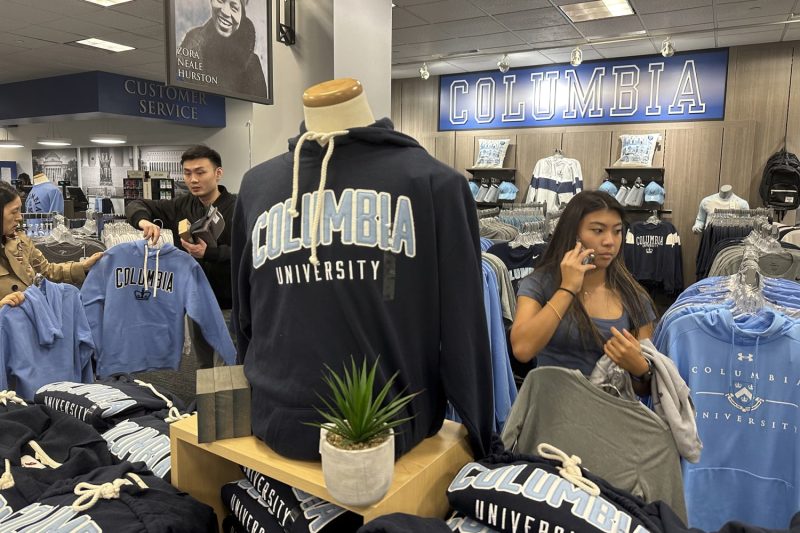
For decades, T-shirts, sweatshirts and other clothing under the Columbia Sportswear brand and clothing emblazoned with the Columbia University name coexisted more or less peacefully without confusion.
But now, the Portland-based outdoor retailer has sued the New York-based university over alleged trademark infringement and a breach of contract, among other charges. It claims that the university’s merchandise looks too similar to what’s being sold at more than 800 retail locations including more than 150 of its branded stores as well as its website and third-party marketplaces.
In a lawsuit filed July 23 in the U.S. District Court for the District of Oregon, Columbia Sportswear, whose roots date back to 1938, alleges that the university intentionally violated an agreement the parties signed on June 13, 2023. That agreement dictated how the university could use the word “Columbia” on its own apparel.
As part of the pact, the university could feature “Columbia” on its merchandise provided that the name included a recognizable school insignia or its mascot, the word “university,” the name of the academic department or the founding year of the university — 1754 — or a combination.
But Columbia Sportswear alleges the university breached the agreement a little more than a year later, with the company noticing several garments without any of the school logos being sold at the Columbia University online store.
Many of the garments feature a bright blue color that is “confusingly similar” to the blue color that has long been associated with Columbia Sportswear, the suit alleged.
The lawsuit offered photos of some of the Columbia University items that say only Columbia.
“The likelihood of deception, confusion, and mistake engendered by the university’s misappropriation and misuse of the Columbia name is causing irreparable harm to the brand and goodwill symbolized by Columbia Sportswear’s registered mark Columbia and the reputation for quality it embodies,” the lawsuit alleged.
The lawsuit comes at a time when Columbia University has been threatened with the potential loss of billions of dollars in government support.
Last week, Columbia University reached a deal with the Trump administration to pay more than $220 million to the federal government to restore federal research money that was canceled in the name of combating antisemitism on campus.
Under the agreement, the Ivy League school will pay a $200 million settlement over three years, the university said.
Columbia Sportswear aims to stop all sales of clothing that violate the agreement, recall any products already sold and donate any remaining merchandise to charity. Columbia Sportswear is also seeking three times the amount of actual damages determined by a jury.
Neither Columbia Sportswear or Columbia University couldn’t be immediately reached for comment.

The S&P 500 ($SPX) just logged its fifth straight trading box breakout, which means that, of the five trading ranges the index has experienced since the April lows, all have been resolved to the upside.
How much longer can this last? That’s been the biggest question since the massive April 9 rally. Instead of assuming the market is due to roll over, it’s been more productive to track price action and watch for potential changes along the way. So far, drawdowns have been minimal, and breakouts keep occurring. Nothing in the price action hints at a lasting change — yet.
While some are calling this rally “historic,” we have a recent precedent. Recall that from late 2023 through early 2024, the index had a strong start and gave way to a consistent, steady trend.
From late October 2023 through March 2024, the S&P 500 logged seven consecutive trading box breakouts. That streak finally paused with a pullback from late March to early April, which, as we now know, was only a temporary hiccup. Once the bid returned, the S&P 500 went right back to carving new boxes and climbing higher.
If there’s been one gripe about this rally, it’s that the number of new highs within the index has lagged. As we’ve discussed before, among all the internal breadth indicators available, new highs almost always lag — that’s normal. What we really want to see is whether the number of new highs begins to exceed prior peaks as the market continues to rise, which it has, as shown by the blue line in the chart below.
As of Wednesday’s close, 100 S&P 500 stocks were either at new 52-week highs or within 3% of them. That’s a strong base. We expect this number to continue rising as the market climbs, especially if positive earnings reactions persist across sectors.
Even when we get that first day with 100+ S&P 500 stocks making new 52-week highs, though, it might not be the best time to initiate new longs.
The above chart shows that much needs to align for that many stocks to peak in unison, which has historically led to at least a short-term consolidation, if not deeper pullbacks — as highlighted in yellow. Every time is different, of course, but this is something to keep an eye on in the coming weeks.
The GoNoGo Trend remains in bullish mode, with the recent countertrend signals having yet to trigger a greater pullback.
We still have two live bullish upside targets of 6,555 and 6,745, which could be with us for a while going forward. For the S&P 500 to get there, it will need to form new, smaller versions of the trading boxes.
In the chart below, you can view a rising wedge pattern on the recent price action, the third since April. The prior two wedges broke down briefly and did not lead to a major downturn. The largest pullbacks in each case occurred after the S&P 500 dipped below the lower trendline of the pattern.
The deepest drawdown so far is 3.5%, which is not exactly a game-changer. Without downside follow-through, a classic bearish pattern simply can’t be formed, let alone be broken down from.
We’ll continue to monitor these formations as they develop because, at some point, that will change.

In this video, Mary Ellen spotlights the areas driving market momentum following Taiwan Semiconductor’s record-breaking earnings report. She analyzes continued strength in semiconductors, utilities, industrials, and AI-driven sectors, plus highlights new leadership in robotics and innovation-focused ETFs like ARK. From there, Mary Ellen breaks down weakness in health care and housing stocks, shows how to refine trade entries using hourly charts, and compares today’s rally to past market surges. Watch as she explores setups in silver and examines individual stocks like Nvidia, BlackRock, and State Street.
This video originally premiered on July 18, 2025. You can watch it on our dedicated page for Mary Ellen’s videos.
New videos from Mary Ellen premiere weekly on Fridays. You can view all previously recorded episodes at this link.
If you’re looking for stocks to invest in, be sure to check out the MEM Edge Report! This report gives you detailed information on the top sectors, industries and stocks so you can make informed investment decisions.
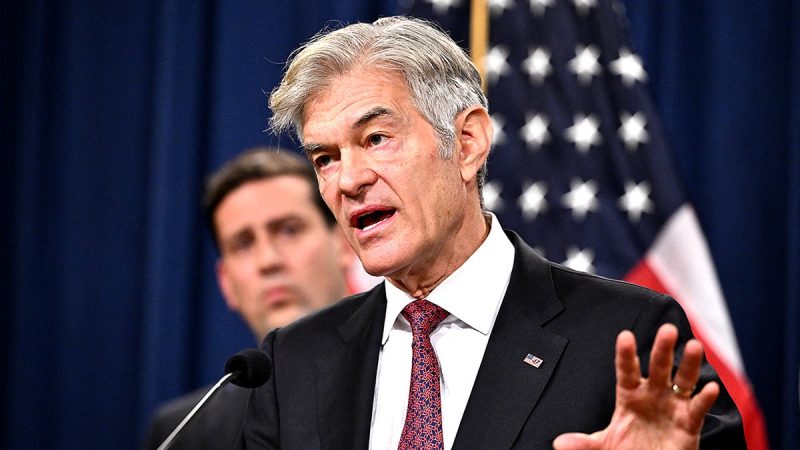
Centers for Medicare and Medicaid Services (CMS) administrator Dr. Mehmet Oz says the Trump administration plans to invest more than $200 billion ‘more dollars’ into Medicaid following the passage of the ‘One Big Beautiful Bill.’
‘I’m trying to save this beautiful program, this noble effort, to help folks, giving them a hand up,’ Oz told CBS’ ‘Face the Nation’ on Sunday.
‘And as you probably gather, if Medicaid isn’t able to take care of the people for whom it was designed, the young children, the dawn of their life, those who are twilight of their lives, the seniors, and those who were disabled living in the shadows, as Hubert Humphrey said, then we’re not satisfying the fundamental obligation of a moral government,’ he continued.
Oz, the 17th administrator for CMS, said the government wants ‘an appropriate return’ on the Medicaid investment. He addressed the difference in drug costs between the U.S. and Europe, adding that work is being done by the administration in an attempt to bring drug prices down.
Last week, the Trump administration announced it is launching a new program that will allow Americans to share personal health data and medical records across health systems and apps run by private tech companies, promising that this will make it easier to access health records and monitor wellness.
CMS will be in charge of maintaining the system, and officials have said patients will need to opt in for the sharing of their medical records and data, which will be kept secure.
Those officials said patients will benefit from a system that lets them quickly call up their own records without the hallmark difficulties, such as requiring the use of fax machines to share documents, that have prevented them from doing so in the past.
‘We’re going to have remarkable advances in how consumers can use their own records,’ Oz said during the White House event.
CMS already has troves of information on more than 140 million Americans who enroll in Medicare and Medicaid. Earlier this month, the federal agency agreed to hand over its massive database, including home addresses, to deportation officials.
The Associated Press contributed to this report.
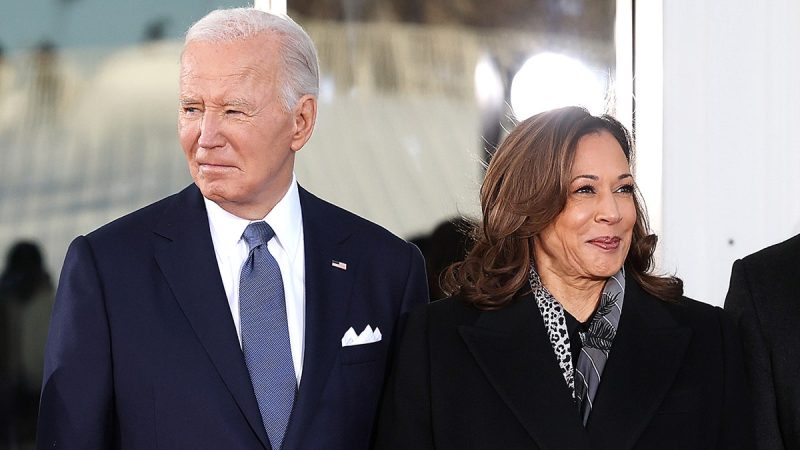
Former Vice President Kamala Harris is back in the national spotlight with her forthcoming book about her short-lived 2024 White House campaign, and she is generating a buzz about whether she’ll try again in 2028.
While politicos are keenly watching Harris for her next moves, she’s also being eyed by House Oversight Committee Chair James Comer, R-Ky., who is investigating whether top Biden administration officials covered up evidence of a mental decline in former President Joe Biden.
Comer all but guaranteed his committee would be contacting Harris during an appearance on ‘The Ingraham Angle’ last week. He joined Fox News Channel just after Harris announced she would not be running for governor of California, as some have speculated, and will instead embark on a listening tour to hear from Americans and try to boost fellow Democrats across the country.
‘I think that that’s another great thing about Kamala Harris not running for governor – she’s gonna have more time to come before the House Oversight Committee and testify about Joe Biden’s cognitive decline,’ Comer said. ‘So I think that the odds of Kamala Harris getting a subpoena are very high.’
During a recent appearance on ‘The Late Show with Stephen Colbert,’ Harris distanced herself from any immediate electoral ambitions. She emphasized she wanted to hear from all voters, however, not necessarily ruling out a future presidential run.
‘I believe, and I always believed, that as fragile as our democracy is, our systems would be strong enough to defend our most fundamental principles. And I think right now that, they’re not as strong as they need to be,’ Harris said.
‘And I just don’t want to for now, I don’t want to go back in the system. I want to, I want to travel the country. I want to listen to people. I want to talk with people. And I don’t want it to be transactional, where I’m asking for their vote.’
Jonathan Turley, a Fox News contributor and professor at George Washington University Law School, told Fox News Digital the optics of a congressional subpoena would be less than ideal for a potential 2028 candidate.
‘This is a tough question for Harris, who clearly has aspirations to run again,’ Turley said when asked if he would advise Harris to appear. ‘The committee can compel her to appear. However, the optics of forcing a subpoena are not exactly optimal for someone who wants to run again for this office.’
He added, however, that Harris would be a ‘natural’ target for Comer’s probe.
‘Harris held a unique spot within the inner circle of the White House,’ Turley said.
But both he and former House Oversight Committee ChairTrey Gowdy, R-S.C., now a Fox News Channel host, were doubtful that bringing Harris in would yield much new information.
‘Is it worth investigating? Absolutely. Is it worth getting her take on it? Yeah. Is she going to cooperate? No,’ Gowdy told Fox News Digital.
The former South Carolina congressman, who also served as a federal prosecutor, predicted that Harris’ lawyers would seek to bury any potential appearance in a quagmire of legal proceedings stemming from executive and/or presidential privilege claims.
‘That privilege has been invoked by both parties repeatedly during congressional investigations,’ Gowdy said.
‘Leaving the names out of it, just for the sake of an analogy, I can’t think of an advisor that would be closer to a president than his or her vice president. So, by the time you’re litigating the issue of whether or not you can compel a vice president to talk about conversations that he or she had with a chief of staff, with a spouse, with the president, with the president’s physician – you’ll be as old as I am by the time that’s litigated.’
Turley said House investigators would have to be armed with ‘specific’ questions to avoid someone like Harris being able to answer with ‘a matter of opinion.’
Gowdy agreed Harris was a ‘legitimate’ witness to bring in and that the issue of Biden’s autopen use, particularly for pardons, ‘warrants further scrutiny.’
He warned, however, that a potent subpoena comes with consequences for noncompliance.
‘Prosecutors can send cops and have [people] brought in. Congress can’t do that. Judges can send the marshals or the sheriff’s deputies out to bring a witness in if the witness is recalcitrant. Congress can’t do that,’ Gowdy said. ‘So your power is only as good as what you can do to enforce it.’
A spokesperson for Biden declined to comment on Comer’s subpoena threat when reached by Fox News Digital.
Spokespeople for Harris and House Oversight Committee Democrats did not return requests for comment.

President Donald Trump alleged that Senate Democrats are possibly delaying his nominees in exchange for money in a heated post on Truth Social Sunday night.
In the post, Trump accused Senate Democrats, led by Senate Minority Leader Chuck Schumer, D-N.Y., of slowing down the confirmations of more than 150 executive nominees.
‘Democrats, lead[sic] by Cryin’ Chuck Schumer, are slow walking my Nominees, more than 150 of them. They wanted us to pay, originally, two billion dollars for approvals. The Dems are CRAZED LUNATICS!!!’ the post read.
He implied that Democrats were leveraging the process to extract funding agreements — a tactic his associates have described as ‘political extortion.’
Senate Majority Leader John Thune, R-S.D., met with Schumer recently to discuss an offer during ongoing negotiations, but they have not readdressed it directly since choosing to communicate through intermediaries, according to Thune.
While Trump has urged the Senate to make quick moves, Democrats continue to block more nominees than normal.
‘I think they’re desperately in need of change,’ Thune said of Senate rules Saturday after negotiations with Schumer and Trump broke down. ‘I think that the last six months have demonstrated that this process, nominations is broken. And so I expect there will be some good robust conversations about that.’
Historically, nominees have been confirmed unanimously or by voice vote quickly, but Senate Dems have been reportedly forcing roll-call votes on many of the current nominees.
Thune told Fox News Digital that not much headway was being made as ‘the Dems are dug in on a position that’s just not working.’
Senate Republicans want to strike a deal that would send nominees with bipartisan support through committee to lightning-fast votes on the floor, but Schumer has not relented.
Trump’s claims come after the Senate left Saturday for a month-long August recess without coming to a deal on advancing dozens of nominees, which prompted him to post on Truth Social that Schumer could ‘GO TO HELL.’
Fox News Digital’s Alex Miller contributed to this report.

RemSense Technologies (REM:AU) has announced RemSense Capital Raising
Download the PDF here.