South Harz Potash Limited (SHP:AU) has announced Completion of Entitlement Offer
Download the PDF here.
This post appeared first on investingnews.com


South Harz Potash Limited (SHP:AU) has announced Completion of Entitlement Offer
Download the PDF here.
Kobo Resources Inc. (‘ Kobo’ or the ‘ Company ‘) ( TSX.V: KRI ) is pleased to announce it has entered into a new earn-in agreement as part of its broader regional exploration strategy to evaluate prospective gold bearing structural corridors in Côte d’Ivoire, West Africa.
This press release features multimedia. View the full release here: https://www.businesswire.com/news/home/20250731071790/en/
Figure 1: Location Map Yakassé Gold Project
Key Highlights
Edward Gosselin, CEO and Director of Kobo commented: ‘Our earn-in agreement on the Yakassé Project marks a meaningful step in Kobo’s strategy to expand our exploration portfolio in one of Côte d’Ivoire’s promising gold regions. This project sits within a structurally complex and underexplored area that has already returned high-grade results from past drilling by reputable operators. With its expected strong regional potential and well-developed infrastructure, the Yakassé Projec t aligns with our long-term growth strategy. Subject to the approval of the pending application, we look forward to advancing exploration on this project with Geoservices as we continue unlocking new opportunities alongside the development of our flagship Kossou Project .’
Geoservices – Earn-In Agreement Overview
Geoservices applied for a gold exploration license on February 23, 2021, in the Adzopé/Yakassé-Attobrou departments which was updated and its perimeter increased at Kobo’s request from 67 km 2 to 74.06 km 2 on July 17, 2025. The application is in the vicinity of the Nesdave permit (PR-0973 73.5 km 2 ) which is covered by another earn-in agreement signed in February 2025 as well as to the Kuniboa application (18.3 km 2 ) located next to the Nesdave permit (see Figures 1 & 2).
Subject to Geoservices being granted a research permit for an initial four-year term, the Company and Geoservices will conduct the exploration activities. The Company has made an initial payment of C$20,000 upon the signing of the Geoservices Earn-In agreement following the update of the application. Another payment in the amount of C$10,000 will be made by the Company upon approval of the Application by the Interministerial Commission and a final payment of C$20,000 and, subject to the approval of the TSX Venture Exchange Inc., the issuance of 30,000 common shares of the Company to Geoservices upon it being granted by decree an exploration permit.
Once the exploration permit is issued by decree, the Company can acquire a 90% interest in the license over the first four years by investing a minimum of 295 million CFA F (approximately C$719,500). The first year requires an investment of 77 million CFA F or approximately C$187,800 to acquire an interest of 18% in the permit. The second year requires a minimum investment of 67 million CFA F (approximately C$163,400) to acquire an 19% interest in the exploration permit. The third year requires the Company to invest a minimum of 68 million CFA F (approximately C$165,853) for a 28% interest in the permit and the fourth year requires a minimal investment of 83 million CFA F (approximately C$202,400) for an additional 25% interest in the permit bringing the total to 90% over the four years.
In the event the Company elects to apply for an exploitation license (an ‘ Exploitation License ‘) with respect to any of the properties covered under the Geoservices Earn-In Agreement , the Company and Geoservices will constitute a joint venture with respect to the exploitation of such property which will be held as to 81% by the Company, 9% by Geoservices and 10% by the Government of Côte d’Ivoire. The Company will be entitled to purchase, at any given time, from Geoservices an additional 4% interest in the joint venture for a cash payment of C$2.0 million.
The Geoservices Earn-In Agreemen t grants a 1% net smelter return (‘ NSR ‘) to Geoservices with the Company retaining the right to buy back 50% of such 1% NSR in consideration of a C$1.0 million payment. Following commissioning of facilities to commercially exploit a discovery, Geoservices will also be entitled to receive, subject to approval of the TSX Venture Exchange (‘ TSXV ‘), 350,000 common shares of the Company’s share-capital.
Subject to approval from the TSXV, Kobo will issue 30,000 common shares to Geoservices upon Geoservices being granted by decree an exploration permit. Such common shares will be issued to Geoservices pursuant to an exemption from the prospectus requirements of applicable Canadian securities laws and will be subject to a hold period of four months and one day.
Yakassé Gold Project – Overview
The Yakassé Project is located approximately 100 km northeast of Abidjan and is easily accessible by paved and gravel roads. The 74.06 km² permit application lies within a highly prospective region characterized by NE-SW trending Birimian metavolcanic and metasedimentary units intruded by granitoids. Gold mineralization in the area is structurally controlled, associated with shear zones and quartz veining, and has been the focus of significant historic artisanal and small-scale mining activity.
Previous exploration by reputable operators, including, most recently, Newmont (2007–2010), outlined widespread gold anomalies and confirmed the potential for mineralized systems at the Yakassé Project . Newmont’s work included extensive soil geochemistry, auger drilling, and over 3,500 metres (‘ m ‘) of reverse circulation (‘ RC ‘) drilling 1 . Several broad, near-surface gold intercepts were reported, including 44.0 m at 2.32 g/t Au , 48.0 m at 1.20 g/t Au , and 20.0 m at 1.69 g/t Au , highlighting the strong mineral potential associated with NE-SW trending shear zones. Importantly, the Company believes the structural trends observed at Yakassé may represent parallel systems to those present at its nearby Nesdave permit and Kuniboa application, underscoring the broader regional opportunity to consolidate and explore an underexplored but prospective gold corridor in southeastern Côte d’Ivoire.
Nesdave Earn-In Agreements
As announced on March 4, 2025, Kobo previously entered into earn-in agreements (the ‘ Nesdave Earn-In Agreements ‘) with NESDAVE MINING SARL (‘ Nesdave ‘) with respect to two exploration licences, PR-0970 and PR-0973.
Pursuant to the Nesdave Earn-In Agreements , as amended on July 25, 2025, the Company can acquire (i) a 90% interest in the PR-0970 license over the next four years by investing 550 million CFA F (approximately C$1.25 million), with 75 million CFA F (approximately C$171,500) being invested in the first year, and (ii) a 90% interest in the PR-0973 license over the next four years by investing 555 million CFA F (approximately C$1.27 million), with 80 million CFA F (approximately C$183,000) being invested in the first year.
Furthermore, in the event Kobo elects to apply for an Exploitation Licence with respect to any of the properties covered under the Nesdave Earn-In Agreements , Kobo and Nesdave will constitute a joint venture with respect to the exploitation of such property which will be held as to 80% by Kobo , 10% by Nesdave and 10% by the Government of Côte d’Ivoire.
Finally, each of the Nesdave Earn-In Agreements grants a 1% NSR to Nesdave with the Company retaining the right to buy back 50% of such NSR in consideration of a C$1.0 million payment. Following the completion of a positive Feasibility Study leading to the issuance of an Exploitation License, Nesdave will also be entitled to receive (i) a bonus payment of C$1.00 per proven and probable ounce of gold discovered and (ii) subject to approval of the TSXV, 350,000 common shares of the Company’s share-capital.
Subject to approval from the TSXV, Kobo will issue 60,000 common shares to Nesdave in connection with the execution of the Nesdave Earn-In Agreements . Such common shares will be issued to Nesdave pursuant to an exemption from the prospectus requirements of applicable Canadian securities laws and will be subject to a hold period of four months and one day.
Review of Technical Information
The scientific and technical information in this press release has been reviewed and approved by Paul Sarjeant, P.Geo., who is a Qualified Persons as defined in National Instrument 43-101. Mr. Sarjeant is the President and Chief Operating Officer and Director of Kobo.
About Kobo Resources Inc.
Kobo Resources is a growth-focused gold exploration company with a compelling new gold discovery in Côte d’Ivoire, one of West Africa’s most prolific and developing gold districts, hosting several multi-million-ounce gold mines. The Company’s 100%-owned Kossou Gold Project is located approximately 20 km northwest of the capital city of Yamoussoukro and is directly adjacent to one of the region’s largest gold mines with established processing facilities.
With over 18,500 metres of diamond drilling, nearly 5,900 metres of reverse circulation (RC) drilling, and 5,900 metres of trenching completed since 2023, Kobo has made significant progress in defining the scale and prospectivity of its Kossou’s Gold Project . Exploration has focused on multiple high-priority targets within a 9+ km strike length of highly prospective gold-in-soil geochemical anomalies, with drilling confirming extensive mineralisation at the Jagger, Road Cut, and Kadie Zones. The latest phase of drilling has further refined structural controls on gold mineralisation, setting the stage for the next phase of systematic exploration and resource development.
Beyond Kossou , the Company is advancing exploration at its Kotobi Permit and is actively expanding its land position in Côte d’Ivoire with prospective ground, aligning with its strategic vision for long-term growth in-country. Kobo remains committed to identifying and developing new opportunities to enhance its exploration portfolio within highly prospective gold regions of West Africa. Kobo offers investors the exciting combination of high-quality gold prospects led by an experienced leadership team with in-country experience. Kobo’s common shares trade on the TSX Venture Exchange under the symbol ‘KRI’. For more information, please visit www.koboresources.com .
NEITHER THE TSXV NOR ITS REGULATION SERVICES PROVIDER (AS THAT TERM IS DEFINED IN THE POLICIES OF THE TSXV) ACCEPTS RESPONSIBILITY FOR THE ADEQUACY OR ACCURACY OF THIS RELEASE.
Cautionary Statement on Forward-looking Information:
This news release may contain ‘forward-looking information’ and ‘forward-looking statements’ (collectively, ‘forward-looking statements’) within the meaning of the applicable Canadian securities legislation. All statements, other than statements of historical fact, are forward-looking statements. Any statement that involves discussions with respect to predictions, expectations, beliefs, plans, projections, objectives, assumptions, future events or performance (often but not always using phrases such as ‘expects’, or ‘does not expect’, ‘is expected’, ‘anticipates’ or ‘does not anticipate’, ‘plans’, ‘budget’, ‘scheduled’, ‘forecasts’, ‘estimates’, ‘believes’ or ‘intends’ or variations of such words and phrases or stating that certain actions, events or results ‘may’ or ‘could’, ‘would’, ‘might’ or ‘will’ be taken to occur or be achieved) are not statements of historical fact and may be forward-looking statements, including statements related to the issue of the common shares, the future development of the Company and the Company’s plan with respect to the properties subject to the Geoservices Earn-In Agreement and the Nesdave Earn-In Agreements. Forward-looking statements are necessarily based upon a number of estimates and assumptions that, while considered reasonable as at the date of this news release, are subject to known and unknown risks, uncertainties, and other factors which may cause the actual results and future events to differ materially from those expressed or implied by such forward-looking statements. Such factors include, but are not limited to: general business, economic, competitive, political and social uncertainties; the inherent risks involved win the exploration and development of mineral properties; unanticipated costs and expenses; the delay or failure to receive board, shareholder or regulatory approvals; and other risk factors listed from time to time in our documents filed with Canadian securities regulators on SEDAR+ at www.sedarplus.ca . There can be no assurance that such statements will prove to be accurate, as actual results and future events could differ materially from those anticipated in such statements. Accordingly, readers should not place undue reliance on the forward-looking statements and information contained in this news release. Except as required by law, Kobo assumes no obligation and/or liability to update the forward-looking statements of beliefs, opinions, projections, or other factors, should they change, except as required by law.
1 Newmont Mining, Internal Report, Adzope License (Coté d’Ivoire) Final Report, October 2010
View source version on businesswire.com: https://www.businesswire.com/news/home/20250731071790/en/
For further information, please contact:
Edward Gosselin
Chief Executive Officer and Director
1-418-609-3587
ir@kobores.com
Twitter: @KoboResources | LinkedIn: Kobo Resources Inc.
News Provided by Business Wire via QuoteMedia

(TheNewswire)
TORONTO, ON TheNewswire – August 1, 2025 Silver Crown Royalties Inc. ( Cboe: SCRI,OTC:SLCRF; OTCQX: SLCRF; FRA: QS0) ( ‘Silver Crown’ ‘SCRi’ or the ‘Company’ ) is pleased to announce it has executed an amendment (the ‘ Amendment ‘) to its silver royalty agreement originally dated December 13, 2024 (the ‘Agreement’ ) with PPX Mining Corp. ( TSXV: PPX; BVL: PPX) ( ‘PPX’ ) with respect to a silver royalty (‘ Silver Royalty ‘) on the Igor Project. The Amendment changes the capital deployment structure of the second tranche of the purchase price for the Silver Royalty (the ‘ Second Tranche Payment ‘) and the commencement date of the quarterly minimum Silver Royalty payments under the Agreement (the ‘ Minimum Royalty Payments ‘).
The Second Tranche Payment, originally set at US$1,470,000 and payable on or before August 6, 2025, has now been divided into two payments, with Silver Crown paying US$833,000 of the Second Tranche Payment to PPX today and with the remaining US$637,000 of the Second Tranche Payment now being due on or before December 31, 2025. Additionally, the commencement date for the Minimum Royalty Payments has been deferred from October 1, 2025, to March 31, 2026, subject to earlier commencement upon the startup of metallurgical operations at the Beneficiation Plant.
In accordance with the terms of the Agreement as amended by the Amendment, the payment of the first US$833,000 of the Second Tranche Payment today increased Silver Royalty payable to SCRi to the cash equivalent of 5.1% of the silver produced at the Igor Project (to an aggregate 11.1%), and the total payable silver ounces under the Silver Royalty increased by 76,500 ounces (to an aggregate total of 166,500 ounces). Upon payment of the remaining US$637,000 of the Second Tranche Payment on or before December 31, 2025, the Silver Royalty will further increase by 3.9% of the cash equivalent of the silver produced at the Igor Project (to a total of 15%), and the total payable silver ounces under the Silver Royalty will increase by an additional 58,500 ounces (to an aggregate total of 225,000 ounces) as contemplated by the Agreement.
Peter Bures, Silver Crown’s CEO, stated, ‘Increasing our royalty to 11.1% of the cash equivalent of the silver produced at Igor 4 (up from 6% in the first half of the year) is expected to be instrumental to our revenue growth in the immediate term. Amending the Second Tranche Payment offers flexibility to our partners as they continue to develop their infrastructure and presents an opportunity for SCRI to deploy capital in a more advantageous manner for shareholders. Furthermore, adjusting the Minimum Royalty Payments to a more advantageous timeline enables for any fine tuning during the initial phase of the Beneficiation Plant’s operation. We emphasize that the overall transaction terms remain unchanged per the Agreement: SCRI is still expected to receive the cash equivalent of 225,000 silver ounces over the next four years, of which approximately the cash equivalent of 1,600 silver ounces have already been delivered and will now be delivered at an increased rate.
ABOUT Silver Crown Royalties INC.
Founded by industry veterans, Silver Crown Royalties ( Cboe: SCRI | OTCQX: SLCRF | BF: QS0 ) is a publicly traded, silver royalty company. Silver Crown (SCRi) currently has four silver royalties of which three are revenue-generating. Its business model presents investors with precious metals exposure that allows for a natural hedge against currency devaluation while minimizing the negative impact of cost inflation associated with production. SCRi endeavors to minimize the economic impact on mining projects while maximizing returns for shareholders. For further information, please contact:
Silver Crown Royalties Inc.
Peter Bures, Chairman and CEO
Telephone: (416) 481-1744
Email: pbures@silvercrownroyalties.com
FORWARD-LOOKING STATEMENTS
This release contains certain ‘forward looking statements’ and certain ‘forward-looking information’ as defined under applicable Canadian and U.S. securities laws. Forward-looking statements and information can generally be identified by the use of forward-looking terminology such as ‘may’, ‘will’, ‘should’, ‘expect’, ‘intend’, ‘estimate’, ‘anticipate’, ‘believe’, ‘continue’, ‘plans’ or similar terminology. The forward-looking information contained herein is provided for the purpose of assisting readers in understanding management’s current expectations and plans relating to the future. Readers are cautioned that such information may not be appropriate for other purposes. Forward-looking statements and information include, but are not limited to, SCRi anticipates that Elk Gold will pay this residual amount owing on or before March 31, 2025. Forward-looking statements and information are based on forecasts of future results, estimates of amounts not yet determinable and assumptions that, while believed by management to be reasonable, are inherently subject to significant business, economic and competitive uncertainties and contingencies. Forward-looking information is subject to known and unknown risks, uncertainties and other factors that may cause the actual actions, events or results to be materially different from those expressed or implied by such forward-looking information, including but not limited to: the impact of general business and economic conditions; the absence of control over mining operations from which SCRi will purchase gold and other metals or from which it will receive royalty payments and risks related to those mining operations, including risks related to international operations, government and environmental regulation, delays in mine construction and operations, actual results of mining and current exploration activities, conclusions of economic evaluations and changes in project parameters as plans continue to be refined; accidents, equipment breakdowns, title matters, labor disputes or other unanticipated difficulties or interruptions in operations; SCRi’s ability to enter into definitive agreements and close proposed royalty transactions; the inherent uncertainties related to the valuations ascribed by SCRi to its royalty interests; problems inherent to the marketability of gold and other metals; the inherent uncertainty of production and cost estimates and the potential for unexpected costs and expenses; industry conditions, including fluctuations in the price of the primary commodities mined at such operations, fluctuations in foreign exchange rates and fluctuations in interest rates; government entities interpreting existing tax legislation or enacting new tax legislation in a way which adversely affects SCRi; stock market volatility; regulatory restrictions; liability, competition, the potential impact of epidemics, pandemics or other public health crises on SCRi’s business, operations and financial condition, loss of key employees. SCRi has attempted to identify important factors that could cause actual results to differ materially from those contained in forward-looking statements, there may be other factors that cause results not to be as anticipated, estimated or intended. There can be no assurance that such statements will prove to be accurate, as actual results and future events could differ materially from those anticipated in such statements. Accordingly, readers are advised not to place undue reliance on forward-looking statements or information. SCRi undertakes no obligation to update forward-looking information except as required by applicable law. Such forward-looking information represents management’s best judgment based on information currently available.
This document does not constitute an offer to sell, or a solicitation of an offer to buy, securities of the Company in Canada, the United States or any other jurisdiction. Any such offer to sell or solicitation of an offer to buy the securities described herein will be made only pursuant to subscription documentation between the Company and prospective purchasers. Any such offering will be made in reliance upon exemptions from the prospectus and registration requirements under applicable securities laws, pursuant to a subscription agreement to be entered into by the Company and prospective investors. There can be no assurance that forward-looking statements will prove to be accurate, as actual results and future events could differ materially from those anticipated in such statements. Accordingly, the reader is cautioned not to place undue reliance on forward-looking statements.
CBOE CANADA DOES NOT ACCEPT RESPONSIBILITY FOR THE ADEQUACY OR ACCURACY OF THIS NEWS RELEASE.
Copyright (c) 2025 TheNewswire – All rights reserved.
News Provided by TheNewsWire via QuoteMedia

NOT FOR DISTRIBUTION TO U.S. NEWS WIRE SERVICES OR DISSEMINATION IN THE UNITED STATES
Stallion Uranium Corp. (the ‘ Company ‘ or ‘ Stallion ‘ ) ( TSX-V: STUD ; OTCQB: STLNF ; FSE: FE0 ) further to its news release of July 8 th 2025, the Company provides certain updates in respect of its technology licensing agreement dated July 7 th 2025 (the ‘ Technology Licensing Agreement ‘), amongst the Company and Matthew J. Mason (the ‘ Lessor ‘). The Lessor holds the exclusive license to certain proprietary technology and know-how that can be used to assist in area prioritization selection for the purposes of exploration for minerals (the ‘ Technology ‘), which was developed by an arm’s length Ph.D. geologist (the ‘ Licensor ‘).
In particular, the Lessor obtained its license in the Technology pursuant to the terms of a binding term sheet dated February 6 th , 2025, amongst the Lessor and the Licensor (the ‘ Underlying Agreement ‘). Pursuant to the terms of the Underlying Agreement, the Lessor’s license in the Technology shall be for a period of 2 years. In connection with the grant of the license to the Lessor from the Licensor, the Lessor and the Licensor shall form an unincorporated joint-venture whereby the Licensor shall contribute the Technology, and the Lessor shall contribute funding and marking expertise to collaboratively advance the development of the Technology. As of the date hereof, the Licensor has advanced funds of GBP280,000 pursuant to the Underlying Agreement.
Furthermore, the 3,750,000 common shares of the Company payable to the Lessor pursuant to the Technology Licensing Agreement shall be subject to a tier 2 value escrow agreement, with 10% of the escrowed securities being releasable at the time of the Final TSX-V Bulletin, and 15% of the escrowed securities being releasable every six months thereafter until released in full.
For more information regarding the Technology Licensing Agreement and the Technology, please refer to the Company’s news release of July 8 th , 2025.
This press release does not constitute an offer to sell, or the solicitation of an offer to buy, any securities. None of the securities issued pursuant to the Technology License Agreement have been, or will be, registered under the United States Securities Act of 1933, or any state securities laws.
About Stallion Uranium Corp.:
Stallion Uranium is working to ‘Fuel the Future with Uranium’ through the exploration of roughly 1,700 sq/km in the Athabasca Basin, home to the largest high-grade uranium deposits in the world. The company, with JV partner Atha Energy holds the largest contiguous project in the Western Athabasca Basin adjacent to multiple high-grade discovery zones.
Our leadership and advisory teams are comprised of uranium and precious metals exploration experts with the capital markets experience and the technical talent for acquiring and exploring early-stage properties. For more information visit stallionuranium.com .
On Behalf of the Board of Stallion Uranium Corp.:
Matthew Schwab
CEO and Director
Corporate Office:
700 – 838 West Hastings Street,
Vancouver, British Columbia,
V6C 0A6
T: 604-551-2360
info@stallionuranium.com
Neither the TSX Venture Exchange nor its Regulation Services Provider (as that term is defined in the policies of the TSX Venture Exchange) accepts responsibility for the adequacy or accuracy of this release.
This news release contains forward-looking statements and forward-looking information within the meaning of Canadian securities legislation (collectively, ‘forward-looking statements’) that relate to the Company’s current expectations and views of future events. Any statements that express, or involve discussions as to, expectations, beliefs, plans, objectives, assumptions or future events or performance (often, but not always, through the use of words or phrases such as ‘will likely result’, ‘are expected to’, ‘expects’, ‘will continue’, ‘is anticipated’, ‘anticipates’, ‘believes’, ‘estimated’, ‘intends’, ‘plans’, ‘forecast’, ‘projection’, ‘strategy’, ‘objective’ and ‘outlook’) are not historical facts and may be forward-looking statements and may involve estimates, assumptions and uncertainties which could cause actual results or outcomes to differ materially from those expressed in such forward-looking statements. No assurance can be given that these expectations will prove to be correct and such forward-looking statements included in this material change report should not be unduly relied upon. These statements speak only as of the date they are made.
Forward-looking statements are based on a number of assumptions and are subject to a number of risks and uncertainties, many of which are beyond the Company’s control, which could cause actual results and events to differ materially from those that are disclosed in or implied by such forward-looking statements. The Company undertakes no obligation to update or revise any forward-looking statements, whether as a result of new information, future events or otherwise, except as may be required by law. New factors emerge from time to time, and it is not possible for the Company to predict all of them or assess the impact of each such factor or the extent to which any factor, or combination of factors, may cause results to differ materially from those contained in any forward-looking statement. Any forward-looking statements contained in this presentation are expressly qualified in their entirety by this cautionary statement .
News Provided by GlobeNewswire via QuoteMedia
The Canadian province of Ontario has canceled a C$100 million ($68.12 million) satellite high-speed internet contract with Elon Musk’s company Starlink, following through with a vow by the province’s premier to cut ties in retaliation for U.S. tariffs imposed on Canada.
Stephen Lecce, Ontario’s minister of energy and mines, confirmed the cancellation of the contract for internet services at an unrelated news conference in Toronto on Wednesday. Lecce, who oversees broadband connectivity in Canada’s most populous province, didn’t say how much the termination would cost.
“I can confirm that the premier has fulfilled his word, which is to cancel that contract because of the very reasons he cited in the past,” Lecce said. “We are standing up for Canada.”
Under the terms of the deal, which Ontario signed last November, Starlink was to provide high-speed internet access to 15,000 eligible homes and businesses in more remote communities.
In February, Ontario Premier Doug Ford threatened to end the agreement with Starlink in response to U.S. President Donald Trump imposing tariffs on Canadian goods. He later postponed the cancellation after Trump agreed to a 30-day pause on tariffs.
SpaceX, Starlink’s parent, did not immediately respond to a request for comment.
Musk headed Trump’s drive to shrink the federal government and was a close ally before falling out with the president.
Canada and the U.S. are working on negotiating a trade deal by August 1, the date Trump is threatening to impose a 35% tariff on all Canadian goods not covered by the U.S.-Mexico-Canada trade agreement.
Earlier this week, Canadian Prime Minister Mark Carney said talks were at an intense phase while reiterating that a deal that would remove all U.S. tariffs was unlikely.
Lecce said Ontario has taken other measures against the U.S., including restricting the ability of U.S. companies to bid on provincial government contracts, removing U.S.-made alcoholic beverages from store shelves and working to decouple the province’s energy sector from the U.S.
SAN FRANCISCO — Apple on Thursday reported sales and profit that far surpassed expectations, showing that its efforts to re-route its sprawling global supply chain away from U.S. President Donald Trump’s trade war have so far succeeded.
Apple said it earned $94.04 billion in revenue for its fiscal third quarter ended June 28, up nearly 10% from a year earlier and beating analyst expectations of $89.54 billion, according to LSEG data. Its earnings per share of $1.57 per share topped expectations of $1.43 per share.
Sales of iPhones, the Cupertino, California, company’s best-selling product, were up 13.5% to $44.58 billion, beating analyst expectations of $40.22 billion.
Apple has been shifting production of products bound for the U.S., sourcing iPhones from India and other products such as Macs and Apple Watches from Vietnam. Still, the company had warned investors that U.S. tariffs could cost it $900 million in the fiscal third quarter, and it trimmed its annual share buyback program by $10 billion, a move analysts viewed as helping to free up cash to remain nimble in uncertain times.
The ultimate tariffs many Apple products could face remain in flux, and many of its products are currently exempt. Sales in its Americas segment, which includes the U.S. and could face tariff impacts, rose 9.3% to $41.2 billion.
In an interview with Reuters, Apple CEO Tim Cook said the company set seasonal records for upgrades of iPhones, Macs, and Apple Watches. He said Apple estimates about 1 percentage point of its 9.6% of sales growth in the quarter was attributable to customers making purchases ahead of potential tariffs.
“We saw evidence in the early part of the quarter, specifically, of some pull-ahead related to the tariff announcements,” Cook told Reuters, though he also said the active user base for iPhones hit a record high in all geographies.
The U.S. is still negotiating with both China and India, with Trump saying India could face 25% tariffs as early as Friday. However, analysts said India could still retain cost advantages for Apple in the longer term.
Tariffs are only one of Apple’s challenges. The company faces competition from rivals such as Samsung in a tough market for premium-priced mobile phones. On the software front, Apple faces challenges from Alphabet, which is quickly weaving AI features into its competing Android operating system.
Apple has delayed the release of an AI-enriched version of Siri, its virtual assistant, but Cook said the company is “making good progress on a personalized Siri.” He also said Apple, which has thus far not engaged in the massive capital expenditures of its Big Tech rivals to pursue AI, is “significantly growing” its investments in artificial intelligence.
“Apple has always been about taking the most advanced technologies and making them easy to use and accessible for everyone, and that’s at the heart of our AI strategy,” Cook said.
Apple faces regulatory rulings in Europe that threaten to undermine its lucrative App Store business. Apple said sales from its services business, which includes the App Store as well as music and cloud storage, were $27.42 billion, topping analyst expectations of $26.8 billion.
Sales of wearables such as AirPods and Apple Watches were $7.4 billion, missing estimates of $7.82 billion. Mac sales of $8.05 billion beat expectations of $7.26 billion, while iPads hit $6.58 billion in sales, missing expectations of $7.24 billion.
In Greater China, where Apple has faced long delays in approval to introduce AI features on its devices, sales were $15.37 billion, up from a year ago and above expectations of $15.12 billion, according to a survey of five analysts from data firm Visible Alpha.
Apple said gross margins were 46.5%, beating analyst expectations of 45.9%, according to LSEG estimates.

The S&P 500 ($SPX) just logged its fifth straight trading box breakout, which means that, of the five trading ranges the index has experienced since the April lows, all have been resolved to the upside.
How much longer can this last? That’s been the biggest question since the massive April 9 rally. Instead of assuming the market is due to roll over, it’s been more productive to track price action and watch for potential changes along the way. So far, drawdowns have been minimal, and breakouts keep occurring. Nothing in the price action hints at a lasting change — yet.
While some are calling this rally “historic,” we have a recent precedent. Recall that from late 2023 through early 2024, the index had a strong start and gave way to a consistent, steady trend.
From late October 2023 through March 2024, the S&P 500 logged seven consecutive trading box breakouts. That streak finally paused with a pullback from late March to early April, which, as we now know, was only a temporary hiccup. Once the bid returned, the S&P 500 went right back to carving new boxes and climbing higher.
If there’s been one gripe about this rally, it’s that the number of new highs within the index has lagged. As we’ve discussed before, among all the internal breadth indicators available, new highs almost always lag — that’s normal. What we really want to see is whether the number of new highs begins to exceed prior peaks as the market continues to rise, which it has, as shown by the blue line in the chart below.
As of Wednesday’s close, 100 S&P 500 stocks were either at new 52-week highs or within 3% of them. That’s a strong base. We expect this number to continue rising as the market climbs, especially if positive earnings reactions persist across sectors.
Even when we get that first day with 100+ S&P 500 stocks making new 52-week highs, though, it might not be the best time to initiate new longs.
The above chart shows that much needs to align for that many stocks to peak in unison, which has historically led to at least a short-term consolidation, if not deeper pullbacks — as highlighted in yellow. Every time is different, of course, but this is something to keep an eye on in the coming weeks.
The GoNoGo Trend remains in bullish mode, with the recent countertrend signals having yet to trigger a greater pullback.
We still have two live bullish upside targets of 6,555 and 6,745, which could be with us for a while going forward. For the S&P 500 to get there, it will need to form new, smaller versions of the trading boxes.
In the chart below, you can view a rising wedge pattern on the recent price action, the third since April. The prior two wedges broke down briefly and did not lead to a major downturn. The largest pullbacks in each case occurred after the S&P 500 dipped below the lower trendline of the pattern.
The deepest drawdown so far is 3.5%, which is not exactly a game-changer. Without downside follow-through, a classic bearish pattern simply can’t be formed, let alone be broken down from.
We’ll continue to monitor these formations as they develop because, at some point, that will change.

In this video, Mary Ellen spotlights the areas driving market momentum following Taiwan Semiconductor’s record-breaking earnings report. She analyzes continued strength in semiconductors, utilities, industrials, and AI-driven sectors, plus highlights new leadership in robotics and innovation-focused ETFs like ARK. From there, Mary Ellen breaks down weakness in health care and housing stocks, shows how to refine trade entries using hourly charts, and compares today’s rally to past market surges. Watch as she explores setups in silver and examines individual stocks like Nvidia, BlackRock, and State Street.
This video originally premiered on July 18, 2025. You can watch it on our dedicated page for Mary Ellen’s videos.
New videos from Mary Ellen premiere weekly on Fridays. You can view all previously recorded episodes at this link.
If you’re looking for stocks to invest in, be sure to check out the MEM Edge Report! This report gives you detailed information on the top sectors, industries and stocks so you can make informed investment decisions.

Steve Ricchetti, a longtime Democratic operative and lobbyist, is sitting down with House Oversight Committee investigators Wednesday.
He’s known as a member of former President Joe Biden’s inner circle who reportedly played a key role in downplaying concerns, both public and private, about the ex-commander-in-chief’s mental fitness for office.
Ricchetti also reportedly helped craft Biden’s historic letter announcing the end of his 2024 re-election bid that July, according to the New York Times.
But long before that, Ricchetti graduated from Miami University in Ohio and got a Juris Doctor from Virginia’s George Mason University.
His first major role in electoral politics came when Ricchetti served as executive director for the Senate Democrats’ campaign arm, the Democratic Senatorial Campaign Committee, from 1990 to 1992.
Ricchetti then worked for former President Bill Clinton as a congressional liaison from 1993 to 1996 and then again as White House deputy chief of staff for operations from 1998 to 2001.
During that second stint, he played a critical role in wrangling House Democrats during the GOP’s impeachment proceedings against Clinton.
In between and in later years, Ricchetti enjoyed a lucrative career as a lobbyist, even founding the lobbying firm Ricchetti Inc. with his brother in 2001.
His work with Biden began in 2012 when Ricchetti was appointed to be counselor to the vice president during the Obama administration – one of several ex-lobbyists appointed to that White House, despite former President Barack Obama’s vow not to hire K Street operatives. He was soon elevated to be Biden’s chief of staff in late 2013.
Ricchetti also chaired Biden’s 2020 campaign before playing a critical role in his administration, where he acted as part of a small ‘Politburo’ of close advisors who helped control the White House, Axios reporter Alex Thompson and CNN host Jake Tapper wrote in their book ‘Original Sin.’
‘In terms of who was running the White House, it’s a small group of people that have been around,’ Thompson told the PBS program ‘Washington Week’ earlier this year.
Several members of Ricchetti’s family also notably had roles in the Biden administration; two of his sons and his daughter worked for the Treasury, State Department, and in the White House, respectively.
At the time, the White House argued they got the jobs on their merits rather than their father’s closeness to Biden.
Ricchetti also reportedly played a key role in dismissing concerns about Biden’s mental health.
Two weeks after Biden’s disastrous debate against current President Donald Trump, the New York Times reported that Ricchetti got into a ‘shouting’ argument with Rep. Pete Aguilar, D-Calif., after the latter called to express concerns about Biden’s political viability.
U.K.-based outlet The Times reported that Ricchetti ‘sounded like a mob boss’ in a conversation with actor George Clooney days before the Hollywood star and longtime Democratic donor penned an explosive op-ed calling for a new 2024 nominee in early July 2024.
And multiple outlets have reported that Ricchetti also denied any concerns about Biden’s mental acuity in an off-the-record conversation with an unnamed reporter at an unnamed outlet that almost ran a story shining a light on concerns about Biden’s mental health.
Ricchetti is the seventh ex-Biden aide to speak with investigators in House Oversight Committee Chair James Comer’s probe into whether White House officials covered up signs of Biden’s decline.
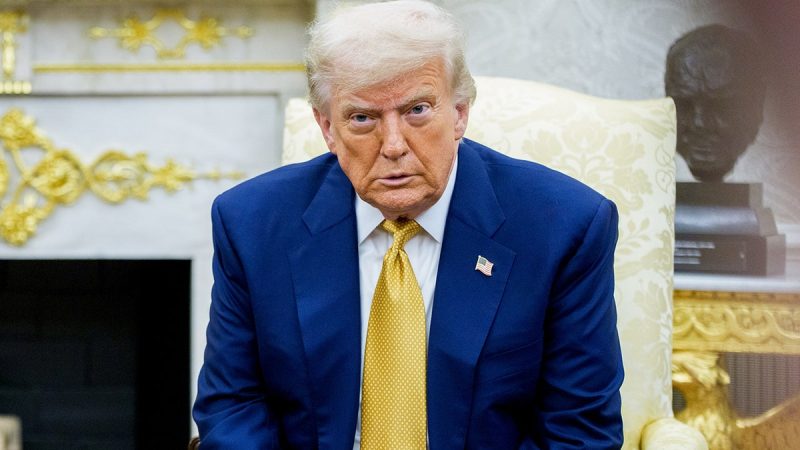
President Donald Trump warned that his August 1 deadline for making a trade deal with the U.S. ‘stands strong’ on Wednesday, threatening several key nations with a big tariff hike.
‘The August first deadline is the August first deadline — it stands strong, and will not be extended. A big day for America!’ Trump wrote on Truth Social, using all-caps.
Here are the major countries that still need to negotiate deals with the U.S.
Trump sent a letter to Canadian Prime Minister Mark Carney threatening a 35% tariff if a deal isn’t struck, but negotiations appear to have stalled.
‘We haven’t really had a lot of luck with Canada. I think Canada could be one where they’ll just pay tariffs. It’s not really a negotiation,’ Trump said of the negotiations with our neighbor to the north on Friday.
Carney himself said on Monday that negotiations have reached an ‘intense phase.’
‘It’s a complex negotiation. You see with the various trade deals that have been agreed to by other jurisdictions — the European Union yesterday, Japan before that, Indonesia, United Kingdom — that there are many elements to these negotiations. We’re engaged in them. But the assurance for Canadian businesses, for Canadians, is we will only sign a deal that’s a good deal, the right deal for Canada,’ he told reporters Monday.
According to the US Trade Representative (USTR), Canada is America’s third-largest importer, totaling $412.7 billion in 2024. The U.S. exported $349.4 billion to Canada in the same year.
Trump sent a similar letter to Mexican President Claudia Sheinbaum earlier this month, this one threatening a 30% tariff.
No deal has been struck as of Wednesday, however, and neither party has been vocal about where negotiations stand.
Mexico is America’s top source of imports, totaling $506 billion in 2024, according to the USTR. Meanwhile, the U.S. exported $334 billion to the country over the same year.
Treasury Secretary Scott Bessent negotiated with Chinese officials in Sweden this week and said Tuesday that the talks were ‘very constructive.’
He emphasized to reporters that no final agreement was made, however. Unlike most countries, China is facing an August 12 deadline rather than August 1, giving them somewhat more breathing room for negotiations.
‘Nothing is agreed until we speak with President Trump,’ Bessent told reporters.
Commerce Secretary Howard Lutnick told Fox News on Monday that the deadline for China could be extended even further than August 12, though that decision will be up to Trump.
Trump warned South Korean President Lee Jae Myung in a July 7 letter that the country would face a 25% blanket tariff if a deal isn’t reached by August 1.
Lee’s office said late last week that it was preparing a proposal. Lutnick met with three top Korean officials in Washington this week, though no news has come out of the meeting.
Taiwan has yet to reach a trade deal with the Trump administration, but Taipei has a delegation in Washington hoping to reach one before August 1, Reuters reported Wednesday.
The self-governed island is facing a 32% tariff if it does not secure a deal.
‘All the relevant talks are still ongoing,’ one source familiar with the talks told Reuters, with another saying negotiators were still in the U.S.
‘We hope these negotiations will accomplish four objectives: safeguarding national interests, protecting industrial interests, ensuring public health, and securing food safety. These objectives serve dual purposes: promoting balanced bilateral trade between Taiwan and the U.S., and enhancing cooperation in diverse areas like technology and national security,’ Taiwan’s cabinet said in a statement.
Trump appears to have slammed the door shut early on India, announcing on Truth Social that the country will face a 25% tariff across the board beginning August 1.
‘Remember, while India is our friend, we have, over the years, done relatively little business with them because their tariffs are far too high, among the highest in the world, and they have the most strenuous and obnoxious non-monetary trade barriers of any country. Also, they have always bought a vast majority of their military equipment from Russia, and are Russia’s largest buyer of energy, along with China, at a time when everyone wants Russia to stop the killing in Ukraine — all things not good!’ Trump wrote.
‘India will therefore be paying a tariff of 25%, plus a penalty for the above, starting on August first. Thank you for your attention to this matter. MAGA!’ he added.
Trump threatened a massive 50% blanket tariff on Brazilian goods in a letter to Brazilian President Luiz Inácio Lula da Silva earlier in July.
Trump credited the higher rate to Brazil’s prosecution of former President Jair Bolsonaro, who many compared to Trump himself. The U.S. president said Bolsonaro was the victim of a ‘witch hunt.’
Lula’s regime has requested that the U.S. exempt certain industries from the tariffs, but a deal before August 1 appears unlikely.