Brightstar Resources (BTR:AU) has announced Canaccord Global Mining Conference Presentation
Download the PDF here.
This post appeared first on investingnews.com



Brightstar Resources (BTR:AU) has announced Canaccord Global Mining Conference Presentation
Download the PDF here.
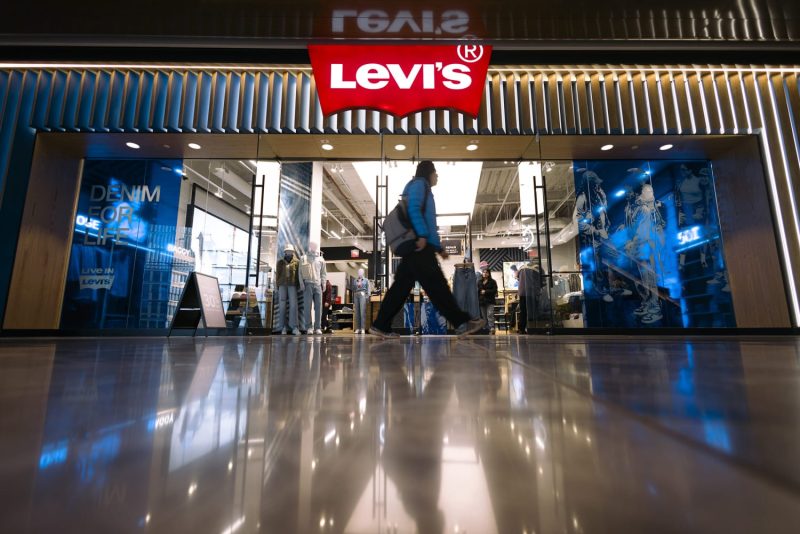
Levi Strauss has agreed to sell Dockers to brand management firm Authentic Brands Group for $311 million, the companies announced Tuesday.
Under the terms of the deal, Authentic will own Dockers’ intellectual property while Centric Brands will take on operations, handling manufacturing, sourcing and distribution. Under the brand management business model, Levi’s stands to make up to $391 million in future years based on how well Dockers performs under the Authentic umbrella, which also includes Forever 21′s intellectual property and brands like Reebok and Nautica.
“The Dockers transaction further aligns our portfolio with our strategic priorities, focusing on our direct-to-consumer first approach, growing our international presence and investing in opportunities across women’s and denim lifestyle,” Levi’s CEO Michelle Gass said in a statement. “After a robust process, we are confident that we maximized the value of the business and that Authentic is the right organization to usher in the next chapter of growth for the Dockers brand.”
In October, Levi’s announced it was considering selling Dockers as it looked to focus on growing its namesake line and its athleisure brand, Beyond Yoga. Levi’s created Dockers in 1986 as a hedge against denim and to offer consumers an alternative: khakis. The brand was hugely popular throughout the 1990s and 2000s, but khakis have since fallen out of fashion in the U.S., especially recently as denim makes another comeback.
To grow Dockers, Levi’s needed to offer more tops and bottoms, but the company is doing the same thing at its namesake banner and there was too much overlap between the two brands. Dockers’ performance was also dragging down Levi’s results and Gass, who took the helm of the company a little over a year ago, has been working to cut off extraneous businesses to fuel growth and focus on direct selling.
In the three months ended March 2, Levi’s reported $67 million in revenue related to Dockers. The figure isn’t comparable to the year-ago period because Levi’s only recently started breaking out the performance of each individual brand.
While khakis have fallen out of favor in the U.S., Dockers is still popular abroad, which is what makes a brand management company a strategic fit, according to people who have seen Dockers’ financials and spoke on the condition of anonymity because the details were private. Firms like Authentic are skilled at rapidly licensing and deploying brands internationally.
In a press release, Authentic said it plans to “unlock new opportunities” for Dockers through its global network of 1,700 licensing partners. It said it is in active discussions with regional operators in Latin America, Europe, the Middle East and Asia to expand Dockers’ existing businesses across those markets.
“Few brands own a category the way Dockers does, yet still have so much room to grow,” said Matt Maddox, president at Authentic. “Its legacy in casualwear gives it a strong foundation, but the real opportunity lies in reimagining the brand for a new generation. Through our global platform and deep licensing network, we’re committed to stewarding the brand into its next era of growth and relevance.”

BEIJING — One Chinese baby products company announced Tuesday it is officially entering the United States, the world’s largest consumer market — regardless of the trade war.
Shanghai-based Bc Babycare expects its supply chain diversification and the U.S. market potential to more than offset the impact of ongoing U.S.-China trade tensions, according to Chi Yang, the company’s vice president of Europe and the Americas.
“Even [if] the political things are not steady … I’m very confident about our product for the moment,” he told CNBC, adding he anticipates “very fast” growth in the U.S. in coming years. That includes his bold predictions that Bc Babycare’s flagship baby carrier can become the best-seller on Amazon.com in half a year, and that U.S. sales can grow by 10-fold in a year.
The $159.99 carrier, eligible for a $40 discount, already has 4.7 stars on Amazon.com across more than 30 reviews. The device claims to reduce pressure on the parent’s body by up to 33%. A far cheaper version of the baby carrier is a top seller among travel products for pregnancy and childbirth on JD.com in China.
Bc Babycare already has the carrier stocked in its U.S. warehouses, and has a network of factories and raw materials suppliers in the Americas, Europe and Asia, Yang said. “The global supply chain is one of the things we keep on building in the past couple years.”
The Trump administration has sought to reduce U.S. reliance on China-made goods and to encourage the return of manufacturing jobs to the U.S. In a rapid escalation of tensions last month, the U.S. and China had added tariffs of more than 100% on each other’s goods. Last week, the two sides agreed to a 90-day pause for most of the new duties in order to discuss a trade deal.
Baby gear is particularly sensitive to tariffs since the majority of those sold in the U.S. are made in China, said U.S.-based Newell Brands, which owns stroller company Graco, on an April 30 earnings call. That’s according to a FactSet transcript.
The company said it raised baby gear prices by about 20% in the last few weeks, but had not incorporated the additional 125% tariffs announced in mid-April. Newell said on the call it had about three to four months of inventory in the U.S., and had paused additional orders from China.
The company did not respond to a request for comment about whether it had resumed orders from China and whether it planned more price increases.
Bc Babycare declined to share how much it planned to invest in the U.S. But Yang said the company plans to open an office in the country and hire about five to 10 locals.
The company initially plans to sell online, spend on marketing and eventually work with major retailers for offline store sales. Its partners for raw materials and research include three U.S. companies: Lyra, Dow and Eastman.
The Chinese company, which entered the baby products segment in 2014, in 2021 claimed a 700 million yuan ($97.09 million) funding round from investors including Sequoia Capital China.
Yang said the company scrutinizes the comments section on Chinese and U.S. e-commerce websites to improve its products. As a result, the U.S. version of the baby carrier is softer and larger than the Chinese version, he said.
Bc Babycare’s U.S. market ambitions reflect how large U.S. and European multinationals not only face growing competition in China, but also in their home markets.
“After experiencing substantial growth due to the premiumization of consumption in the Chinese market, multinational brands are now entering a challenging second phase where they compete fiercely for market share,” Dave Xie, retail and consumer goods partner in Shanghai at consultancy Oliver Wyman, said in a statement last week.
Oliver Wyman said in a report last month that the Chinese market has become the incubator for premium product innovations that are being exported. The authors noted, for example, that Tineco floor scrubbers have become Amazon best-sellers.

Learn how to analyze stock price gaps with Dave! In this video, Dave discusses the different types of price gaps, why all price gaps are not the same, and how you can use the StockCharts platform to identify key levels and signals to follow on charts where price gaps occur. Charts discussed include the S&P 500, First Solar (FSLR), Microsoft (MSFT), and more!
This video originally premiered on May 19, 2025. Watch on StockCharts’ dedicated David Keller page!
Previously recorded videos from Dave are available at this link.

Earnings season continues with names like Home Depot, Palo Alto Networks, and BJ’s Wholesale flashing signals that investors shouldn’t ignore. Whether you’re following home improvement trends, cybersecurity growth, or retail resilience, these stocks offer insight into where the stock market could be headed next.
Let’s break down the charts, decode the earnings, and explore the setups that could shape your next move.
Home Depot, Inc. (HD) reports earnings on Tuesday, and its results will give a peek at how the DIY home retail investor is changing their spending habits. HD’s stock price has struggled and is down about 2.5% year-to-date, but well off its lows. Like most stocks reporting earnings this quarter, investors will listen for any revisions to HD’s guidance, especially considering ongoing economic challenges such as high interest rates and their impact on consumer spending.
Let’s look at the daily chart of HD.
FIGURE 1. DAILY CHART OF HOME DEPOT, INC. STOCK PRICE. The $377 area and 200-day moving average act as the middle road for a potential setup.Chart source: StockCharts.com. For educational purposes.
The chart of HD stock displayed a head-and-shoulders top last quarter, which we warned about. Sadly, that pattern broke to the downside and hit its target some $50 lower. Since bottoming, shares have retreated to where they were before their last report.
The set-up is a coin flip, with the $377 area and 200-day simple moving average (SMA) acting as the middle road. Stock prices are known to gap and trend for roughly two weeks in the gap’s direction before reversing direction.
If HD’s stock price dips, there are clear support and potential entry points. Look for the rising 50-day SMA to hold at around the $360 level. A dip and hold here would be good for the longer-term turnaround story and the bullish case. If there’s a break, wait for a deeper drop to enter HD. A gap above the 200-day SMA should lead to near-term smooth sailing and enable a trader to use the average as a great stop loss guide.
It’s one of the biggest names in cybersecurity, and it’s on the verge of getting back to its all-time highs.
Fundamentally, Palo Alto Networks’ annual recurring revenue (ARR) continues to be the significant growth driver. In Q1, ARR grew 40% year-over-year to $4.5 billion. For Q2 2025, the company projected ARR between $4.70 billion and $4.75 billion. Investors will be keen to see if the company meets or exceeds this guidance.
Technically, we wanted to look at this chart on a longer time frame. The five-year weekly chart of PANW below shows the trend is stalling under a double top at the $205 level. There are some good signs that it may be able to get back on track and push to new highs.
FIGURE 2. WEEKLY CHART OF PALO ALTO NETWORKS STOCK PRICE. Monitor the rising 50-week SMA. Will it hold that level after earnings? The MACD is displaying a bullish crossover, which signals a favorable risk/reward setup.Chart source: StockCharts.com. For educational purposes.
The key level to watch for the bulls is the rising 50-week (blue line) SMA. Shares had consistently trended above this level since initially surpassing it in early 2023. Price action briefly broke below that average, but recaptured it two weeks ago. Now it must hold that level, so watch $178.50 for support on any weakness.
The technical indicator that caught my eye was the moving average convergence/divergence (MACD), which just experienced a bullish crossover. This has a history of leading to great risk/reward setups in a stock. The chart highlights the current crossover and the last two notable ones in green to demonstrate the indicator’s past performance.
Any upside movement should take PANW’s stock price back to the $205 level and a re-test of all-time highs.
BJ’s has quietly enjoyed a strong 2025, despite tariff talk and negative consumer sentiment. Shares of BJ are up 29% year-to-date and over 44% over the last 52 weeks. While its $14 billion market cap pales in comparison to the $450 billion size of its biggest wholesale competitor in Costco (COST), BJ continues to exceed expectations and thrive.
BJ’s stock price has rallied after four of the last five earnings reports, with an average gain of 8%, including a 12% rally last quarter. Coming into the results, the stock price is starting to rally back towards all-time highs. Maybe this will be the catalyst to break out even higher.
Technically, there is much overhead resistance at the $120 level (see daily chart of BJ below). A break above there should lead to another $10–$15 on the upside.
FIGURE 3. DAILY CHART OF BJ STOCK. Note the overhead resistance at around the $120 level. On the downside, there’s support at $108 and the rising 100-day SMA.Chart source: StockCharts.com. For educational purposes only.
Weakness has given investors opportunities as well. There is clear support at the $108 level and the rising 100-day SMA (in green). The long-term trend has been strong and, barring a major change in the fiscal direction of BJ’s, the trends should continue to be your friend and give solid risk/reward entry points.
Charts aren’t just squiggly lines. They’re tools to help you make smarter decisions with your hard-earned money.
Whether you’re eyeing a potential rebound in Home Depot, the strength of cybersecurity, or a quiet winner like BJ’s, remember: technical patterns can give you an edge, but so can patience and perspective.

Looking for breakout stocks and top market leaders? Follow along Mary Ellen shares stock breakouts, analyst upgrades, and sector leadership trends to help you trade strong stocks in today’s market.
In this week’s episode, Mary Ellen reveals the stocks leading the market higher and explains what’s fueling their strength. She highlights base breakouts, analyst upgrades, and leadership stocks gaining momentum. In addition, she screens for emerging breakout candidates you should have on your radar.
This video originally premiered May 16, 2025. You can watch it on our dedicated page for Mary Ellen’s videos.
New videos from Mary Ellen premiere weekly on Fridays. You can view all previously recorded episodes at this link.
If you’re looking for stocks to invest in, be sure to check out the MEM Edge Report! This report gives you detailed information on the top sectors, industries and stocks so you can make informed investment decisions.
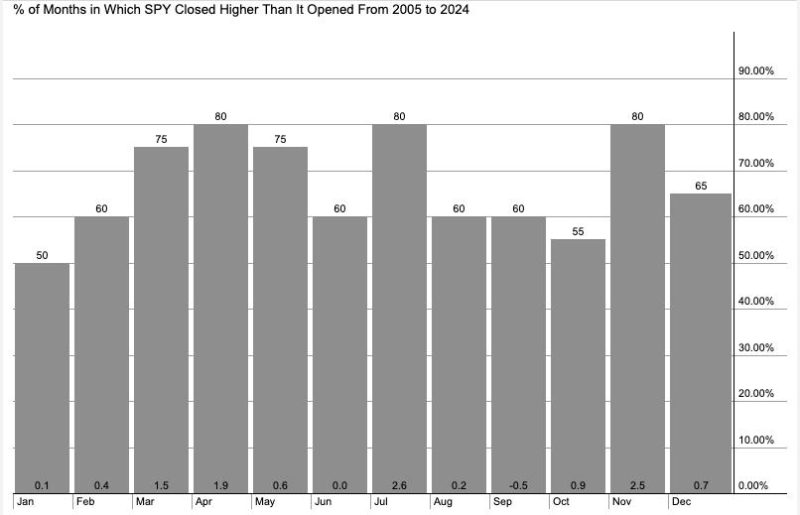
We’ve all heard the classic market maxim, “Sell in May and go away.” For many investors, that’s the introduction to market seasonality that suggests a six month period where it’s just best to avoid stocks altogether.
Through my own experience, complemented with interviews with seasonality experts like ” We’ll dig deeper into the history of “Sell in May,” analyze summer trends in recent years, and focus on signs to follow in the weeks and months ahead! Sign up HERE for this free event!
It turns out that the reason why “sell in May” has often worked out is less about May being super weak, but more about how major lows have usually come in the fall months. Since the COVID low in early 2020, we’ve experienced major lows in September or October every year except for 2024.
When we focus on the last five years, we can see that the May-June-July period has been consistently strong. In fact, May and July have seen bullish trends every year since 2019. So while investors often talk about the “summer doldrums” and weakness into the hot summer months, the recent evidence would suggest otherwise.
The weakest months since the COVID low have actually been January, February, September, and October. So again, it’s been less about weakness in the spring, and much more about weaker price action into the traditional low in September or October. Also note the strength in November, where the market is almost always rallying off a major low and setting up for a positive finish to the calendar year!
As I mentioned earlier, I like to think of seasonal patterns as tendencies. There is no guarantee that July will be strong, and there is no way I can tell you for sure that the market will make yet another major low in September. Seasonality tells you the general bias to the markets, but mindful investors know the most important evidence is price itself.
Given the extreme rally off the early April low, we’ve seen a rapid rotation from bearish sentiment to more bullish outlooks as investors have started to believe in the new uptrend phase. This week’s price gap higher for the S&P 500 could provide a perfect support range to monitor in the coming weeks and months.
If the S&P 500 is able to hold 5750, and remain above the support range set from the gap earlier this month, then perhaps the equity markets will follow the same pattern as recent years and remain strong into August.
If, however, the S&P 500 is unable to hold this key support range, and we also confirm that breakdown with weaker momentum readings and deteriorating breadth conditions, then the S&P 500 may be charting a new course through what has become a strong period in the calendar year.
RR#6,
Dave
PS- Ready to upgrade your investment process? Check out my free behavioral investing course!
David Keller, CMT
President and Chief Strategist
Sierra Alpha Research LLC
https://www.youtube.com/c/MarketMisbehavior
Disclaimer: This blog is for educational purposes only and should not be construed as financial advice. The ideas and strategies should never be used without first assessing your own personal and financial situation, or without consulting a financial professional.
The author does not have a position in mentioned securities at the time of publication. Any opinions expressed herein are solely those of the author and do not in any way represent the views or opinions of any other person or entity.

President Donald Trump will descend on Capitol Hill Tuesday morning where he’s expected to meet with House Republicans on his ‘one, big, beautiful bill.’
Trump is attending the House GOP’s weekly conference meeting, three House GOP sources and two White House officials confirmed to Fox News Digital and Fox News Radio, respectively. It’s normally an hour-long session behind closed doors where Republicans discuss the week’s agenda and any outstanding issues.
The president is expected to rally Republicans around the massive piece of legislation designed to advance his agenda on tax, immigration, defense, energy, and raising the debt limit.
It’s a significant escalation in the president’s involvement in the process so far.
House Republicans, meanwhile, have several critical differences to resolve before their self-imposed deadline to pass the bill by Memorial Day.
Conservatives are pushing for the bill to be more aggressive on cutting waste, fraud, and abuse in the Medicaid system, including a faster timeline for implementing work requirements for able-bodied recipients. Currently, the legislation has work requirements kicking in in 2029.
Moderates, meanwhile, have been wary of making significant cuts to the program.
Fiscal hawks are also pushing for a total and near-immediate repeal of the former Biden administration’s green energy subsidies in the Inflation Reduction Act (IRA), noting it was a Trump campaign promise – while other Republicans have pointed out businesses in their districts are benefiting from the tax relief.
There’s also disagreement over raising the state and local tax (SALT) deduction cap, a critical issue for blue state Republicans representing high-cost-of-living districts. GOP lawmakers in lower-tax states have dismissed it as a giveaway to high-tax Democrat-controlled areas, however.
News of Trump’s likely appearance on Capitol Hill comes after Speaker Mike Johnson, R-La., said on a lawmaker-only call on Monday morning that the president is ready and willing to play an active role in discussions.
‘He wants to be involved as much as we need him,’ Johnson told House GOP colleagues.
The speaker also said he spoke with Trump by phone on Monday morning, and the president was ‘very excited, very encouraged.’
Republicans are working to pass Trump’s policies on tax, immigration, energy, defense, and the national debt all in one massive bill via the budget reconciliation process.
GOP lawmakers also see it as an opportunity to put the country on a better fiscal path, with the national debt already having surpassed $36 trillion.
Budget reconciliation lowers the Senate’s threshold for passage from 60 votes to 51, thereby allowing the party in power to skirt the minority – in this case, Democrats – to pass sweeping pieces of legislation, provided they deal with the federal budget, taxation, or the national debt.
House Republicans are hoping to advance Trump’s bill through the House by the end of this week, with a goal of a final bill on the president’s desk by Fourth of July.
The House Rules Committee, the final gatekeeper before a House-wide vote, is set to take up the bill at 1 a.m. on Wednesday.

A conservative Republican said he’s opposed to his moderate colleague’s proposal for a modest tax hike on high-income earners, as GOP lawmakers continue to navigate divisions over President Donald Trump’s ‘one big, beautiful bill.’
‘Well, think about that — higher taxes to pay for something that is pretty much self-inflicted by all the states that don’t have their financials in order,’ Rep. Ralph Norman, R-S.C., a member of the conservative House Freedom Caucus, told Fox News Digital on Sunday.
It comes as various House Republican factions are locked in high-stakes debates on taxes, Medicaid, and green energy subsidies while crafting Trump’s wide-ranging bill.
Rep. Nick LaLota, R-N.Y., suggested over the weekend that increasing the top tax bracket to a 39.6% income tax rate rather than 37% could help pay for higher deduction caps for state and local taxes (SALT).
The 39.6% rate refers to the top income tax bracket before it was lowered by Trump’s 2017 Tax Cuts and Jobs Act (TCJA).
SALT deduction caps primarily benefit people living in high-cost-of-living areas like New York City, Los Angeles, and their surrounding suburbs.
Republicans representing those areas, including LaLota, have argued that raising the SALT deduction cap is an existential issue — and that a failure to address it could cost the GOP the House majority in the 2026 midterms.
Several of the Republicans vying for higher SALT deduction caps have pointed out that their victories are critical to the party retaining control of the House in 2024.
SALT deduction caps did not exist before TCJA, which notably instilled a $10,000 ceiling for married and single tax filers.
‘The One Big Beautiful Bill has stalled—and it needs wind in its sails. Allowing the top tax rate to expire—returning from 37% to 39.6% for individuals earning over $609,350 and married couples earning over $731,200—breathes $300 billion of new life into the effort,’ LaLota wrote on X.
‘It’s a fiscally responsible move that reflects the priorities of the new Republican Party: protect working families, address the deficit, fix the unfair SALT cap, and safeguard programs like Medicaid and SNAP—without raising taxes on the middle class.’
But Republicans in lower-tax states are largely wary of significant increases to those caps, believing them to incentivize blue states’ high-tax policies.
‘People with money invest, and to tax them more — history has been, when you tax the other upper 1% more, you know, the economy does worse,’ Norman argued. ‘More taxes don’t make sense to me.’
The current legislation would increase the SALT deduction cap from $10,000 to $30,000, but a majority of Republicans in the House SALT Caucus rejected the deal.
LaLota and others have contended it’s not enough for middle-class families in their districts.
‘My party’s $30K cap proposal only makes 4 in 5 households whole. That’s not enough. On [Long Island], $250K isn’t rich—it barely covers the basics. Too many families pay over $15K in property taxes & get left out. I’m fighting for a higher cap. Wish me luck,’ he said on X.
But while tax hike proposals targeting wealthy Americans were part of Republicans’ negotiations at an earlier point, any such effort appears to have been all but definitively stamped out.
House GOP leadership aides signaled to reporters on Monday morning that such a tax hike would not be in the final bill, pointing to Speaker Mike Johnson’s comments on the matter.
Johnson, R-La., said on The Will Cain Show late last month that he was ‘not in favor of raising the tax rates, because our party is the group that stands against that, traditionally.’
But nevertheless, the differing viewpoints underscore the divisions that Republicans still have to navigate ahead of their planned House-wide vote on Trump’s bill later this week.
Republicans are using the budget reconciliation process to advance Trump’s priorities on taxes, immigration, energy, defense and the national debt via one massive bill.
Budget reconciliation lowers the Senate’s threshold for passage from 60 votes to 51, thereby allowing the party in power to skirt the minority — in this case, Democrats — to pass sweeping pieces of legislation, provided they deal with the federal budget, taxation or the national debt.
Republican leaders want to have a final bill on the president’s desk by Fourth of July.
Fox News Digital reached out to LaLota’s office for comment on Norman’s remarks but did not immediately hear back.

President Donald Trump spoke candidly about former President Joe Biden’s recent prostate cancer diagnosis on Monday, expressing sympathy while also suggesting that the situation should be investigated.
Biden’s team announced the diagnosis on Sunday afternoon, saying that the former statesman ‘was seen for a new finding of a prostate nodule after experiencing increasing urinary symptoms.’
‘On Friday, he was diagnosed with prostate cancer, characterized by a Gleason score of 9 (Grade Group 5) with metastasis to the bone,’ the statement added.
‘While this represents a more aggressive form of the disease, the cancer appears to be hormone-sensitive which allows for effective management,’ Biden’s team concluded. ‘The President and his family are reviewing treatment options with his physicians.’
Speaking to reporters on Monday afternoon, Trump called the news ‘very sad, actually.’
‘I’m surprised that…you know, the public wasn’t notified a long time ago because to get to stage nine [sic], that’s a long time,’ Trump said. ‘I just had my physical… We had the doctors at the White House and over at Walter Reed, which is a fantastic hospital. I did a very complete physical, including cognitive tests.’
Trump also referenced Biden’s cognitive decline during his presidency, stating that ‘anybody running for president should take a cognitive test.’
‘They say it’s unconstitutional. But I would say in that particular case, having a cognitive test wouldn’t be so bad,’ the Republican said.
Trump also posited that the general public ‘wasn’t informed’ about Biden’s medical situation, and suggested that the situation should be investigated.
‘I think somebody is going to have to speak to his doctor if it’s the same, or even if it’s two separate doctors,’ Trump said. ‘Why wasn’t the cognitive ability, why wasn’t that discussed? And I think the doctor said he’s just fine. And it’s turned out that’s not so. It’s very dangerous.’
The president concluded by saying that the cancer diagnosis is ‘a very, very sad situation and I feel very badly about it.’
‘I think people should try and find out what happened, because I’ll tell you….I don’t know if it had anything to do with the hospital,’ Trump added. ‘Walter Reed is really good. There’s some of the best doctors I’ve ever seen.’
‘Somebody is not telling the facts,’ he concluded. ‘It’s a big problem.’
News of Biden’s aggressive cancer diagnosis shocked the country over the weekend. After receiving bipartisan messages of sympathy, the 82-year-old thanked his supporters on social media on Monday.
‘Cancer touches us all,’ Biden wrote on X. ‘Like so many of you, Jill and I have learned that we are strongest in the broken places. Thank you for lifting us up with love and support.’