Brightstar Resources (BTR:AU) has announced High-grade results incl 16m @ 8g/t Au in Menzies drilling
Download the PDF here.
This post appeared first on investingnews.com



Brightstar Resources (BTR:AU) has announced High-grade results incl 16m @ 8g/t Au in Menzies drilling
Download the PDF here.

(TheNewswire)
TORONTO, ON TheNewswire – May 20, 2025 Silver Crown Royalties Inc. ( Cboe: SCRI, OTCQX: SLCRF, BF: QS0 ) ( ‘Silver Crown’ ‘SCRi’ the ‘Corporation’ or the ‘Company’ ) is pleased to announce a non-brokered offering (the ‘ Offering ‘) for gross proceeds of up to C$2,000,000.
The Company intends to issue up to 307,692 units (‘ Units ‘) of the Company at a price of C$6.50 per Unit pursuant to the Offering. Each Unit will consist of one common share in the capital of the Company (‘ Common Share ‘) and one Common Share purchase warrant (‘ Warrant ‘). Each Warrant will be exercisable to acquire one (1) additional Common Share at an exercise price of C$13.00 for a period of three years from the date of the closing of the Offering (the ‘ Expiry Date ‘). Closing of the Offering will be subject to customary conditions precedent, including the prior approval of Cboe Canada Inc.
Peter Bures, Silver Crown’s Chief Executive Officer, commented, ‘In the current market environment, this financing paves the way to free cash flow in Q4 of this year by facilitating the completion of the second tranche of our silver royalty on PPX Mining Corp.’s Igor 4 project and other growth initiatives.’
ABOUT Silver Crown Royalties INC.
Founded by industry veterans, Silver Crown Royalties ( Cboe: SCRI | OTCQX: SLCRF | BF: QS0 ) is a publicly traded, silver royalty company. Silver Crown (SCRi) currently has four silver royalties of which three are revenue-generating. Its business model presents investors with precious metals exposure that allows for a natural hedge against currency devaluation while minimizing the negative impact of cost inflation associated with production. SCRi endeavors to minimize the economic impact on mining projects while maximizing returns for shareholders. For further information, please contact:
Silver Crown Royalties Inc.
Peter Bures, Chairman and CEO
Telephone: (416) 481-1744
Email: pbures@silvercrownroyalties.com
FORWARD-LOOKING STATEMENTS
This release contains certain ‘forward looking statements’ and certain ‘forward-looking information’ as defined under applicable Canadian and U.S. securities laws. Forward-looking statements and information can generally be identified by the use of forward-looking terminology such as ‘may’, ‘will’, ‘should’, ‘expect’, ‘intend’, ‘estimate’, ‘anticipate’, ‘believe’, ‘continue’, ‘plans’ or similar terminology. The forward-looking information contained herein is provided for the purpose of assisting readers in understanding management’s current expectations and plans relating to the future. Readers are cautioned that such information may not be appropriate for other purposes. Forward-looking statements and information include, but are not limited to, In the current market environment, this financing paves the way to free cash flow in Q4 of this year by facilitating the completion of the second tranche of our silver royalty on PPX Mining Corp.’s Igor 4 project and other growth initiatives’ . Forward-looking statements and information are based on forecasts of future results, estimates of amounts not yet determinable and assumptions that, while believed by management to be reasonable, are inherently subject to significant business, economic and competitive uncertainties and contingencies. Forward-looking information is subject to known and unknown risks, uncertainties and other factors that may cause the actual actions, events or results to be materially different from those expressed or implied by such forward-looking information, including but not limited to: the impact of general business and economic conditions; the absence of control over mining operations from which SCRi will purchase gold and other metals or from which it will receive royalty payments and risks related to those mining operations, including risks related to international operations, government and environmental regulation, delays in mine construction and operations, actual results of mining and current exploration activities, conclusions of economic evaluations and changes in project parameters as plans continue to be refined; accidents, equipment breakdowns, title matters, labor disputes or other unanticipated difficulties or interruptions in operations; SCRi’s ability to enter into definitive agreements and close proposed royalty transactions; the inherent uncertainties related to the valuations ascribed by SCRi to its royalty interests; problems inherent to the marketability of gold and other metals; the inherent uncertainty of production and cost estimates and the potential for unexpected costs and expenses; industry conditions, including fluctuations in the price of the primary commodities mined at such operations, fluctuations in foreign exchange rates and fluctuations in interest rates; government entities interpreting existing tax legislation or enacting new tax legislation in a way which adversely affects SCRi; stock market volatility; regulatory restrictions; liability, competition, the potential impact of epidemics, pandemics or other public health crises on SCRi’s business, operations and financial condition, loss of key employees. SCRi has attempted to identify important factors that could cause actual results to differ materially from those contained in forward-looking statements, there may be other factors that cause results not to be as anticipated, estimated or intended. There can be no assurance that such statements will prove to be accurate, as actual results and future events could differ materially from those anticipated in such statements. Accordingly, readers are advised not to place undue reliance on forward-looking statements or information. SCRi undertakes no obligation to update forward-looking information except as required by applicable law. Such forward-looking information represents management’s best judgment based on information currently available.
This document does not constitute an offer to sell, or a solicitation of an offer to buy, securities of the Company in Canada, the United States or any other jurisdiction. Any such offer to sell or solicitation of an offer to buy the securities described herein will be made only pursuant to subscription documentation between the Company and prospective purchasers. Any such offering will be made in reliance upon exemptions from the prospectus and registration requirements under applicable securities laws, pursuant to a subscription agreement to be entered into by the Company and prospective investors. There can be no assurance that forward-looking statements will prove to be accurate, as actual results and future events could differ materially from those anticipated in such statements. Accordingly, the reader is cautioned not to place undue reliance on forward-looking statements.
CBOE CANADA DOES NOT ACCEPT RESPONSIBILITY FOR THE ADEQUACY OR ACCURACY OF THIS NEWS RELEASE.
Copyright (c) 2025 TheNewswire – All rights reserved.
News Provided by TheNewsWire via QuoteMedia

After spending most of 2025’s first quarter consolidating at the US$63 per pound level, spot U3O8 prices have been on an upswing, adding 13.62 percent between March 30 and May 14.
The uptick has been supported by improving utility demand, tariff clarity and resilient supply-demand fundamentals.
While broad market uncertainty added pressure for other commodities, uranium’s long term outlook prevented the energy fuel from suffering more declines at the start of the year’s second quarter.
“As other asset classes faltered, uranium held its ground, supported by its structural supply-demand story, inelastic demand and insulation from tariff-related disruptions,” Jacob White of Sprott (TSX:SII,NYSE:SII) wrote in a recent uranium report.
As tailwinds propelled the spot price higher uranium, uranium equities also caught an updraft.
“Physical uranium and uranium equities continue to outperform over longer periods,” said White, who is the firm’s exchange-traded fund product manager. “The strong five-year returns of physical uranium and uranium equities relative to broader commodity and equity benchmarks reinforce the metal’s role as a differentiated and strategic asset class.”
The list below provides an overview of the five largest uranium companies by market cap. All data was current as of May 15, 2025. Read on to learn about these top uranium stocks and their operations.
Market cap: US$128.63 billion
Mining major BHP owns and operates Australia’s Olympic Dam mine, considered one of the world’s largest uranium deposits. While the site is included in the company’s Copper South Australia operations portfolio and copper is the primary resource extracted, the mine also produces significant quantities of uranium, gold and silver.
In the operational review for its third fiscal quarter of 2025, released in mid-April, BHP reported a decrease in uranium production year-over-year. The company’s fiscal year-to-date uranium production totaled 2,180 metric tons, an 18 percent contraction from 2,674 metric tons in the first three quarters of fiscal 2024.
BHP is advancing its Olympic Dam expansion plan, which includes building a two-stage smelter, with a final decision due in 2026, and the US$5 billion Northern Water project, featuring a desalination plant and 600 kilometer pipeline.
The expansion targets a copper output of 650,000 metric tons annually by the mid-2030s, doubling its current production. While it was previously expected that BHP’s uranium output would expand at a similar rate, causing fear of oversupply and low prices, BHP announced in February that this would not be the case.
Uranium production is expected to rise marginally, by roughly 1 percent.
Additionally, if the company decides to expand the hydrometallurgical plant to process uranium in the future, growth will still be smaller than expected due to lower uranium concentrations in feedstock ore from newly integrated assets Carrapateena and Prominent Hill.
Market cap: US$23.2 billion
Uranium major Cameco holds significant stakes in key uranium operations within the Athabasca Basin of Saskatchewan, Canada, including a 54.55 percent interest in Cigar Lake, the world’s most productive uranium mine.
The company also owns 70 percent of the McArthur River mine and 83 percent of the Key Lake mill. Orano Canada is Cameco’s primary joint venture partner across these operations.
Cameco also holds a 40 percent interest in the Inkai joint venture in Kazakhstan, with the rest held by the state company Kazatomprom. The mine produces uranium using in-situ recovery.
Weak spot uranium prices between 2012 and 2020 weighed heavily on pure-play uranium producers. In 2018, Cameco placed the McArthur River and Key Lake operations on care and maintenance, reducing the company’s total annual uranium output from 23.8 million pounds in 2017 to 9.2 million pounds in 2018.
Improving market dynamics prompted the company to restart MacArthur Lake in 2022.
As a full nuclear fuel cycle provider, Cameco, in partnership with Brookfield Renewable Partners and Brookfield Asset Management, completed the purchase of Westinghouse Electric Company — a leading provider of nuclear power plant services and technologies — in November 2023.
In its Q1 update, Cameco reported steady operational and financial performance, with consolidated adjusted EBITDA of C$353 million and adjusted net earnings of C$70 million.
While uranium segment earnings declined due to timing of sales at its Inkai joint venture, average realized prices improved, supported by stronger fixed-price contracts and a favorable US dollar. For 2025, Cameco expects uranium production of 18 million pounds on a 100 percent basis at each of Cigar Lake and McArthur River/Key Lake.
After logistical issues at its Inkai joint venture in Kazakhstan weighed on production growth in 2024, Inkai suspended operations for about three weeks in January due to a directive from partner Kazatomprom. The revised 2025 production target is 8.3 million pounds on a 100 percent basis, with Cameco’s allocation at 3.7 million pounds. No deliveries from Inkai are expected until the second half of the year.
Market cap: US$3.18 billion
NexGen Energy, a company specializing in uranium exploration and development, is primarily focused on the Athabasca Basin. Its flagship project is the Rook I project, which includes the Arrow discovery.
The company also owns a 50.1 percent interest in exploration-stage company IsoEnergy (TSXV:ISO,OTCQX:ISENF).
In its Q1 results, NexGen reported a net loss of C$50.9 million, driven primarily by an impairment on its investment in IsoEnergy and ongoing exploration spending at its Rook I uranium project. Despite the loss, NexGen maintained a cash position of C$434.6 million, down from C$476.6 million at the end of 2024.
The largest component of the cash flow change was investing activities at C$34.3 million, mostly tied to C$28.1 million in exploration and evaluation expenses. The majority of this went toward technical work, permitting, and drilling at Rook I. NexGen also made a C$6.3 million follow-on investment in IsoEnergy.
Financing activity was limited, with C$557,000 raised from stock option exercises and C$6.8 million in restricted cash movements, resulting in a total cash outflow of C$41.9 million.
The company continues to hold a strategic uranium inventory of 2.7 million pounds of U3O8, valued at C$341 million. While NexGen does not currently generate production revenue, it remains well-capitalized to fund its development plans as it progresses Rook I toward potential construction and licensing milestones.
In late March NexGen reported its “best ever discovery phase intercept” at Rook I. As noted in a press release, drill hole RK-25-232 at the Patterson Corridor East zone intersected 3.9 meters of exceptionally high uranium readings within a larger 13.8 meter mineralized section starting at 452.2 meters depth.
Market cap: US$2.36 billion
Uranium Energy (UEC) has two production-ready in-situ recovery (ISR) uranium projects — its Christensen Ranch uranium operations in Wyoming and its Texas Hub and Spoke operations in South Texas — as well as two operational processing facilities. It plans to restart uranium production in Wyoming in August and resume South Texas operations in 2025.
The firm has built one of the largest US-warehoused uranium inventories, and in 2022 secured a US Department of Energy contract to supply 300,000 pounds of U3O8 as part of the country’s move to establish a domestic uranium reserve.
UEC also holds a wide portfolio of uranium projects in the US and Canada, some of which have major permits secured. In August 2022, UEC completed its acquisition of uranium company UEX. That same year, UEC also acquired both a portfolio of uranium exploration projects and the Roughrider uranium project from Rio Tinto (ASX:RIO,NYSE:RIO,LSE:RIO).
In January, UEC increased its stake in Anfield Energy (TSXV:AEC,OTCQB:ANLDF) by acquiring 107.1 million shares for approximately C$15 million, at C$0.14 per share. The deal boosts UEC’s ownership to about 17.8 percent.
A month later, the company announced that it had achieved a key milestone by successfully processing, drying and drumming uranium at its Irigaray central processing plant in Wyoming.
Uranium concentrate produced from the plant will be shipped to the ConverDyn conversion facility in Illinois.
In March, UEC released results for the quarter ended on January 31, highlighting that additional wellfields at Christensen Ranch were on track to begin production in the coming weeks. It also finalized the acquisition of Rio Tinto’s Sweetwater plant, adding 4.1 million pounds per year of licensed capacity and establishing its third ISR hub-and-spoke platform.
Financially, UEC reported Q2 revenue of US$49.8 million from selling 600,000 pounds of U3O8 at US$82.92 per pound, generating US$18.2 million in gross profit. The company holds 1.36 million pounds in uranium inventory valued at US$97.3 million, with an additional 300,000 pounds to be acquired at US$37.05 per pound this December.
In May, UEC signed a memorandum of understanding with Radiant Industries to collaborate on strengthening the US nuclear energy value chain. As part of the agreement, UEC will supply domestically sourced uranium to Radiant. The partnership supports Radiant’s development of the Kaleidos portable nuclear microreactor, which is planned to be mass produced, aligning with growing national interest in small modular reactors and energy security.
Market cap: US$1.33 billion
Denison Mines is focused on uranium mining in Saskatchewan’s Athabasca Basin. holding a 95 percent interest in the Wheeler River uranium project, which hosts the Phoenix and Gryphon deposits.
The company has significant landholdings in the basin through both operating and non-operating joint venture interests with uranium majors such as Orano and Cameco. This includes a 22.5 percent interest in Orano’s McLean Lake mill and mine, the latter of which is expected to re-enter production in 2025.
In 2023, Denison completed a feasibility study for Phoenix, which hosts proven and probable reserves of 56.7 million pounds of uranium. The company is planning to use ISR for Phoenix and is targeting first production for 2027 or 2028. Denison also updated a 2018 prefeasibility study for the Gryphon deposit as an underground mine.
According to the company, both deposits have low-cost production potential.
In February, Denison announced that the Canadian Nuclear Safety Commission has scheduled public hearings for the Phoenix ISR project, which will take place in two parts, one in October and one in December.
The hearings are the final step in the federal approval process for the project’s environmental assessment and license to construct and prepare a uranium mine and mill.
On May 12, Denison released its results for the first quarter, noting that Phoenix had reached 75 percent completion for total engineering. If it receives approval later this year, Denison expects to begin construction for the Phoenix ISR operation in early 2026 and achieve production in 2028.
Meanwhile, site prep resumed at the McClean North deposit, which will be mined using the joint venture’s proprietary SABRE mining method. Operations are on track to begin mid-year.
First discovered in 1789 by German chemist Martin Klaproth, uranium is a heavy metal that is as common in the Earth’s crust as tin, tungsten and molybdenum. Named after the planet Uranus, which was also discovered around the same time, uranium has been an important source of global energy for more than six decades.
Australia and Kazakhstan lead the world in both terms of uranium reserves and uranium production. Australia takes first prize for the world’s largest uranium reserves, representing 28 percent globally at 1,684,100 MT of U3O8. However, the Oceanic country ranks fourth in global uranium production, putting out 4,087 MT of U3O8 in 2022.
For its part, Kazakhstan controls 13 percent of global uranium reserves and leads the world in uranium production with 2022 output of 21,227 MT. Last year, Canada passed Namibia to become the second largest uranium producer, putting out 7,351 MT of U3O8 in 2022 compared to Namibia’s 5,613 MT. The countries hold 10 percent and 8 percent of global reserves respectively.
Securities Disclosure: I, Georgia Williams, hold no direct investment interest in any company mentioned in this article.
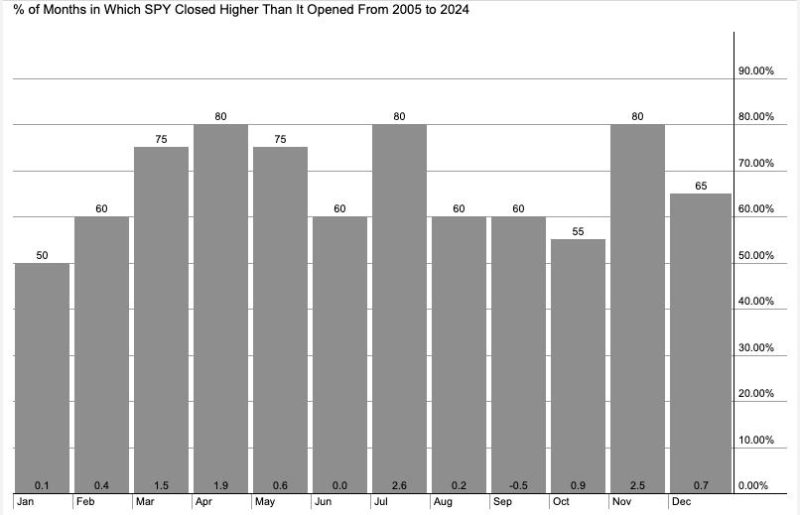
We’ve all heard the classic market maxim, “Sell in May and go away.” For many investors, that’s the introduction to market seasonality that suggests a six month period where it’s just best to avoid stocks altogether.
Through my own experience, complemented with interviews with seasonality experts like ” We’ll dig deeper into the history of “Sell in May,” analyze summer trends in recent years, and focus on signs to follow in the weeks and months ahead! Sign up HERE for this free event!
It turns out that the reason why “sell in May” has often worked out is less about May being super weak, but more about how major lows have usually come in the fall months. Since the COVID low in early 2020, we’ve experienced major lows in September or October every year except for 2024.
When we focus on the last five years, we can see that the May-June-July period has been consistently strong. In fact, May and July have seen bullish trends every year since 2019. So while investors often talk about the “summer doldrums” and weakness into the hot summer months, the recent evidence would suggest otherwise.
The weakest months since the COVID low have actually been January, February, September, and October. So again, it’s been less about weakness in the spring, and much more about weaker price action into the traditional low in September or October. Also note the strength in November, where the market is almost always rallying off a major low and setting up for a positive finish to the calendar year!
As I mentioned earlier, I like to think of seasonal patterns as tendencies. There is no guarantee that July will be strong, and there is no way I can tell you for sure that the market will make yet another major low in September. Seasonality tells you the general bias to the markets, but mindful investors know the most important evidence is price itself.
Given the extreme rally off the early April low, we’ve seen a rapid rotation from bearish sentiment to more bullish outlooks as investors have started to believe in the new uptrend phase. This week’s price gap higher for the S&P 500 could provide a perfect support range to monitor in the coming weeks and months.
If the S&P 500 is able to hold 5750, and remain above the support range set from the gap earlier this month, then perhaps the equity markets will follow the same pattern as recent years and remain strong into August.
If, however, the S&P 500 is unable to hold this key support range, and we also confirm that breakdown with weaker momentum readings and deteriorating breadth conditions, then the S&P 500 may be charting a new course through what has become a strong period in the calendar year.
RR#6,
Dave
PS- Ready to upgrade your investment process? Check out my free behavioral investing course!
David Keller, CMT
President and Chief Strategist
Sierra Alpha Research LLC
https://www.youtube.com/c/MarketMisbehavior
Disclaimer: This blog is for educational purposes only and should not be construed as financial advice. The ideas and strategies should never be used without first assessing your own personal and financial situation, or without consulting a financial professional.
The author does not have a position in mentioned securities at the time of publication. Any opinions expressed herein are solely those of the author and do not in any way represent the views or opinions of any other person or entity.

The S&P 500 ($SPX) just staged one of the sharpest rebounds we’ve seen in years. After tumbling into deeply oversold territory earlier this year, the index has completely flipped the script—short-term, medium-term, and even long-term indicators are now pointing in a new direction.
One longer-term indicator that hit an extreme low in early April was the 14-week relative strength index (RSI), which dropped to 27. That’s among the lowest levels since the 2008 financial crisis.
The obvious takeaway: it was a great time to buy, even in cases where the low RSI didn’t mark the low. Everyone who pounded the table a few weeks ago has been proven right, even if the rebound was faster and stronger than most could’ve predicted. So, what happens next?
The long-term picture looks promising, but markets rarely move in a straight line. Even though the market was higher months and years after these deeply oversold readings, the path wasn’t a straight shot to new highs (even if long-term log charts sometimes make it look that way).
The chart below shows the lowest weekly RSI readings in the S&P 500 since 2008.
FIGURE 1. THE LOWEST WEEKLY RSI READING SIN THE S&P 500 SINCE 2008.
Almost every time, there was a pause, often more than one. Some were sharp, others more prolonged. The first real test typically came when RSI bounced back to the 50-zone (the mid-point of its range). Each of these moments is highlighted in yellow in the chart below.
FIGURE 2. AFTER DEEPLY OVERSOLD RSI READINGS, THERE WAS OFTEN A PAUSE IN THE INDEX.
As shown, this often marked the initial digestion phase after the face-ripping rally off the lows. Eventually, the SPX climbed back to a weekly overbought condition, but not right away. This pattern was clearest in 2011, 2015–16, and 2022. The depressed weekly RSI showed that things were getting washed out, but volatility persisted before a lasting uptrend took hold.
Indeed, the current snapback is one of the quickest and most powerful turnarounds in decades, but this pace is also unsustainable. A slowdown is inevitable.
So how does the market handle the next round of profit-taking? By continuing to make higher lows – and converting those into additional bullish patterns.
The market comeback has been led by large-cap growth; that much is clear. The Technology Select Sector SPDR ETF (XLK) has roared back nearly 30% in just six weeks. That’s a massive move in a short period, and far larger than any failed bear market rally seen in 2022. The best six-week rally back then came in the summer and topped out at 17%.
The last time we saw a six-week gain of 20%+ was the period following the COVID-19 low in spring 2020. As we know, that snapback continued, with XLK overtaking its pre-crash highs and ultimately rallying 160% into the early 2022 peak.
This isn’t a prediction, but we shouldn’t ignore it either. Why? Because before 2020, the last such move happened in April 2009, right after the ultimate low of the 2008 financial crisis.
FIGURE 3. WEEKLY CHART OF XLK.
The Industrial Select Sector SPDR ETF (XLI) and XLK are the first sector ETFs to register overbought 14-day RSI readings. While that suggests a short-term pause could be near, it wouldn’t be a negative. As the weekly chart shows, a pullback could help complete a large bullish formation.
Once again, bouts of intense volatility eventually can lead to the biggest bullish chart formations. Let’s keep XLI on our radar screens.
FIGURE 4. WEEKLY CHART OF XLI.
The Invesco Solar ETF (TAN), which has been stuck in a brutal downtrend for years, just rocketed higher by 40%, using intra-day highs and lows. That rally has produced the first overbought reading since late May 2024, which, notably, lasted only a day before momentum faded.
Yesterday, TAN tagged its 200-day moving average, prompting a round of profit-taking. This sets up a critical test for TAN, which has consistently failed at resistance or after short-term pops. Selling strength in TAN has been a highly effective strategy for quite some time.
FIGURE 5: DAILY CHART OF TAN.
The weekly chart clearly shows this pattern playing out since TAN topped in early 2021. Like anything else, TAN could eventually turn the corner—but to do so, it would need to form a legitimate higher low from here.
For now, the downtrend deserves respect. Chasing this move is not advised. Selling strength remains the recommended approach—until proven otherwise.
FIGURE 6. WEEKLY CHART OF TAN.
Yes, the market’s comeback has been fast and fierce. But fast moves don’t necessarily mean a straight path higher. Expect slowdowns and pullbacks, watch for bullish setups, and don’t chase runaway rallies. There’s opportunity out there, but it’s all about timing and discipline.
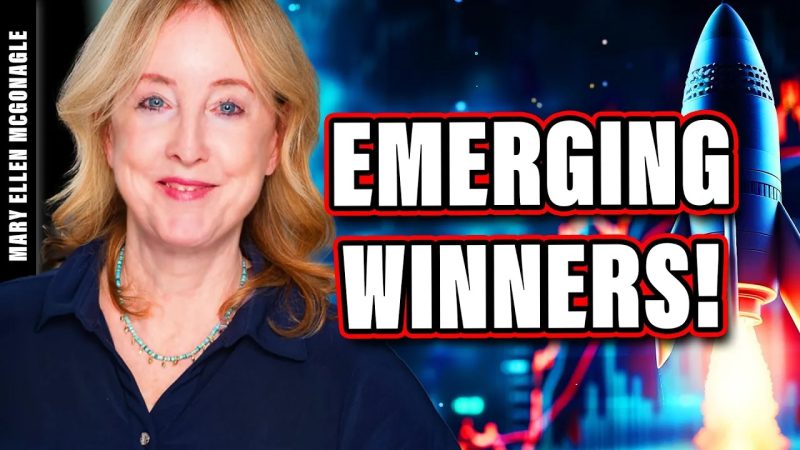
Looking for breakout stocks and top market leaders? Follow along Mary Ellen shares stock breakouts, analyst upgrades, and sector leadership trends to help you trade strong stocks in today’s market.
In this week’s episode, Mary Ellen reveals the stocks leading the market higher and explains what’s fueling their strength. She highlights base breakouts, analyst upgrades, and leadership stocks gaining momentum. In addition, she screens for emerging breakout candidates you should have on your radar.
This video originally premiered May 16, 2025. You can watch it on our dedicated page for Mary Ellen’s videos.
New videos from Mary Ellen premiere weekly on Fridays. You can view all previously recorded episodes at this link.
If you’re looking for stocks to invest in, be sure to check out the MEM Edge Report! This report gives you detailed information on the top sectors, industries and stocks so you can make informed investment decisions.
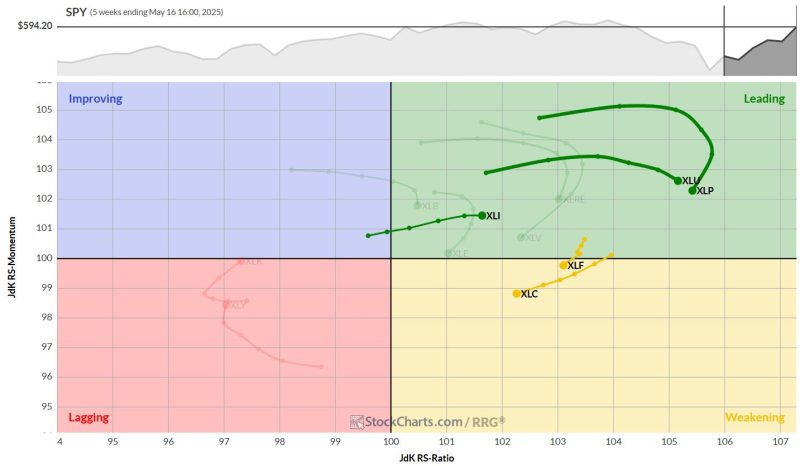
Another week of significant movement in the sector landscape has reshaped the playing field. The Relative Rotation Graph (RRG) paints a picture of shifting dynamics, with some surprising developments in sector leadership. Let’s dive into the details and see what’s happening under the hood.
On the weekly RRG, Utilities and Consumer Staples maintain their high positions on the RS-Ratio scale. However, there are signs of waning momentum. Staples has rolled over within the leading quadrant and is now showing a negative heading. Utilities, while still strong, are losing some of their relative momentum.
Financials and Communication Services are hanging on in the weakening quadrant, but their tails are relatively short — indicating potential for a quick turnaround.
The show’s star, Industrials, has made a beeline for the leading quadrant, climbing on the RS-Ratio scale while maintaining a positive RRG heading.
Switching to the daily RRG, we get a more granular view. Utilities, Staples, and Financials are found in the lagging quadrant, but Staples and Utilities are showing signs of life, turning back up towards the improving quadrant.
Financials, meanwhile, are hugging the benchmark.
The daily chart confirms Industrials’ strength, mirroring its weekly performance.
Communication Services, however, is showing some worrying signs — it’s dropped into the weakening quadrant on the daily RRG, confirming its vulnerable position on the weekly chart.
XLI flexes its muscles, pushing against overhead resistance around the $144 mark.
A break above this level could trigger a further acceleration in price.
The relative strength line has already broken out of its consolidation pattern, propelling both RRG lines above 100 and driving the XLI tail deeper into the leading quadrant.
The financial sector continues its upward trajectory, trading above its previous high and closing in on the all-time high of around $53.
Like Industrials, a break above this resistance could spark a new leg up.
The RS line is moving sideways within its rising channel, causing the RRG lines to flatten—something to watch.
XLU has finally broken through its overhead resistance, approaching its all-time high around $83.
After months of pushing against the $80 level, this breakout is a clear sign of strength.
The RS line is still grappling with its own resistance, but the RS-Ratio line continues its gradual ascent.
While XLC is moving higher on the price chart, its relative strength is lagging.
The sideways movement in the RS line is causing both RRG lines to move lower, with the RS-Momentum line already below 100.
This sector is rapidly approaching the lagging quadrant on the daily RRG—definitely one to watch for potential risks.
XLP is approaching the upper boundary of its trading range ($83-$85), where it is running into resistance. The inability to push higher while the market is moving up is causing relative strength to falter.
The recent strength has pushed both RRG lines well above 100, but the current loss of relative strength is now causing the RRG-Lines to roll over.
The tail is still comfortably within the leading quadrant, but this loss of momentum could signal a potential setback.
The model portfolio’s defensive positioning has led to some underperformance relative to SPY, with the gap now just under 6%.
However, the model is sticking to its guns, maintaining a defensive stance with Staples and Utilities firmly in the top five.
It’s worth noting that Healthcare has now definitively dropped out of the top ranks. Nevertheless, with Staples and Utilities holding firm, and Technology and Consumer Discretionary still in the bottom half, the overall positioning remains cautious.
These are the periods when patience is key. We need to let the model do its work and wait for new, meaningful relative trends to emerge. It’s not always comfortable to endure underperformance, but it’s often necessary to capture longer-term outperformance.
#StayAlert, –Julius
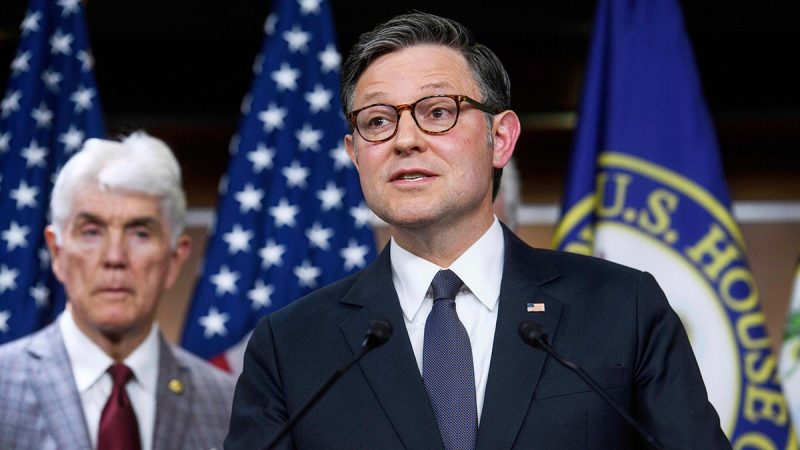
House Speaker Mike Johnson on Sunday defended the ‘aggressive’ timetable he is pushing to advance President Donald Trump’s ‘big, beautiful bill,’ saying the House remains on track to pass the ‘historic’ legislative package by Memorial Day.
The House Budget Committee will reconvene at 10 p.m. Sunday night after a vote to advance the more than 1,100-page ‘One Big Beautiful Bill Act’ failed Friday, when five Republicans sided with committee Democrats to sink Trump’s sweeping tax bill.
‘We’re on track, working around the clock to deliver this nation-shaping legislation for the American people as soon as possible,’ Johnson said during an appearance on ‘Fox News Sunday’ regarding ongoing negotiations. ‘All 11 of our committees have wrapped up their work, and they spent less and saved more than even we’ve projected initially. This really is a once in a generation opportunity that we have here.’
After the bill advances through the budget committee, Johnson said the plan is to move the legislative package to the House Rules Committee by mid-week and then to the House floor by the end of the week ‘so we meet our initial, our original Memorial Day deadline.’
‘It’s very important for people to understand why we’re being so aggressive on the timetable and why this really is so important,’ Johnson said. ‘This is the vehicle through which we will deliver on the mandate the American people gave us during the last election. You’re going to have historic savings for the American people, historic tax relief for American workers, historic investments in border security.
‘At the same time, we’re restoring American energy dominance, and we’re rebuilding the defense industrial base, and we’re ensuring that programs like Medicaid and SNAP are strengthened for U.S. citizens who need and deserve them and not being squandered away by illegal aliens and persons who are ineligible to receive them and are cheating the system,’ he added.
Johnson reiterated that making Trump’s 2017 tax cuts permanent by 2026 is critical and stressed that the package also eliminates taxes on overtime and tips – a 2024 Trump campaign promise. He said it also includes new tax relief for seniors on Social Security and cuts taxes on ‘job creators, so that will help everybody across the country at the same time as incentivizing American-made production and manufacturing.’
‘This is a big thing. We cannot fail, and we’ll get it done for the American people,’ Johnson said.
South Carolina Rep. Ralph Norman and Texas Rep. Chip Roy are among critics from Johnson’s own party who say the speaker is not serious about cutting spending. They want work requirements for able-bodied adult Medicaid recipients to be implemented sooner than 2029 – a view Johnson told ‘Fox News Sunday’ that he shares, but the speaker added there is concern over the ability of the states to ‘retool their systems and ensure the verification process’ can be enforced.
‘We’re working through all those details, and we’ll get it done, but I’ll tell you what, this is the largest spending reduction in at least three decades, probably longer. It’s historic,’ Johnson said, adding that the package has the support of Office of Management and Budget Director Russ Vought, as well as ‘nearly 500 organizations across the conservative spectrum’ including fiscally responsible groups who believe ‘that we’ve got to turn the tide in spending.’
‘We are. This is our opportunity to do it. It’s once in a generation, as I’ve said, and we can’t squander it,’ Johnson said.
The speaker said that while he is confident he will be able to reach a compromise on the Medicaid work requirement to squash internal disputes, Republican leadership does not expect a single Democrat to vote for the bill.
‘Which means that they will be on record apparently supporting the largest tax increase in U.S. history, which is what will happen by default after the end of this year if we do not get this job done. We have to accomplish this mission, and we will.,’ Johnson said.
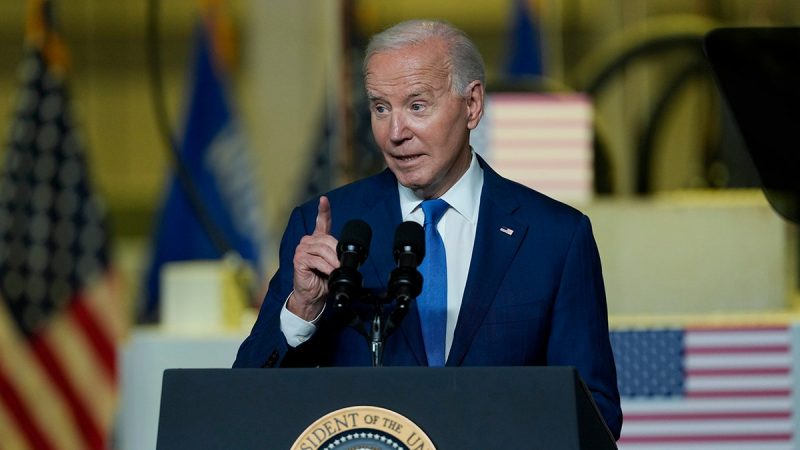
The release of audio recordings of former President Joe Biden’s interview with special counsel Robert Hur have intensified criticism of the administration’s use of an autopen on official presidential orders and pardons.
The damning tapes, which bring Biden’s alarming mental decline into sharp relief, were kept under wraps by Biden Attorney General Merrick Garland. Now that Biden’s cognitive problems have been bared, some are calling for Garland to face prosecution for rejecting Congressional demands to release the tapes when he ran the Department of Justice (DOJ).
‘Key decisions made in the final days of the Biden presidency, including using autopens to issue blanket pardons for the Biden Crime Family, must be fully examined. There are serious concerns that President Biden lacked the mental capacity to authorize those actions,’ House Oversight Committee Chair Rep. James Comer, R-Ky., posted to X on Saturday.
Axios released hours of Biden’s interview with the special counsel’s office on Saturday – a year and a half after the interviews were held across a two-day period in the fall of 2023. The recordings showed the former president tripping over his words, slurring sentences, taking long pauses between answers and struggling to remember key moments in his life, including the year his son Beau Biden died of cancer.
The recordings have further bolstered conservative outrage stretching back years that Biden’s mental acuity had cratered and that the Delaware Democrat who had served in the Senate for decades had become a ‘shadow’ of himself and was unfit to lead the country as president.
The flurry of pardons Biden allegedly signed by autopen in the waning days of his administration included ones for his son Hunter Biden, his siblings and their spouses, retired Gen. Mark Milley, Dr. Anthony Fauci, and members and staff of the House committee that investigated the Jan. 6 Capitol riot.
Tom Fitton, president of Judicial Watch, told Fox News Digital in a phone interview on Sunday that he has long sounded the alarm over the validity of Biden’s pardons, as many lacked specifically what charges an individual was protected against. Instead, many of the pardons outlined blanket protections, such as preemptively pardoning Milley and Fauci from potential prosecution and blanket pardons for unidentified members of Congress who served on the J6 select committee.
‘I’ve been long of the position that the pardons, many of the pardons, are not valid based on the fact that they don’t pardon anything. It’s just a pardon for conduct that’s unnamed … it’s further confirmation that the pardons are not valid,’ said Fitton, who had sued for the release of the audio recordings.
‘A competent president would say, ‘How is it I could pardon someone for nothing?’’ he continued.
Fitton added that ‘more importantly, Biden should still be prosecuted’ after he was ‘mollycoddled’ by the Biden DOJ during the investigation into the documents he possessed from his days in the Senate and when he served as vice president.
‘The audio shows he was mollycoddled by the Justice Department, you know, because Hur was working for the Justice Department. … There’s an argument that the records he had as vice president, he could have. But that wasn’t the position of Justice Department. But certainly he didn’t have the right to have those records from his days of the Senate,’ Fitton said.
President Donald Trump railed on Truth Social that the release of the audio recordings revealed a ‘bigger scandal’ about the use of an autopen under the Biden White House.
‘Whoever had control of the ‘AUTOPEN’ is looking to be a bigger and bigger scandal by the moment,’ Trump posted to Truth Social on Friday.
He added: ‘THIS IS WHY THE UNSELECT COMMITTEE OF POLITICAL THUGS, WHO WERE GIVEN A FULL AND COMPLETE PARDON BY THE PERSON WHO WIELDED THE NOW ILLEGALLY USED AUTOPEN, DELETED AND DESTROYED ALL EVIDENCE AND INFORMATION FROM THEIR CORRUPT AND VICIOUS WITCH HUNT AGAINST ME, AND MANY OTHER PEOPLE, WHOSE LIVES WERE COMPLETELY SHATTERED AND DESTROYED BY THIS HISTORICALLY CRIMINAL EVENT.’
Autopen signatures are automatically produced by a machine, as opposed to an authentic, handwritten signature. The conservative Heritage Foundation’s Oversight Project first investigated the Biden administration’s use of an autopen earlier this year and found that the same signature was on a bevvy of executive orders and other official documents, while Biden’s signature on the document announcing his departure from the 2024 race varied from the apparent machine-produced signature.
The reports led to speculation that Biden aides had approved of executive orders and sweeping pardons, not the president.
Hur led an investigation into Biden’s handling of classified documents following his departure as vice president under the Obama administration. Hur announced in February 2024 that he would not recommend criminal charges against Biden for possessing classified materials after his vice presidency, citing that Biden is ‘a sympathetic, well-meaning, elderly man with a poor memory.’
Although a transcript was released, the White House asserted executive privilege over releasing recordings after Garland urged the administration not to release the recordings, according to a letter obtained by Fox News in May of last year.
‘The audio recordings of your interview and Mr. Zwonitzer’s interview fall within the scope of executive privilege. Production of these recordings to the Committees would raise an unacceptable risk of undermining the Department’s ability to conduct similar high-profile criminal investigations–in particular, investigations where the voluntary cooperation of White House officials is exceedingly important,’ Garland wrote in a letter to Biden last year, justifying why the recordings should not be released.
Comer and House Judiciary Committee Chairman Jim Jordan, R-OH, subpoenaed the Department of Justice in February 2024 for the recordings and other materials related to the interview and investigation, but to no avail. The House voted to hold Garland in contempt of Congress over the matter in June 2024.
Comer announced on Friday that his committee will continue ‘its investigation into the cover-up of Biden’s mental decline and use of autopen’ and the use of the pen when Biden pardoned members of his family.
‘The American people deserve to know who was actually calling the shots in the Biden White House, because it wasn’t Joe Biden. His mental decline was obvious to anyone paying attention. But instead of being honest, the Biden Administration, Democrats in Congress, and the legacy media lied and covered it up. They gaslit the American people while propping up a man who was unfit to lead,’ Comer said in a press release on Friday, noting that Garland ‘defied’ a subpoena to release the recordings.
‘Key decisions made in the final days of the Biden presidency, including using autopens to issue blanket pardons for the Biden Crime Family, must be fully examined. There are serious concerns that President Biden lacked the mental capacity to authorize those actions. The American people are done being lied to. We’re going to bring the truth into the light, and starting next week, those involved in the cover-up will begin to be put on notice,’ Comer said in a statement on Friday.
The recordings ‘demonstrate that Biden was completely out of it, and we already found documents that the Biden White House had changed the transcript, edited it to hide this. This is what they were hiding. There’s got to be accountability. Garland should be prosecuted by the Attorney General over the contempt he had for Congress to hide this,’ Fitton said on Fox News last week.
Fox News host Mark Levin said Garland ‘should be forced to testify before Congress under oath’ over the alleged cover-up of Biden’s health.
‘Former Attorney General Garland heard these recordings and used lies and deceit to prevent them from being released to the American people before the Democrats nominated Biden. He should be forced to testify before Congress under oath and held to account for his grotesque abuse of power,’ Levin posted to X.
Hours before Trump’s inauguration on Jan. 20, the White House announced pardons for both Fauci, the former director of the National Institute of Allergy and Infectious Diseases; and Milley, the former chairman of the Joint Chiefs of Staff.
Less than a half an hour before Trump became president, Biden pardoned members of his family, including his brother James B. Biden, sister Valerie Biden Owens, brother-in-law John T. Owens and brother Francis W. Biden.
The former president had previously issued a ‘full and unconditional pardon’ to his adult son, Hunter Biden, after he was convicted in two separate federal cases last year. Hunter Biden’s pardon covered a 10-year period, between 2014 to 2024, for any offenses he may have committed.
‘I do think that the Biden pardons need some scrutiny, and they need scrutiny because we want pardons to matter and to be accepted and to be something that’s used correctly. So, I do think we’re going to take a hard look at how they went and what they did. And if they’re null and void,’ Ed Martin said in his final press conference while serving as acting U.S. Attorney for Washington, D.C.
Trump claimed on Truth Social in March that Biden’s pardons were ‘void’ due to the ‘fact that they were done by Autopen.’
‘The ‘Pardons’ that Sleepy Joe Biden gave to the Unselect Committee of Political Thugs, and many others, are hereby declared VOID, VACANT, AND OF NO FURTHER FORCE OR EFFECT, because of the fact that they were done by Autopen,’ Trump claimed in a Truth Social post.
‘In other words, Joe Biden did not sign them but, more importantly, he did not know anything about them! The necessary Pardoning Documents were not explained to, or approved by, Biden. He knew nothing about them, and the people that did may have committed a crime,’ Trump added.
Martin, who will now lead the Department of Justice’s ‘Weaponization Working Group’ targeting political corruption within the federal law enforcement department, added in a media interview earlier this month that he had been investigating Biden’s last-minute pardons.
‘When [former President] Bill Clinton pardoned Marc Rich, and it turned out that Marc Rich had paid a boatload of money to one of Clinton’s friend’s lawyers. That’s not corrupt, it’s not criminal, because the plenary power of the pardon. But in the case of Joe Biden and his pardons, they were so specific. Back 14 years, covering everything you’ve ever done. And when I say specific, they were broad, but they had time stuff on them,’ Martin said earlier this month, according to the Daily Caller News Foundation.
‘And that at least leads to questions, because the plenary power’s true. But the question is what is going on here, and I did get responses from some of them and those questions are ongoing,’ Martin continued.
Conservative social media users have sounded off that the recordings show Biden lacked the cognitive ability to know about the pardons or executive orders he allegedly signed off on.
‘Joe Biden had no clue where he was for most of his presidency… Just listen to Robert Hur’s interview with him… He’s a complete mess. There’s no way Biden knew about the pardons, executive orders and directives coming out of his office,’ conservative X commentator Tim Young posted to the platform.
‘I’d say with the Hur tapes coming out, maybe those pardons can be challenged? Biden was CLEARLY mentally incapacitated,’ conservative podcast host Shawn Farash posted to X.
Fox News Digital reached out to Biden’s office for comment on the tapes and subsequent backlash on Sunday morning but did not immediately receive a reply.
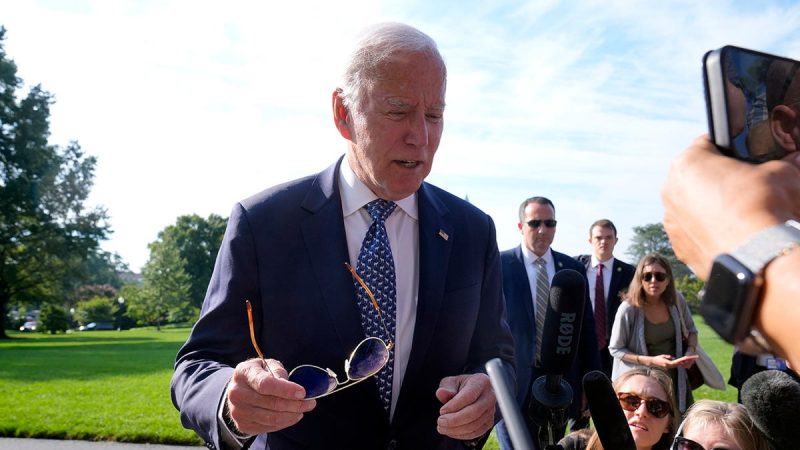
Former President Joe Biden’s office confirmed on Sunday that he is undergoing treatment for prostate cancer.
‘Last week, President Joe Biden was seen for a new finding of a prostate nodule after experiencing increasing urinary symptoms,’ Biden’s team shared in a statement. ‘On Friday, he was diagnosed with prostate cancer, characterized by a Gleason score of 9 (Grade Group 5) with metastasis to the bone.’
‘While this represents a more aggressive form of the disease, the cancer appears to be hormone-sensitive which allows for effective management. The President and his family are reviewing treatment options with his physicians,’ the statement continued.
This is a developing story. Please check back for updates.
Stepheny Price is a writer for Fox News Digital and Fox Business. She covers topics including missing persons, homicides, national crime cases, illegal immigration, and more. Story tips and ideas can be sent to stepheny.price@fox.com