Altech Batteries (ATC:AU) has announced Altech – Agreement to Secure EUR2.5M in Funding
Download the PDF here.
This post appeared first on investingnews.com


Altech Batteries (ATC:AU) has announced Altech – Agreement to Secure EUR2.5M in Funding
Download the PDF here.
The energy transition demands substantial funding as participants look to build out infrastructure and supply chains, but experts say new solutions are emerging to help navigate this landscape.
During the ‘Financing the Energy Transition’ panel at the Benchmark Summit, participants discussed the role of government and public sector investment, as well as the outlook for Canada’s electric vehicle (EV) supply chain.
Moderated by Adam Webb, head of battery raw materials at Benchmark Mineral Intelligence, the discussion at the Toronto-based event opened with a snapshot of Canada’s EV battery supply chain buildout.
Daanish Hussein, senior manager of grants and direct funding at BDO Canada, highlighted the downstream, midstream and upstream development happening in Ontario and Québec.
“If you look at the last four years, just looking at Ontario, we’ve secured over C$45 billion in this industry,” he said, adding that Ontario’s strategy has initially been focused on downstream growth.
“Whereas in Québec, I think what you’ve seen is a bigger focus on the midstream and upstream,” added Hussein.
Moving forward, he expects both provinces to prioritize midstream and upstream expansion.
“We want to make sure that Canada has the breadth and depth to get supply chain security, but also it’s an economic development imperative to develop the north, and there’s a lot of private and public sector support for this,” he noted.
During the Prospectors & Developers Association of Canada (PDAC) convention, which coincided with the Benchmark Summit, Jonathan Wilkinson, Canada’s minister of energy and natural resources, made several announcements aimed at supporting the country’s exploration, mining and development sectors.
The first was an extension to the Mineral Exploration Tax Credit (METC) until March 31, 2027.
The 15 percent METC aims to support junior exploration, mining and mineral processing companies, providing an estimated C$110 million to drive exploration investment.
Wilkinson also announced a second round of funding under Canada’s Critical Minerals Infrastructure Fund. It will offer up to C$500 million for energy and transportation projects to boost the mining sector.
Last year’s round approved over 31 projects with C$300 million pending final review.
Hussein noted that these types of funding initiatives are imperative to encourage northern development.
Despite focusing largely on Canada, the panel could not escape talks of US tariffs.
While acknowledging the uncertainty that the tariff threat presents, Hussein explained that the EV supply chain project pipeline in Québec and Ontario is robust and financially strong.
He pointed to Linamar’s (TSX:LNR,OTC Pink:LINAF) C$1 billion investment in six Ontario automotive technology sites, announced in January, as an example. The Ontario-based global auto parts manufacturer is also receiving support from the provincial (C$100 million) and federal (C$169.4 million) governments.
“So yes, there is reason for trepidation, but I think there’s a lot of compelling reasons to be optimistic,” said Hussein.
Webb next asked where investors are currently finding value.
Arun Viswanathan, senior equity analyst for chemicals and packaging at RBC (TSX:RY,NYSE:RY), told the audience that investors are currently grappling with three issues.
“First off, they’re a little bit anchored to the recent peak as a potential possibility as to how high they think prices can go, and there isn’t really support for investors to get to that level,” he said.
In addition to unrealistic expectations about metals prices returning to peaks seen in late 2021 and early 2022, Viswanathan pointed to apprehension in EV sales growth in the EU and North America.
“Investors are also struggling with the idea that (in) North America and Europe, EV demand is very weak, and that demand has coincided with this downturn in pricing,” Viswanathan said.
“Even though 80 percent of the supply chain in lithium is in China, 99 percent of LFP capacity production is there, people actually do think that the North American and European markets do matter to drive pricing.”
A lack of transparency was the final factor impacting investor sentiment Viswanathan underscored.
“The third thing I would mention is opacity in the market,” he said. “And when you think about what is actually observable in China and elsewhere, I think investors struggle with data.”
He suggests that investors often “hone in” on inventory numbers, which do not always paint a complete picture.
Viswanathan went on to say that the lithium industry was once seen as a high-growth sector, but major producers are now scaling back their forecasts. For example, Albemarle (NYSE:ALB), has reduced its expected production growth from double digits to low single digits for 2025 and possibly 2026.
With a significant surplus in the market, there’s little immediate catalyst for change. Many investors remain focused on the short term, limiting interest in long-term opportunities despite potential value over the next decade.
“I think in general, investors are optimistic on the long-term story. But even though prices have come down significantly, I don’t know if we’re at value stages yet,” he said.
From there, the discussion shifted to the importance of ESG credentials in financing projects.
Weighing in on the topic, Shelley Gilberg, markets leader of managed accounts at PwC, noted that it “depends on whose money you are taking’ and said alternative forms of financing are emerging.
“You’re starting to see the emergence of much more purpose capital that understands what they’re investing in. They’re prepared to potentially take a slightly lower rate of return in exchange for the thematic investing that they’re doing.”
Gilberg highlighted the Canada Growth Fund’s recent equity stake in the Nouveau Monde Graphite (TSXV:NOU,NYSE:NGM) as part of the shift in financing strategies. Announced in December, the C$57 million investment aligns with the Canada Growth Fund’s goal of supporting national critical minerals development.
Gilberg went on to suggest that companies seeking financing have to pay attention to a multitude of factors, including boardroom dynamics, shareholder activism and industry partnerships.
In today’s geopolitical climate, some market expectations conflict — some US buyers reject ESG commitments, while European buyers demand them, leaving Canadian firms navigating a middle ground.
“I think the most difficult thing for every company right now — this isn’t unique to mining — is how do you line up customer sentiment around this stuff with investor sentiment?” she said. “And I can tell you, it’s difficult.”
Ultimately, Gilberg explained that these are strategic business decisions, not just ESG concerns.
Although the landscape is rough, companies that are able to mesh customer needs with investor concerns are likely to benefit from what Gilberg described as a “reset” of the sustainability and ESG lens.
‘I think the greatest risk and the greatest opportunity right now for mining companies comes from aligning the customers you’re going to serve with the investors whose money you’re using,” she said. “That has to be the magic.”
Securities Disclosure: I, Georgia Williams, hold no direct investment interest in any company mentioned in this article.

US President Donald Trump has signed an executive order invoking the Defense Production Act to accelerate domestic production of critical minerals, aiming to reduce reliance on foreign sources — particularly China.
The order, signed on March 20, identifies mineral production as a national security imperative and authorizes the Department of Defense, in coordination with the International Development Finance Corporation, to facilitate financing, permitting and investment support for mining and processing essential minerals.
It also directs the Department of the Interior to expedite permits and prioritize mining operations on federal land.
‘Our national and economic security are now acutely threatened by our reliance upon hostile foreign powers’ mineral production,’ the order states. ‘It is imperative for our national security that the United States take immediate action to facilitate domestic mineral production to the maximum possible extent.’
The Defense Production Act, a Cold War-era law originally enacted in 1950, grants the government the authority to direct private industry toward national security objectives. In recent years, the law has been used to ramp up production of defense materials, medical supplies and renewable energy components.
Trump’s use of the act signals a strong shift toward prioritizing domestic resource extraction to counteract China’s dominance in the supply chain and dependence on other nations.
Despite possessing significant reserves, the US remains heavily dependent on mineral imports.
According to the US Geological Survey, the country imports at least 15 critical minerals in large quantities, with 70 percent of America’s rare earths coming from China.
The US also relies on imports for nearly 50 percent of its lithium, 90 percent of its gallium and nearly 100 percent of its graphite, all essential for defense applications and the growing electric vehicle industry.
The move to boost domestic production comes amid growing concerns over China’s tightening export controls.
Beijing has recently begun restricting shipments of germanium, gallium and antimony — materials that are vital for semiconductors and defense systems. In response, US policymakers have pushed for strategic stockpiles and expanded domestic production to reduce vulnerability.
Industry leaders have applauded the order, calling it a necessary step toward securing a stable supply chain.
Some US mining companies have also issued statements in support of the executive order.
Ucore Rare Metals (TSXV:UCU,OTCQX:UURAF), which is currently working with the Department of Defense on rare earth elements processing technology, called the order a move that ‘underscores the urgent need to establish robust, domestic rare earth processing capabilities’ in a recent press release.
CEO Pat Ryan noted that the Trump administration’s efforts align with Ucore’s plans to commercialize its refining technology, which would help reduce the country’s dependence on Chinese processing facilities.
Similarly, American Tungsten (CSE:TUNG,OTCQB:DEMRF) praised the initiative, citing the need for an independent tungsten supply chain. ‘This Executive Order is a clear endorsement for America’s mining industry. We believe our tungsten project, the IMA Mine, is a core example of why critical mineral production in the U.S. must be prioritized and addressed without delay,’ commented CEO Murray Nye in a statement.
However, environmental groups have criticized the order, warning that it could weaken safeguards meant to protect public lands from excessive mining activity. ‘Yet again, President Trump is trying to ignore the law and dictate that our national public lands be handed over to private companies for extraction and profit above all else,’ Bloomberg quotes Rachael Hamby, policy director at the Center for Western Priorities, as saying.
Many environmental advocates prefer stronger regulations, and have long warned that increased mining activity, particularly on federal lands, could lead to pollution, habitat destruction and water contamination.
The order directs federal agencies to produce a list of US mines that could be quickly approved, and to assess which federal lands, including those managed by the Pentagon, could be used for mineral processing.
It also mandates the creation of a centralized forum for buyers and sellers in the critical minerals industry.
Securities Disclosure: I, Giann Liguid, hold no direct investment interest in any company mentioned in this article.
Embattled genetic testing company 23andMe, once valued at $6 billion, filed for Chapter 11 bankruptcy protection in Missouri federal court on Sunday night.
The company’s CEO, Anne Wojcicki, has resigned from her role as chief executive effective immediately, though she will remain a member of the board. Joseph Selsavage, 23andMe’s chief financial and accounting officer, will serve as interim CEO, according to a filing with the U.S. Securities and Exchange Commission.
“We have had many successes but I equally take accountability for the challenges we have today,” Wojcicki wrote in a post on X early Monday morning. “There is no doubt that the challenges faced by 23andMe through an evolving business model have been real, but my belief in the company and its future is unwavering.”
23andMe declined to comment further on the filing.
The former billionaire co-founded 23andMe in 2006, and the company rocketed into the mainstream because of its at-home DNA testing kits that gave customers insight into their family histories and genetic profiles. The five-time CNBC Disruptor 50 company went public in 2021 via a merger with a special purpose acquisition company, which valued the company at around $3.5 billion at the time.
23andMe’s stock has mostly been in free fall in recent years as the company struggled to generate recurring revenue and stand up viable research and therapeutics businesses. As of Monday morning, the company has a market capitalization of around $25 million.
Last March, 23andMe’s independent directors formed a special committee to evaluate the company’s potential paths forward. Wojcicki submitted multiple proposals to take the company private, but all were rejected. The special committee “unanimously determined to reject” Wojcicki’s most recent proposal earlier this month.
If 23andMe’s plan to sell its assets through a Chapter 11 plan is approved by the court, the company will “actively solicit qualified bids” over a 45-day process. Wojcicki plans to pursue the company as an independent bidder, she said in her post on Monday.
23andMe has between $100 million and $500 million in estimated assets, as well as between $100 million and $500 million in estimated liabilities, according to the bankruptcy filing.
Beyond its financial woes, privacy concerns around 23andMe’s genetic database have swirled in recent years. In October 2023, hackers accessed the information of nearly 7 million customers.
California Attorney General Rob Bonta on Friday issued a consumer alert urging residents to consider deleting their genetic data from 23andMe’s website.
23andMe said there will be no changes to the way that it stores, protects or manages customer data through the sale process, and it will continue operating business as usual.
“As I think about the future, I will continue to tirelessly advocate for customers to have choice and transparency with respect to their personal data, regardless of platform,” Wojcicki said.
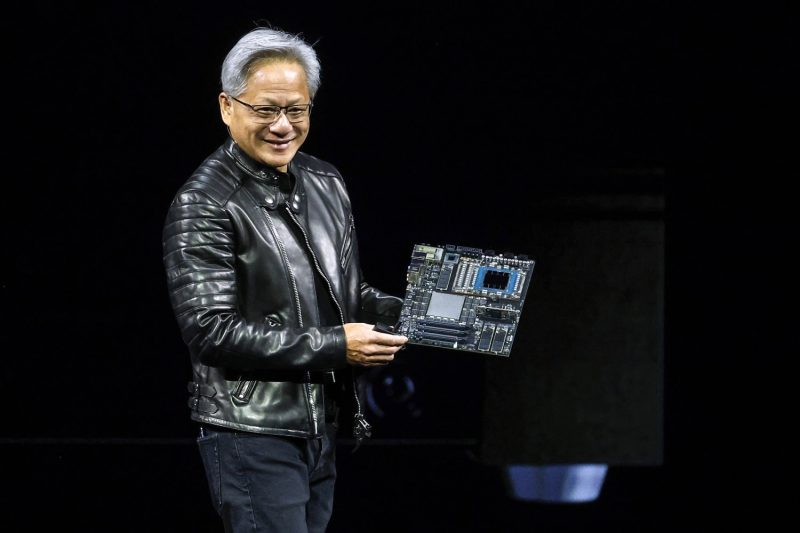
Investors have closely watched Nvidia’s week-long GPU Technology Conference (GTC) for news and updates from the dominant maker of chips that power artificial intelligence applications.
The event comes at a pivotal time for Nvidia shares. After two years of monster gains, the stock is down 15% over the past month and 22% below the January all-time high.
As part of the event, CEO Jensen Huang took questions from analysts on topics ranging from demand for its advanced Blackwell chips to the impact of Trump administration tariffs. Here’s a breakdown of how Huang responded — and what analysts homed in on — during some of the most important questions:
Huang said he “underrepresented” demand in a slide that showed 3.6 million in estimated Blackwell shipments to the top four cloud service providers this year. While Huang acknowledged speculation regarding shrinking demand, he said the amount of computation needed for AI has “exploded” and that the four biggest cloud service clients remain “fully invested.”
Morgan Stanley analyst Joseph Moore noted that Huang’s commentary on Blackwell demand in data centers was the first-ever such disclosure.
“It was clear that the reason the company made the decision to give that data was to refocus the narrative on the strength of the demand profile, as they continue to field questions related to Open AI related spending shifting from 1 of the 4 to another of the 4, or the pressure of ASICs, which come from these 4 customers,” Moore wrote to clients, referring to application-specific integrated circuits.
Piper Sandler analyst Harsh Kumar said the slide was “only scratching the surface” on demand. Beyond the four largest customers, he said others are also likely “all in line looking to get their hands on as much compute as their budgets allow.”
Another takeaway for Moore was the growth in physical AI, which refers to the use of the technology to power machines’ actions in the real world as opposed to within software.
At previous GTCs, Moore said physical AI “felt a little bit like speculative fiction.” But this year, “we are now hearing developers wrestling with tangible problems in the physical realm.”
Truist analyst William Stein, meanwhile, described physical AI as something that’s “starting to materialize.” The next wave for physical AI centers around robotics, he said, and presents a potential $50 trillion market for Nvidia.
Stein highliughted Jensen’s demonstration of Isaac GR00T N1, a customizable foundation model for humanoid robots.
Several analysts highlighted Huang’s explanation of what tariffs mean for Nvidia’s business.
“Management noted they have been preparing for such scenarios and are beginning to manufacture more onshore,” D.A. Davidson analyst Gil Luria said. “It was mentioned that Nvidia is already utilizing [Taiwan Semiconductor’s’] Arizona fab where it is manufacturing production silicon.”
Bernstein analyst Stacy Rasgon said Huang’s answer made it seem like Nvidia’s push to relocate some manufacturing to the U.S. would limit the effect of higher tariffs.
Rasgon also noted that Huang brushed off concerns of a recession hurting customer spending. Huang argued that companies would first cut spending in the areas of their business that aren’t growing, Rasgon said.

Bitcoin is more closely correlated to the Nasdaq than it is to gold most of the time, and investors could benefit from viewing it as another big tech stock, says Standard Chartered.
Bitcoin’s correlation with the Nasdaq is currently at about 0.5, after it approached 0.8 earlier this year, according to the bank. Meanwhile, its correlation with gold has been falling since January, touching zero at one point, and is now just above 0.2.
“Bitcoin trading is highly correlated to the Nasdaq over short time horizons,” Geoff Kendrick, Standard Chartered’s global head of digital assets research, said in a note Monday. “This Nasdaq correlation leads to the idea that bitcoin could be included in a basket of large tech stocks; if it were included, the implication would be more institutional buying as BTC would serve multiple purposes in investor portfolios.”
Bitcoin is frequently viewed as “digital gold” and a hedge against risks facing the traditional financial sector. Kendrick said he still sees the flagship cryptocurrency serving that purpose but that “in reality … the need for such hedges is very infrequent.”
Standard Chartered created a hypothetical index dubbed “Mag 7B,” in which it added bitcoin to the Magnificent 7 tech stocks — Alphabet, Amazon, Apple, Meta Platforms, Microsoft, Nvidia, and Tesla — and removed Tesla.
“Mag 7B has outperformed Mag 7 by about 5% over the period since December 2017,” he said. “On a calendar year basis, Mag 7B outperformed Mag 7 in five out of seven years, albeit by a very small margin in 2022. Mag 7B’s relative returns are decent on both an absolute basis (averaging around 1% a year above Mag 7) and a calendar-year basis.”
Kendrick said bitcoin has been trading in a similar volatility-adjusted fashion to Nvidia since President Trump’s inauguration. They’re down 16% and 12%, respectively, since Jan. 20. Meanwhile, Tesla, which has lost 36% in the same period, is trading more like ether (down 38% since Jan. 20).
“Investors can view bitcoin as both a hedge against [traditional finance] and as part of their tech allocation,” Kendrick said. “Indeed, as BTC’s role in global investor portfolios becomes established, we think that having more than one use will bring fresh capital inflows to the asset. This is particularly true as bitcoin investment becomes more institutionalized.”
Bitcoin is down about 5% for the year after Trump’s tariff threats in recent weeks have brought new volatility to the market. Investors are expecting relief in the second quarter, however, given bitcoin’s two of its most persistent correlations: its positive correlation with money supply growth, also known as M2, and its negative correlation with the U.S. dollar index, or DXY.
—CNBC’s Michael Bloom contributed reporting.
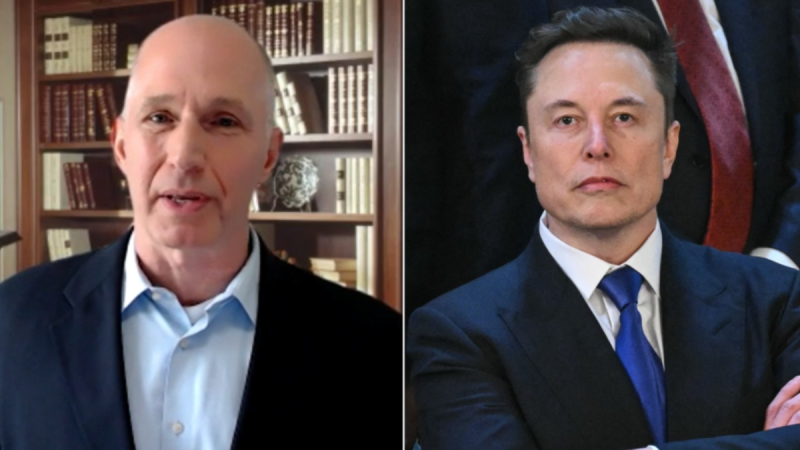
Democrats have pushed back after Elon Musk claimed that social security operates like a ‘Ponzi scheme’ as he continues to argue for cuts to the federal bureaucracy, but one expert tells Fox News Digital that Musk is on track with his criticism of the agency.
‘Musk’s statement about Social Security being the world’s biggest Ponzi scheme does have validity,’ James Agresti, president of the nonprofit research institute Just Facts, told Fox News Digital in response to pushback from Elon Musk’s claim, which included a ‘false’ rating from Politifact.
‘A Ponzi scheme operates by taking money from new investors to pay current investors. That’s the definition given by the SEC, and contrary to popular belief, that’s exactly how Social Security operates.’
Agresti explained to Fox News Digital that Social Security, believed to be a target of Musk’s efforts at DOGE, ‘doesn’t take our money and save it for us, as many people believe, and then give it to us when we’re older’ like many Americans might believe.
‘What it does is, it transfers money when we are young and working and paying into Social Security taxes,’ Agresti said. ‘That money, the vast bulk of it, goes immediately out the door to people who are currently receiving benefits. Now there is a trust fund, but in 90 years of operation, that trust fund currently has enough money to fund two years of program operations.’
The trust fund only being able to last for two years is not a result of the fund being ‘looted,’ Agresti explained, but rather it was put in place to ‘put surpluses in it’ from money that Social Security collects in taxes that it doesn’t pay out immediately and pays interest on.
‘The interest that’s been paid on that has been higher than the rate of inflation,’ Agresti said. ‘So, the problem isn’t that the trust fund has been looted. The problem is that Social Security operates like a Ponzi scheme.’
One of the top Social Security criticisms from Republicans, including President Trump, has been a concern that individuals who are dead or listed with an age well over 100 years old are on the rolls and receiving benefits.
Agresti told Fox News Digital that there are legitimate reasons to be concerned about that issue.
‘What’s unclear to me at this moment is whether or not the people who are on the books are actually receiving checks,’ Agresti said.
‘Back during the Obama administration, there was a stimulus, and the Obama administration sent out stimulus checks via Social Security numbers to 80,000 people who were dead, and about 70,000 of them, the Social Security Administration knew they were dead. So I don’t know if they’ve remedied that situation since then, but clearly the system is not keeping up with the pace of current data, and that provides an opportunity for fraud.’
Democrats have also made the case that Musk is attempting to strip away benefits that senior citizens have rightfully earned. Agresti told Fox News Digital that is not what is happening.
‘There’s been a lot of misinformation about that as of late,’ Agresti said. ‘You know, when DOGE came in and suggested that the Social Security Administration cut, I think it was about 10,000 workers, Democrats erupted that this is going to weaken Social Security. But the fact of the matter is that Social Security pays those workers who are for administrative overhead from the Social Security trust fund. So, by cutting out the money that they’re paying them, you actually strengthen the program financially.’
Agresti told Fox News Digital that the current administrative overhead for Social Security is $6.7 billion per year, which is enough to pay more than 300,000 retirees the average old age benefit.
Questions have emerged from critics in recent years as to whether Social Security, in its current form, is even capable of remaining solvent to pay benefits to Americans who have paid in over the past few decades.
Agresti told Fox News Digital that the program will ‘become insolvent’ as soon as 2035 if changes are not made.
‘To give you a feel of how disconnected Social Security is from a fully funded pension plan, if to keep the program solvent and put it on the same firm financial footing as a real pension plan, it would require an extra $272,000 in additional payroll taxes from every person paying payroll taxes right now,’ Agresti told Fox News Digital.
‘I’ll give you another way in which more numbers prove this point. If you retired in 1980, it took about three years of receiving Social Security benefits to get back the value of your payroll taxes plus interest. If you retired in 2000, it took 17 years. If you retired in 2020. it will take 22 years, assuming the program has enough money to pay those benefits, which it won’t without another increase in taxes on another generation of Americans.’
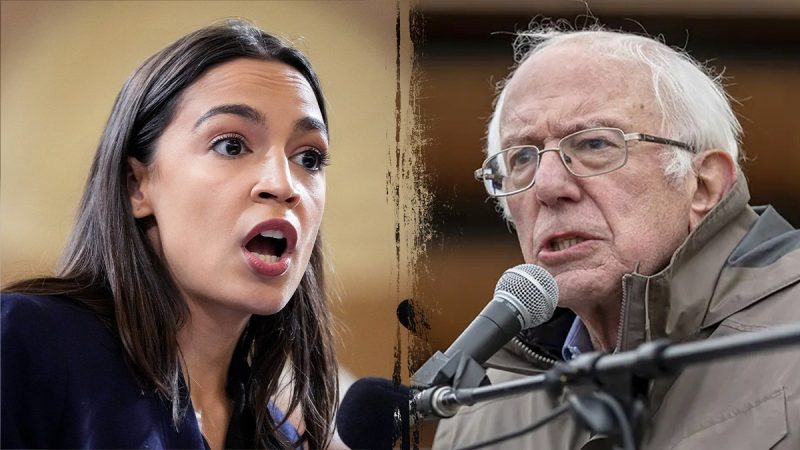
Sen. Bernie Sanders, I-Vt., got up during a pre-taped ABC ‘This Week’ interview that aired Sunday, and accused Jonathan Karl of asking a ‘nonsense’ question about whether Rep. Alexandria Ocasio-Cortez, D-N.Y., should run for Senate.
Right after calling Ocasio-Cortez ‘extraordinary,’ Sanders would not answer a question about whether he would like to see her in the Senate. Speculation has ramped up about AOC challenging Senate Minority Leader Chuck Schumer in a primary after Schumer supported a government funding bill to avoid a partial shutdown.
‘Right now, we have, as I said, just a whole lot of people in the Congress. OK, Jonathan. Thanks,’ Sanders said as he got up from his seat.
Karl told the senator that he had one more question for him.
‘Well, I ask you – you know, you want to do nonsense, do nonsense. No, I don’t want to talk about inside the Beltway stuff. I got 32,000 people,’ Sanders said, referencing the crowd that gathered Friday in Denver for an event with AOC.
Karl convinced Sanders to come back and sit down.
‘Well, fine. But I don’t want to talk about this. What was the last question?’ Sanders asked.
Karl then asked about Sanders’ future in politics.
‘Right now, I am very proud that the people of the state of Vermont sent me back to the Senate with 63% of the vote,’ Sander said. ‘Right now I’m Vermont’s senator. That’s what I do, and I’m very happy to do it. I am 83 years of age, so. And I’m tired.’
Rep. Ro Khanna, D-Calif., spoke on CNN’s ‘State of the Union’ whether he would encourage Ocasio-Cortez to challenge Schumer.
‘She’s perfectly capable of making the decision,’ he said. ‘She’s got so many options. She’s got an incredible future. You know, it’s really her decision. But, you know, all I can say is there’s real anger. And there would be a lot of support for her if she decided to do it.’
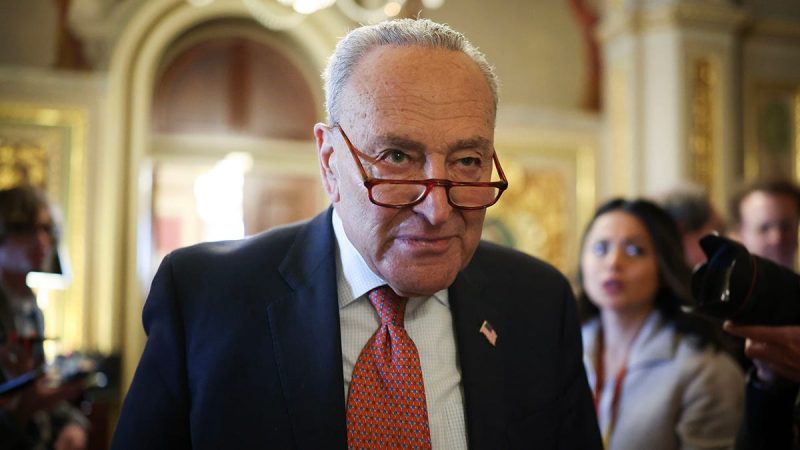
Senate Minority Leader Chuck Schumer, D-N.Y., has refused to step down from his leadership position, as Democratic infighting worsens while the party struggles to agree on messaging to challenge President Donald Trump.
‘Look, I’m not stepping down,’ Schumer said in a pre-recorded interview that aired on NBC’s ‘Meet the Press’ on Sunday. ‘I knew that when I cast my vote against the government shutdown that there would be a lot of controversy.’
Schumer defended why he chose to vote in support of the Republican-proposed continuing resolution to avert a government shutdown despite the bill’s broad opposition by the Democratic Party.
‘The CR was certainly bad, you know the continuing resolution, but a shutdown would be 15 or 20 times worse. Under a shutdown, the executive branch has sole power to determine what is ‘essential.’ And they can determine without any court supervision. The courts have ruled it’s solely up to the executive what to shut down,’ Schumer said.
Schumer alleged, without evidence, that Trump, Department of Government Efficiency chair Elon Musk and Office of Management and Budget Director Russell Vought would slash funding for SNAP, or food stamps and mass transit, as well as cut Medicaid ‘by 20, 30, 50, 80%’ He suggested the administration could decide during a government shutdown, ‘We’ll go after Social Security. We’ll go after the veterans.’
‘They would eviscerate the federal government,’ Schumer said. ‘Their goal is just eviscerate the federal government so they can get more taxes in their tax cuts to their billionaire class over there. So it would be devastating.’
‘There’s no off ramp,’ he added. ‘Who determines how long the shutdown would last? Only those evil people at the top of the executive branch in the Trump administration.’
Schumer told NBC that a Republican senator close to the DOGE team told a Democratic colleague of his that the administration would keep the shutdown in place for ‘six months, nine months, a year til everyone was furloughed and gone and quit.’
‘And there would be no way to stop it,’ Schumer said. ‘So I thought that would be so devastating to the republic and anger so many people.’
Schumer, who played a critical role in urging Joe Biden to exit the 2024 race, denied that he was acting similarly in resisting calls from his party to resign as leader. Democrats have increasingly criticized Schumer for breaking with House Minority Leader Hakeem Jeffries, D-N.Y., in supporting the continuing resolution, and Schumer has dismissed reports of a potential primary challenge by progressive ‘Squad’ member Rep. Alexandria Ocasio-Cortez, D-N.Y., for his Senate seat.
‘It was a vote of principle. Sometimes, when you’re a leader, you have to do things to avoid a real danger that might come down the curve, and I did it out of pure conviction as to what a leader should do and what the right thing for America and my party was,’ Schumer said, admitting that there’s ‘disagreement’ in the Democratic caucus on the spending bill, but ‘We’ve all agree to respect each other because each side saw why the other side felt so strongly about it.’
‘And our caucus is united in fighting Donald Trump every step of the way,’ Schumer claimed. ‘Our goal, our plan, which we’re united on, is to make Donald Trump the quickest lame duck in modern history by showing how bad his policies are.’
‘He represents the oligarchs, as I’ve said, he’s hurting average people in every way,’ Schumer added, saying Democrats are using oversight hearings, the courts and organizing across districts to challenge Trump’s agenda.
‘I believe that by 2026, the Republicans in the House and Senate will feel like they’re rats on a sinking ship because we have so gone after Trump and all the horrible things he’s doing,’ Schumer said.
Rep. Nancy Pelosi, D-Calif, the former House Speaker, has claimed Democrats did not gain anything in Schumer conceding to Republicans’ over the CR.
‘What we got, at the end of the day,’ Schumer responded, ‘is avoiding the horror of a shutdown.’
He added that Democrats had ‘no leverage point,’ because Republicans in control of both houses could force a vote on the CR. ‘When you’re on that political mountain, the higher up you climb, the more fiercely the winds blow,’ Schumer said. ‘The only way you stop being blown off the mountain is your internal gyroscope… I had to do the right thing for our country and for our party.’
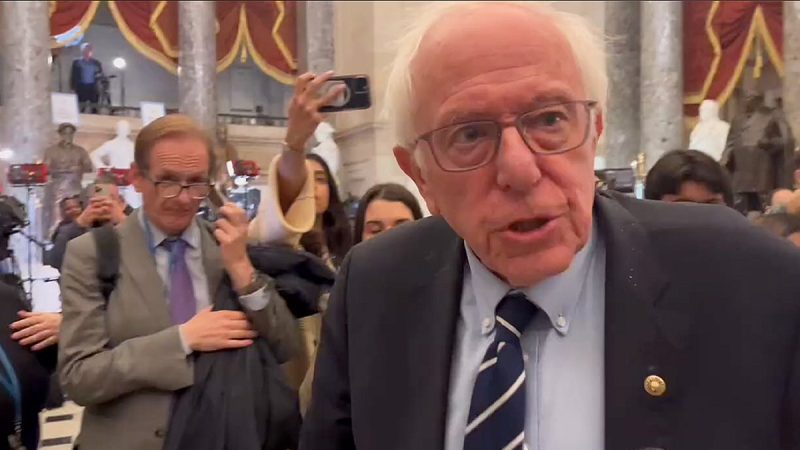
They are like a classic comedy team crafted in a1950s Hollywood studio. There’s the old and grump straight man, Sen. Bernie Sanders set in his Marxist ways, and there’s the young, bubbly comedian Rep. Alexandria Ocasio-Cortez, always smiling or dancing or making cute TikTok videos.
Last week, Sanders & AOC launched a national tour to perform for tens of thousands. The Democrats’ dynamic duo even played Vegas, where they insisted attendees don COVID masks (no, seriously). The question is, why are they on the road?
The 2026 midterm elections are more than 19 months away, so why would two Democrats whose seats are safe as houses spend millions of dollars and untold man hours on this traveling circus today?
The answer is that Sanders & AOC are confronting an emergency, just not the one they say they are. They want you to think the emergency is President Donald Trump’s second term, but the real emergency is that America is firmly rejecting their brand of far-left progressivism.
Make no mistake, old man Sanders and his spunky sidekick aren’t really fighting against Trump, they are fighting to maintain ideological control of a Democratic Party that right now might be the least popular major party in American history.
In the aftermath of Kamala Harris’ embarrassing defeat in November, all fingers were pointed at wokeness to explain the Democrats’ woes. From men in women’s sports and open borders, to Diversity, Equity, and Inclusion and ending private health insurance, the far left has been rejected at every turn.
So here come Sanders & AOC in their hilariously named ‘Fighting Oligarchy’ tour, this from two people who never saw a big bundled donation from George Soros that they wouldn’t greedily accept.
And yes, they perform some tired old material about Trump supposedly tearing down Democratic norms, or Elon Musk swimming in a pool of stolen social security money like Scrooge McDuck. But the real story is in the new material.
Take this from AOC, for example, ‘This isn’t just about Republicans,’ she opined in Arizona. ‘We need a Democratic Party that fights harder for us. That means each and every one of us choosing and voting for Democrats and elected officials who know how to stand for the working class. I want you to look at every level of office around and support Democrats who fight, because those are the ones who can actually win against Republicans.’
Not lately, congresswoman.
On Sunday, the Democratic Socialists of America, who launched Ocasio-Cortez’s career, were protesting in New York City to demand that Senate Minority Leader Chuck Schumer step down for refusing to pointlessly shut down the government this month.
These are desperate last gasps. Since 2008, when the party of Bill Clinton, once the moderate Democratic savior, became the party of Barack Obama, the Democrats have lurched so far left that their most sacred shibboleths of wokeism appear to most Americans as beyond parody.
Sanders & AOC are well aware that as they continue to try to sell gender bending, the green new deal, and endless illegal immigration, there are lean and hungry Democrats like Rep. Ritchie Torres D-NY, Sen. John Fetterman D-PA, and New York City mayoral candidate Andrew Cuomo who are ready to remake the party in their more centrist image.
Even fellow comedian and TV Host Bill Maher is sticking it to Sanders & AOC by accepting a friendly invitation to meet with Trump. His message is clear; screaming, ‘THIS ISN’T NORMAL!!!’ over and over again isn’t working and never will.
This Burns & Allen act that Sanders & AOC have going on is meant to spur the Democratic faithful into revolt against semi-normal party leaders, the kind who won’t encourage the destruction of Teslas or stand around outside empty DC office buildings singing 1960s resistance songs off-key.
Those more centrist Democrats have the upper hand now, and they know it. This is why instead of barnstorming the country with political celebrities, they are biding their time, building their war chests, and plotting a new course for their party.
In the end, don’t be surprised if Sanders & AOC’s Fighting Oligarchy Tour turns out to be the final goodbye tour of socialism in the Democratic Party and in our national politics.
The American people gave the party of Obama a good fair chance and, for their trouble, wound up in a deeply divided nation overwhelmed by illegal immigration, a crushing cost of living and frankly, a stark and troubling lack of patriotism.
Put another way, the party of Obama has failed, and no matter how many times Sanders & AOC yuk it up for a crowd of liberal college-educated women, that fact and its electoral consequences are not going to change.