Greenvale Energy (GRV:AU) has announced Strong Start to Maiden Drill Program at Oasis
Download the PDF here.
This post appeared first on investingnews.com

Greenvale Energy (GRV:AU) has announced Strong Start to Maiden Drill Program at Oasis
Download the PDF here.

Westport Fuel Systems Inc. (‘Westport’ or the ‘Company’) (TSX: WPRT Nasdaq: WPRT) today announced the resignation of its Chief Financial Officer (CFO), William Larkin and the appointment of Elizabeth Owens as his successor. Mr. Larkin will step down in his capacity as CFO effective immediately and remain in an advisory capacity through September 15, 2025, to ensure a smooth transition and the seamless transfer of duties and responsibilities.
‘On behalf of myself and the Board, I would like to thank Bill for his commitment and significant contributions to Westport,’ said Dan Sceli, Chief Executive Officer of Westport. ‘Over his time at Westport, Bill has led the organization through a transformational period, including the recent sale of the Light-Duty segment and close of our HPDI joint venture, Cespira, helping to position the organization for long-term success. Bill has been a valuable member of our management team, and we wish him well in the future.’
‘I am incredibly proud of what we have accomplished over my time at Westport to reposition the company and support its long-term strategy. As I step down from my role, I am confident Elizabeth is the right finance leader to continue building on this momentum. With strong financial expertise and a proven track record within Westport, Elizabeth brings the experience and perspective Westport needs for its next chapter,’ said Bill Larkin.
Succeeding William Larkin is Elizabeth Owens, a seasoned finance executive with experience that spans a diverse set of multinational corporate environments in a range of large publicly held companies. Ms. Owens has been with Westport for 10 years, most recently as Vice President, Finance and Tax. Over the last 20 years, Ms. Owens has held management and leadership roles across various industries, including automotive, telecommunications, aviation, and chemical manufacturing. She brings extensive experience in leading global teams in tax, finance, and accounting, as well as broad experience in mergers, acquisitions and divestitures. She began her career as a CPA, CA with Deloitte and holds a Bachelor of Commerce with a major in Accounting from the University of British Columbia.
‘Elizabeth has been a key part of our finance team for 10 years. Her expertise was instrumental in the successful execution of a number of the Company’s transformational initiatives, including the establishment of our joint venture relationship with a major OEM. We look forward to supporting her as she takes on this expanded role,’ continued Dan Sceli.
About Westport Fuel Systems
Westport is a technology and innovation company connecting synergistic technologies to power a cleaner tomorrow. As a leading supplier of affordable, alternative fuel, low-emissions transportation technologies, we design, manufacture, and supply advanced components and systems that enable the transition from traditional fuels to cleaner energy solutions.
Our proven technologies support a wide range of clean fuels – including natural gas, renewable natural gas, and hydrogen – empowering OEMs and commercial transportation industries to meet performance demands, regulatory requirements, and climate targets in a cost-effective way. With decades of expertise and a commitment to engineering excellence, Westport is helping our partners achieve sustainability goals—without compromising performance or cost-efficiency – making clean, scalable transport solutions a reality.
Westport Fuel Systems is headquartered in Vancouver, Canada. For more information, visit www.westport.com .
For more information contact:
Investor Relations
T: +1 604-718-2046
E: invest@Westport.com
News Provided by GlobeNewswire via QuoteMedia
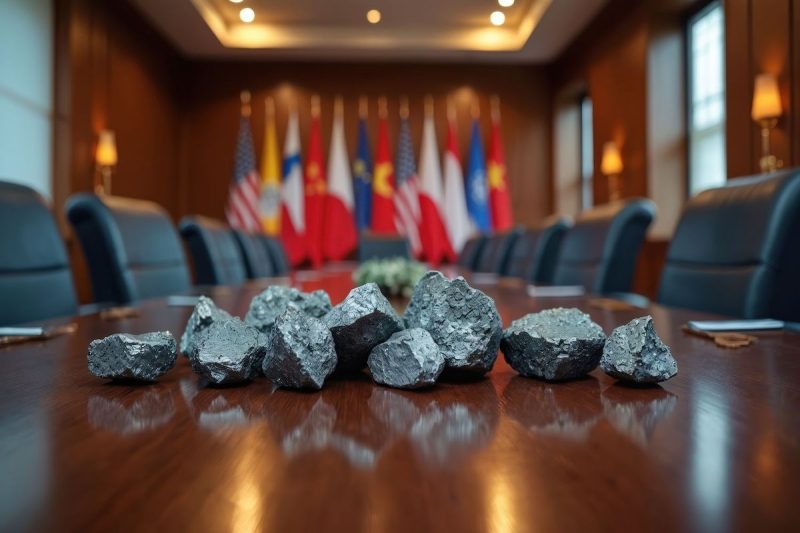
Ottawa’s push to strengthen trade links with Europe is moving ahead on two tracks: investing in new port infrastructure at home and formalizing a minerals partnership with Germany abroad.
Speaking alongside German Chancellor Friedrich Merz in Berlin, Prime Minister Mark Carney confirmed Tuesday (August 26) that Canada would support major new infrastructure projects, including a new port in Churchill and an expansion of Montreal’s Contrecœur terminal.
He also shared a bilateral agreement with Germany to cooperate on critical minerals development which will bring the two countries working together on project financing, technological development and supply-chain integration.
“A number of those investments, the first of which we will be formally announcing in the next two weeks, are with respect to new port infrastructure,” Carney said.
The new facilities, he added, would reinforce Montreal’s port system and create “enormous LNG plus other opportunities” in Churchill, alongside upgrades to other East Coast ports to handle critical metals and minerals.
The announcements deliver on a central campaign promise by Mr. Carney’s Liberals to advance large-scale infrastructure projects as a counterweight to US President Donald Trump’s protectionist trade policies.
Natural Resources Minister Tim Hodgson signed the minerals agreement with his German counterpart in Berlin.
While not legally binding, the deal outlines plans to coordinate investment and appoint envoys to deepen cooperation in sectors ranging from electric vehicles to aerospace and defence.
“So there is a lot happening,” Carney added. “The number one focus of this government is to build that infrastructure, and particularly infrastructure that helps us deepen our partnership with our European partners, and particularly Germany.”
Germany is Canada’s largest European trading partner, with bilateral trade in goods reaching US$30.5 billion last year. For Berlin, diversifying supplies of energy and industrial inputs remains a priority after the country cut reliance on Russian natural gas following Moscow’s invasion of Ukraine.
Ottawa and Berlin have previously signed memorandums of understanding on hydrogen and critical minerals, including 2022 agreements with Volkswagen (OTC Pink:VLKAF,FWB:VOW) and Mercedes-Benz Group (OTC Pink:MBGAF,ETR:MBG) to secure supplies of nickel, cobalt and lithium for electric vehicle batteries.
Canada’s economy has long depended on the US market, and the intensifying trade dispute with Washington has accelerated Ottawa’s drive to find new outlets.
The Prime Minister has framed Europe as Canada’s most reliable alternative, calling the country “the most European of non-European nations.”
His current trip marks his fourth visit to the continent since taking office in March, with stops in Ukraine, Poland, Germany and Latvia.
For Churchill, a new port would be a welcome transformation.
The northern Manitoba town’s existing facilities have largely been used for grain exports. Expanding its capacity to handle liquefied natural gas and minerals could give Canada another strategic outlet to Atlantic markets, bypassing congested southern corridors and reducing dependence on US ports.
While Canada seeks to deepen European ties, Washington is reinforcing its own approach.
On Monday (August 25), the US Department of the Interior released a draft 2025 list of 54 critical minerals deemed vital to the economy and national security.
For the first time, copper, silver and potash were included, alongside silicon, rhenium and lead.
“President Trump has made clear that strengthening America’s economic and national security means securing the resources that fuel our way of life,” Interior Secretary Doug Burgum said in a recent press release.
“This draft list of critical minerals provides a clear, science-based roadmap to reduce our dependence on foreign adversaries, expand domestic production and unleash American innovation.”
The list, updated every three years under the Energy Act of 2020, guides federal investment, permitting, and recycling strategies. It originated with a 2017 executive order that directed agencies to assess US vulnerabilities in mineral supply chains.
The US Geological Survey tested more than 1,200 disruption scenarios for 84 minerals across 402 industries. The analysis flagged rare earths such as dysprosium, terbium and lutetium among the commodities posing the highest potential risks.
Securities Disclosure: I, Giann Liguid, hold no direct investment interest in any company mentioned in this article.
Basin Energy (BSN:AU) has announced Acquires Extensive Uranium and Rare Earth Portfolio
Download the PDF here.
Blackstone Minerals (BSX:AU) has announced BSX Secures JV Partner & Funding for Ta Khoa Nickel Project
Download the PDF here.
DETAILS
Date: Thursday, 28 August 2025
Time: 11:30AM AEST / 9:30AM AWST
Registration:
https://www.abnnewswire.net/lnk/66GZ5R65
Participants will be able to submit questions via the panel throughout the presentation, however we highly encourage attendees to submit questions beforehand via chloe@janemorganmanagement.com.au
To view the Presentation, please visit:
https://www.abnnewswire.net/lnk/3Z6Y66N7
About Basin Energy Ltd:
Basin Energy Ltd (ASX:BSN) (OTCMKTS:BSNEF) is a green energy metals exploration and development company with an interest in three highly prospective projects positioned in the southeast corner and margins of the world-renowned Athabasca Basin in Canada and has recently acquired a significant portfolio of Green Energy Metals exploration assets located in Scandinavia.
Source:
Basin Energy Ltd
Contact:
Pete Moorhouse
Managing Director
pete.m@basinenergy.com.au
+61 7 3667 7449
Chloe Hayes
Investor and Media Relations
chloe@janemorganmanagement.com.au
+61 458619317
News Provided by ABN Newswire via QuoteMedia
Key Highlights
– Binding agreement to acquire the largest prospective uranium and rare earth packages in Queensland, adjacent to Paladin Energy Limited’s (ASX:PDN) Valhalla uranium deposit and Red Metal Limited’s (ASX:RDM) Sybella rare earth discovery [1*]
– Early stage exploration supports three distinct, drill-ready exploration models, each amenable to low-cost shallow drilling:
o AEM geophysical survey previously reported identified extensive paleochannel network adjacent to the Sybella uranium ‘hot’ granite.
o Significant hard rock granite rare earth element potential, analogous to Red Metal’s Sybella discovery. Recent auger drill sampling returned numerous significant results including 5 m @ 1,951 ppm TREO with 578 ppm Nd+Pr oxide, incl. 3 m @ 705 ppm Nd+Pr oxide.
o District-scale sediment-hosted ionic clay rare earth potential with $150,000 Queensland Government funding in place to fastrack drilling. Soil sampling completed with numerous samped returning >600 ppm TREO with a maximum of 653 ppm TREO.
– Additional Valhalla-style uranium targets with multiple untested radiometric anomalies, in proximity to Valhalla, Skal and Odin deposits which host a combined 116 Mlbs U3O8 [2*]
– The Company has received firm commitments from institutional and sophisticated investors to raise $1.25 million at $0.025 per share, representing a 9% premium to 20 day VWAP.
– With the oversubscribed placement along with the Queensland grant, Basin Energy is fully funded to test these drill-ready high priority targets, enabling the Company to fast-track multiple uranium and rare earth drill programs.
– Detailed targeting and drill planning is underway with exploration planned to commence in Q4 2025 to test shallow, high priority targets via aircore and reverse circulation drilling.
Managing Director, Pete Moorhouse commented:
‘This acquisition propels Basin into Australia’s uranium and rare earth exploration landscape. These projects deliver exceptional geology, strategic scale and compelling upside across two of the most critical mineral sectors of the energy transition. With drill-ready targets and a low-cost structure, this portfolio is primed to deliver value for shareholders. Over the next 6 months, Basin Energy will be drilling the first holes on three district-scale opportunities for uranium and rare earth deposits in Northwest Queensland.
The Company is delighted with the strong interest in the capital raising. On behalf of the Board, I welcome our new shareholders, and thank existing shareholders for their continued support at an exciting time of development for the Company. We will be holding a webinar to walk through the projects on 28th August and encourage people to log in and learn more about this opportunity.’
Overview
This acquisition provides Basin with a commanding position over one of Australia’s emerging and underexplored provinces for uranium and rare earth elements (‘REE’), leveraging the recent Sybella rare earth discovery by Red Metal Limited (ASX:RDM) and the prospectivity of the adjacent Barkly Tableland.
Basin now holds 5,958 km2 of exploration tenure in the Mount Isa district of northwest Queensland. The projects provide compelling walk-up drill targets that can be rapidly and cost-effectively tested using air core and reverse circulation (RC) drilling. NeoDys have an existing Queensland Government Collaborative Exploration Initiative funding agreement for $150,000, available for Basin to support upcoming drilling programs.
The drill-ready, district scale targets include:
– Paleochannel roll front uranium (1*)
– Sediment and ionic clay hosted rare earth elements (2*)
– Hard rock, granite hosted rare earth elements (3*)
In addition to these three district-scale targets, the project area contains multiple shear-hosted Valhallastyle uranium targets defined for immediate assessment.
The primary model is based on mineralisation sourced from the various granites of the Sybella Batholith (‘the Sybella’), a large north-south trending igneous body containing zones enriched in rare earth elements. This includes the Red Metal (ASX:RDM) Sybella Discovery with a recent JORC inferred resource estimate of 4.795 Bt at 302 ppm NdPr, 28 ppm DyTb (200 ppm NdPr cut-off) or 209 Mt at 377 ppm NdPr, 34 ppm DyTb (360 ppm NdPr cut-off) [1*]. The Sybella granites are also uranium rich, potentially being the source of Paladin Energy’s (ASX:PDN) Valhalla deposits[2*] .
Terms of the Share Placement
The Company has received firm commitments to raise $1.25 million, by way of a two-tranche share placement (‘Placement’) of 50 million shares at an issue price of $0.025 per share. The Placement price represents the Company’s last market close price, and a 9.1% premium to the 20-day VWAP.
Tranche two will be subject to a general meeting, to be called shortly and expected in early October.
The offer was significantly oversubscribed, with proceeds to be allocated as follows:
– Air core drilling on the Barkly Tablelands uranium and REE targets
– RC drilling at the Newmans Bore granite-hosted REE target
– Mapping and sampling of the West Valhalla Radiometric targets
– General working capital.
The Placement was managed internally and was not subject to broker fees.
To view the full announcement, please visit:
https://abnnewswire.net/lnk/3833C16P
About Basin Energy Ltd:
Basin Energy Ltd (ASX:BSN) (OTCMKTS:BSNEF) is a green energy metals exploration and development company with an interest in three highly prospective projects positioned in the southeast corner and margins of the world-renowned Athabasca Basin in Canada and has recently acquired a significant portfolio of Green Energy Metals exploration assets located in Scandinavia.
Source:
Basin Energy Ltd
Contact:
Pete Moorhouse
Managing Director
pete.m@basinenergy.com.au
+61 7 3667 7449
Chloe Hayes
Investor and Media Relations
chloe@janemorganmanagement.com.au
+61 458619317
News Provided by ABN Newswire via QuoteMedia

Corazon Mining Ltd presents a compelling investment case driven by a strategic pivot to WA gold exploration, capitalising on its recent acquisition of the Two Pools gold project. This acquisition offers significant near-term exploration upside, while the company retains a high-quality portfolio of base and battery metals projects, providing long-term optionality and leverage to the evolving critical minerals market. This strategy positions Corazon to deliver shareholder value through potential high-impact discovery and future project development.
Corazon Mining Ltd (ASX:CZN) is an Australian junior exploration company focused on high-quality gold and critical minerals projects in Australia and Canada.
Simon Coyle is a mining executive with over 20 years’ experience in the resources sector, spanning across gold, iron ore, manganese and lithium. He is a graduate of the Western Australian School of Mines and has held a number of senior operational leadership roles across both private and publicly listed companies.
Most recently, Coyle served as CEO and president of TSXV-listed Velox Energy Materials. Prior to this, he held senior roles at Pilbara Minerals, including general manager – operations, where he was instrumental in the development and expansion of its flagship lithium project, establishing it as one of the world’s leading spodumene concentrate producers. Coyle currently serves as non-executive director of Kali Metals.
Kristie Young is a professional Board Director who began her career as a mining engineer in the mid 90’s across both underground and open cut operations (incl. Hamersley Iron, Mt Isa Mines, Plutonic Gold, New Hampton Goldfields, Surpac), feasibility studies and project evaluation. She holds a BEng(Mining) Hons from the University of Queensland.
Over 25 years’ industry experience, including business development director roles with both EY and PwC. She brings more than 15 years’ experience on boards and committees and currently serves as a non-executive director of Brazilian Rare Earths (ASX:BRE), Livium (ASX:LIT), Tasmea Ltd (ASX:TEA), and MinEx CRC.
She is a Fellow of the AusIMM and a graduate and Fellow of the AICD.
Scott Williamson is a highly experienced mining engineer with an Engineering and Commerce degree from the West Australian School of Mines and Curtin University. With more than 20 years of experience spanning technical and corporate roles in the mining and finance sectors, he brings a wealth of industry expertise and strategic insight. A proven leader in business development, Scott has extensive experience in equity capital markets, complementing his strong technical skill set.
Currently, he serves as managing director of Blackstone Minerals and non-executive Director of Leeuwin Metals.
Scott also holds a WA First Class Mine Manager’s Certificate and is a member of the Australasian Institute of Mining and Metallurgy.
Robert Orr manages Corazon’s financial operations and corporate governance, ensuring compliance and effective financial management.
Kazakhstan’s state-owned uranium giant Kazatomprom will scale back production in 2026, saying that current supply and demand dynamics do not justify a return to full capacity even as long-term prices hold firm.
The company, which accounts for more than one-fifth of the world’s primary uranium output, said it expects to lower production by roughly 10 percent compared with earlier targets, reducing its nominal output level from 32,777 metric tons of uranium (tU) to 29,697 tU.
That equates to a drop of around 8 million pounds of uranium, or about 5 percent of global supply. Most of the reduction will come from adjustments at its Budenovskoye joint venture.
“As the world’s largest producer and seller of natural uranium, Kazatomprom fully recognises the critical role the Company has in supporting the global energy transition,” Chief Executive Meirzhan Yussupov said, as the miner released its first half 2025 results.
Kazatomprom said the present market environment does not warrant lifting production to its previous 100 percent level. The long-term uranium price has remained stable at around US$80 per pound, despite volatility in spot markets and financial uncertainty tied to tariff disputes.
Instead, Kazatomprom said it plans to “exercise its downflex opportunity within the acceptable 20 percent deviation under the updated 2026 Subsoil Use production levels.” It added that the actual guidance for the 2026 output will be released in a later disclosure.
The company further added that supplies of sulphuric acid, a critical reagent for the in-situ recovery (ISR) mining method used across its operations, are expected to be stable in 2026.
Kazatomprom also pointed to Kazakhstan’s own nuclear energy ambitions. The government has floated plans for three nuclear power plants, each of which would require about 400 metric tons (1.04 million pounds) of uranium annually.
Financially, the announcement accompanied weaker half-year results. Kazatomprom reported a 54 percent fall in net profit to 263.2 billion Kazakhstani tenge (around US$489.5 million) in the first six months of 2025, compared with the same period a year earlier. Revenue further slipped 6 percent to 660.2 billion tenge due to lower sales volumes.
In August 2024, the company cut its 2025 uranium output forecast by 12–17 percent amid a sulfuric acid shortage. Its new acid plant won’t be ready until at least 2026, while higher mineral extraction taxes starting which commenced earlier this year are set to raise costs and erode its traditional competitive edge.
Even as it trims output targets, Kazatomprom stressed that it is pushing ahead with large-scale exploration programs across Kazakhstan. The initiatives are aimed at replenishing reserves and safeguarding the company’s status as the leading global supplier of nuclear fuel.
“Kazatomprom is currently undertaking a large-scale exploration in Kazakhstan, which is a top priority for replenishing its resource base and maintaining its leading position as a global nuclear fuel supplier,” Yussupov said.
Although Kazatomprom has seen a decline in profits, sector major Cameco (TSX:CCO,NYSE:CCJ) registered growth in Q2 2025, and is anticipating a broad uptick in global demand.
“We believe that supportive government policies, the tangible actions of energy-intensive industries, and positive public conversations are all pointing to a global convergence: nuclear energy is a critical solution for providing clean, constant, secure and reliable power to electrify global economies, wrote Tim Gitzel, Cameco’s president and CEO.
Uranium’s key role in clean energy has prompted FocusEconomics analysts to forecast uranium prices to stay well above 2010s levels through the decade, with price projected in the US$65 to US$80 per pound range.
The World Nuclear Association (WNA) projects demand will rise 28 percent by 2030, outpacing an 18 percent supply increase, driven by emerging-market growth, AI-related power needs, modular reactor adoption and energy security concerns.
Primary uranium production from mines, conversion and enrichment plants meets most global reactor demand, with secondary supplies helping bridge short-term gaps.
‘However, secondary supply is projected to have a gradually diminishing role in the world market, decreasing from the current level in supplying 11-14 percent of reactor uranium requirements to 4-11 percent in 2050,’ notes the WNA’s recent Nuclear Fuel Report.
Despite the looming shortfall, FocusEconomics analysts don’t anticipate a return to 2024’s highs, when prices overshot fundamentals amid investor exuberance.
“Supply/demand dynamics are supportive of higher uranium prices: We forecast a structural supply deficit of ~20 million pounds in 2025 to grow to ~130 million pounds by 2040, or representing 40 percent-45 percent undersupply,’ an email from FocusEconomics stated. ‘This view is supported by increasing demand for uranium as the global nuclear fleet expands to support growing power needs amid a lack of meaningful potential supply to come online.”
Securities Disclosure: I, Giann Liguid, hold no direct investment interest in any company mentioned in this article.
Securities Disclosure: I, Georgia Williams, hold no direct investment interest in any company mentioned in this article.

Earthwise Minerals Corp. (CSE:WISE)(FSE:966) (‘Earthwise‘ or the ‘Company‘) has completed the first part of its two-phase 2025 field program at the Iron Range Gold Project (‘the Project’) in southeastern British Columbia. The program, led by TerraLogic Exploration Inc., included the collection of 538 soil samples over 13.5 line-km and 15 rock samples, along with structural mapping and prospecting across key target zones. Analytical results are pending and will be released once received, compiled, and interpreted.
Earthwise holds the exclusive option to acquire up to an 80% interest in the Iron Range Gold Project, which is 100% owned by Eagle Plains Resources Ltd. (TSXV:EPL) (‘EPL‘ or ‘Eagle Plains‘), with part of the property subject to an underlying 1.0% Net Smelter Royalty.
The 2025 field program advanced geochemical and mapping work across multiple targets at Iron Range:
EXPLORATION ZONES – 2025
Pyromorphite Zone (BC MinFile 082FSE141): Mineralization was first discovered in 2009 when logging road construction exposed sheared and brecciated sediments hosting cm-scale quartz veins bearing pyromorphite (lead) mineralization. No significant work has been carried out at the zone since its initial discovery by the previous tenure holder. Historic rock (grab) samples include SK10-207, which reported 27.0 g/t Au, 173.0 g/t Ag, and 13.4% Pb, and MK10-170, which reported 54.7 g/t Au, 42.2 g/t Ag, and 2.8% Pb (BC Assessment Report 31659).
Golden Cap (BC MinFile 082FSE014): Tight-spaced soil sampling in 2025 was designed to test cross-fault intersections along the main Iron Range Fault Zone. Historical soil sampling by Eagle Plains at this area returned values up to 230 ppb Au.
DIP Zone (Dakota – BC MinFile 082FSE023; Idaho – BC MinFile 082FSE024; Pacific – BC MinFile 082FSE025): Soil sampling in 2025 was conducted over an area with a historical multi-element soil geochemical anomaly that had not previously been analyzed for gold.
Star West (BC MinFile 082FSE089): Soil sampling in 2025 was conducted over an area with a historical multi-element soil geochemical anomaly that had not previously been analyzed for gold.
HISTORIC DRILLING & PROJECT OVERVIEW
Drilling at Iron Range in 2010 resulted in the discovery of the Talon Zone, where drill-hole IR10-010 intersected 2 intervals of strong and continuous mineralization including 14.0m grading 5.1g/t gold, 1.86% lead, 2.1% Zinc, 75.3g/t silver and 7.1m grading 8.13g/t gold, 2.84% lead, 3.07% zinc, 86.6g/t silver (Eagle Plains news release December 21st, 2010). Previous drilling 10km north of the Talon Zone in 2008 by Eagle Plains intersected gold mineralization in drill-hole IR08006 which assayed 7.0m grading 51.52g/t (1.50 oz/ton) gold (Eagle Plains news release dated April 20th, 2009).
All of the exploration data collected by Eagle Plains since 2001, as well as all of the available historic data, has been integrated into a GIS database, which is used to prioritize areas for ground follow up. Drill targeting at the Talon Zone discovery in 2010 was based on the presence of an extensive multi-element soil geochemical anomaly associated with a structural splay from the regional Iron Range Fault System. Drill hole locations and depths were successfully refined using Induced Polarization (IP) geophysics.
The 21,437ha Iron Range Project is considered by management of both Eagle Plains and Earthwise to hold excellent potential for the presence of structurally controlled gold-silver mineralization, iron-oxide copper-gold (‘IOCG’) and Sullivan-style lead-zinc-silver sedimentary-exhalative (‘sedex’) mineralization. The property is owned 100% by Eagle Plains, with a portion of the property subject to an underlying 1.0% Net Smelter Royalty held by a third party.
IRON RANGE GOLD PROJECT SUMMARY
The Iron Range Project, located near Creston, B.C., is owned 100% by Eagle Plains Resources Ltd., subject to a 1% NSR on a portion of the claim group. A well-developed transportation and power corridor crosses the southern part of the property, including a high-pressure gas pipeline and a high-voltage hydro-electric line, both following the CPR mainline and Highway 3. The rail line provides efficient access to Teck’s smelter in Trail, B.C. The project is fully permitted under a Multi-Year Area Based (MYAB) permit issued by the B.C. Ministry of Mining and Critical Minerals. The permit allows for geophysical surveys, mechanical trenching, access trail construction, and diamond drilling.
The property covers an area of approximately 10 km x 32 km, overlying the regional Iron Range Fault System (IRFS). Prior to Eagle Plains’ acquisition in 2001, the ground had seen little systematic exploration aside from iron resources documented since the late 1800s. Since 2001, Eagle Plains and its partners have completed:
Rock grab samples are selective samples by nature and as such are not necessarily representative of the mineralization hosted across the property. Some of the above results were taken directly from MINFILE descriptions and assessment reports (ARIS) filed with the BC government. Management cautions that historical results were collected and reported by past operators and have not been verified nor confirmed by a Qualified Person but form a basis for ongoing work on the subject properties. Management cautions that past results or discoveries on proximate land are not necessarily indicative of the results that may be achieved on the subject properties.
Qualified Person
Charles C. Downie, P.Geo., a ‘qualified person’ for the purposes of National Instrument 43-101 – Standards of Disclosure for Mineral Projects and an officer and director of Eagle Plains, has reviewed and approved the scientific and technical disclosure in this news release.
About Earthwise Minerals
Earthwise Minerals Corp. (CSE: WISE; FSE: 966) is a Canadian junior exploration company focused on advancing the Iron Range Gold Project in southeastern British Columbia near Creston, B.C. The Company holds an option to earn up to an 80% interest in the fully permitted project, which is road-accessible and situated within a prolific mineralized corridor. The property covers a 10 km x 32 km area along the Iron Range Fault System and hosts multiple high-grade gold showings and large-scale geophysical and geochemical anomalies.
For more information, review the Company’s filings available at www.sedarplus.ca.
EARTHWISE MINERALS CORP.,
ON BEHALF OF THE BOARD
‘Mark Luchinski’
Contact Information:
Mark Luchinski
Chief Executive Officer, Director
Telephone: (604) 506-6201
Email: luch@luchccorp.com
Forward Looking Statements
This news release includes statements that constitute ‘forward-looking information’ as defined under Canadian securities laws (‘forward-looking statements’) including, without limitation, statements respecting the Offering and the intended use of proceeds therefrom. Statements regarding future plans and objectives of the Company are forward looking statements that involve various degrees of risk. Forward-looking statements reflect management’s current views with respect to possible future events and conditions and, by their nature, are subject to known and unknown risks and uncertainties, both general and specific to the Company. Although the Company believes the expectations expressed in its forward-looking statements are reasonable, forward-looking statements are not guarantees of future performance, and actual outcomes may differ materially from those in forward-looking statements. Additional information regarding the various risks and uncertainties facing the Company are described in greater detail in the ‘Risk Factors’ section of the Company’s annual management’s discussion and analysis and other continuous disclosure documents filed with the Canadian securities regulatory authorities which are available at www.sedarplus.ca. The Company undertakes no obligation to update forward-looking information except as required by applicable law. The reader is cautioned not to place undue reliance on forward-looking statements.
For more information, please contact Mark Luchinski, Chief Executive Officer and Director, at luch@luchccorp.com or (604) 506-6201.
Source