
Brightstar Resources (BTR:AU) has announced Shallow, high-grade drilling results continue at Sandstone
Download the PDF here.
Matt Geiger, managing partner at MJG Capital Fund, shares his thoughts on the resource sector, honing in on the health of the junior miners.
In his view, after a decade of hit-or-miss performances, the best is yet to come.
Securities Disclosure: I, Charlotte McLeod, hold no direct investment interest in any company mentioned in this article.
Here’s a quick recap of the crypto landscape for Monday (August 18) as of 9:00 p.m. UTC.
Get the latest insights on Bitcoin, Ethereum and altcoins, along with a round-up of key cryptocurrency market news.
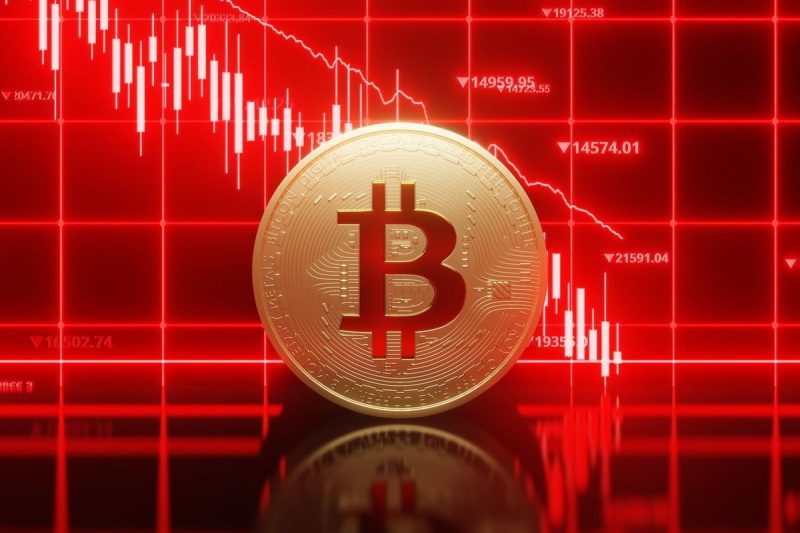
Bitcoin (BTC) was priced at US$116,339, a 1.1 percent decline in 24 hours. Its lowest valuation of the day was US$114,985, while its highest was US$116,751.
Bitcoin price performance, August 18, 2025.
Chart via TradingView.
Markets pulled back considerably on Sunday (August 17) night ahead of a pivotal meeting between US President Donald Trump, Ukrainian President Volodymyr Zelenskyy and other European leaders.
Later this week, US Federal Reserve Chair Jerome Powell will deliver a speech after the Jackson Hole Economic Policy Symposium. His remarks are highly anticipated by investors who are looking for clarity on the Fed’s next move.
Ethereum (ETH) was priced at US$4,359.32, down by 2.3 percent over the past 24 hours. Its lowest valuation of the day was $4,282.60, and its highest valuation was US$4,381.21.
South Korea’s Financial Services Commission (FSC) is set to introduce a regulatory framework for a won-backed stablecoin in October, according to a report from South Korean news outlet MoneyToday.
The initiative, part of the nation’s Virtual Asset User Protection Act, aims to establish clear rules for crypto service providers and is expected to outline requirements for stablecoin issuance, collateral management and internal control systems. The FSC has been developing this framework since 2023 through its virtual asset committee.
Democratic Party of Korea Representative Park Min-kyu confirmed that the government bill is expected to be submitted to the National Assembly around October. This regulatory move follows a June collaboration among major South Korean banks to develop a won-pegged stablecoin, intended to safeguard the currency against increasing dollar dominance. At the time, the token was projected to launch in late 2025 or early 2026.
Japan is also set to approve its first stablecoin, with its Financial Services Agency preparing to greenlight the issuance of a Japanese yen-denominated digital currency as early as this fall.
According to a Sunday report from Japanese news outlet the Nihon Keizai Shimbun, Tokyo-based fintech firm JPYC will spearhead the initiative, aiming to maintain a fixed value of one JPY per Japanese yen, backed by liquid assets like bank deposits and Japanese government bonds.
Tokens will be issued to digital wallets via bank transfer after purchase applications from individuals or corporations. The company plans to register as a money transfer business within the month.
Gemini, the crypto exchange founded by Cameron and Tyler Winklevoss, has formally filed to go public with plans for a Nasdaq listing under the ticker GEMI. Founded in 2014, the company says it has processed US$285 billion in lifetime trading volume, with custodies of over US$18 billion in digital assets as of June 30.
Its registration statement does not specify how many shares will be offered or at what price range.
In the filing, the Winklevoss twins said crypto is entering “a new Golden Age,” emphasizing their vision of financial markets moving increasingly on-chain. They describe Gemini as a “super app” for digital assets, offering trading, custody and broader crypto financial services under one platform.
If successful, Gemini would join Coinbase Global (NASDAQ:COIN) as one of the few US exchanges to list publicly, offering investors direct equity exposure to crypto market infrastructure.
Amsterdam-based Amdax announced plans to list a new Bitcoin treasury firm, Amsterdam Bitcoin Treasury Strategy (AMBTS), on the Euronext Amsterdam exchange.
The company said the goal is to create a vehicle that holds Bitcoin long term on behalf of institutional and private investors, reflecting growing corporate adoption of digital reserves.
CEO Lucas Wensing noted that more than 10 percent of Bitcoin’s supply is already held by corporations, governments and institutions, suggesting a structural shift in how the asset is used.
Bitcoin’s rally of 32 percent in 2025, alongside pro-crypto regulatory momentum following Trump’s election, has reinforced the case for such vehicles. AMBTS plans to raise capital in a private round before listing, with a long-term target of accumulating at least 1 percent of total Bitcoin supply.
The move could make Euronext Amsterdam a more prominent hub for European digital asset investment products, challenging London and Frankfurt.
Securities Disclosure: I, Giann Liguid, hold no direct investment interest in any company mentioned in this article.
Securities Disclosure: I, Meagen Seatter, hold no direct investment interest in any company mentioned in this article.
There are many factors to consider when investing in silver-focused stocks, including the silver price outlook, the company’s management team and whether its assets are in one of the top silver-producing countries.
Location can be key, and knowing the top silver-producing countries can help investors made sound decisions. For example, high silver production in a particular nation might indicate mining-friendly laws or high-grade deposits.
So which country produces the most silver? In 2024, Mexico was once again the world’s leading silver-producing country, followed by China and Peru.
Increasing silver demand in recent years hasn’t been met by increases in mine production; global silver production totaled 25,000 metric tons in 2024, pulling back slightly during the period. As the majority of the world’s silver production comes as a byproduct from the mining of gold, copper, lead and zinc, silver production has largely been tied to fortunes in those other markets rather than its own fundamentals.
With prices of the metal rising to their highest level in more than a decade, the top silver countries could benefit.
Below is an overview of the countries that are already driving the mining output in 2024. Statistics are based on the latest report from the US Geological Survey, along with supporting data from Mining Data Online (MDO) and the UN Comtrade database.
The USGS reports silver production in metric tons while most companies report in ounces. As a point of reference, 1 metric ton of silver is equivalent to 35,274 ounces of the metal.
Silver production: 6,300 metric tons
Mexico is the world’s largest silver producer with production of 6,300 metric tons of the precious metal in 2024, nearly double second-place China.
Silver has been an important commodity for the country for hundreds of years, with evidence of trade dating back to the 1500s. In 2024, the mining sector in Mexico contributed $312.46 billion pesos to the Mexican economy, and silver alone made up $68.24 billion pesos of that total.
The states of Zacatecas, Durango and Chihuahua account for 80 percent of the country’s total output of the metal. The country’s largest silver mine is Newmont’s (TSX:NGT,NYSE:NEM) Penasquito mine in Zacatecas. In 2024, the mine produced 33 million ounces (935.5 metric tons) of silver and is expected to deliver more than 28 million ounces in 2025.
Mexico is also home to Fresnillo (LSE:FRES), the world’s largest silver producer. In 2024, the company produced 56.3 million ounces (1,496 metric tons) of silver between its mines, which are all located in the country.
Silver production: 3,300 metric tons
China produced 3,300 metric tons of silver in 2024, a decline from the 3,400 metric tons it produced in 2023. According to Shanghai Metal Market (SMM), the drop off is part of a longer trend that is owed to lower silver grades as older mines begin to deplete reserves of the metal.
Most silver is produced as a byproduct metal from the mining of lead, copper, zinc and gold. Of the few silver primary operations in the country, Silvercorp Metals’ (TSX:SVM,NYSEAMERICAN:SVM) Ying mining district is the largest, hosting seven underground mines and two processing plants.
In its fiscal year ended March 31, 2025, the Ying mining district produced 6.95 million ounces (197 metric tons) of silver, up 17 percent year-over-year. The increase was supported in part by an extension to the number two mill in November 2024.
Silver production: 3,100 metric tons
Peru produced 3,100 metric tons of silver in 2024, making it the world’s third largest silver country. Its 2024 production was down from 3,200 metric tons in 2023, in part due to declining grades and social unrest.
Overall, the mining industry plays a significant role in the Peruvian economy, accounting for 9.5 percent of its GDP. In 2024, total mineral exports from the country were tallied at US$49 billion, with copper making up more than half of the value of trade and silver accounting for approximately US$1.3 billion.
Silver production in Peru is primarily a byproduct of copper mining. The largest operation in the country is the Antamina mine, a joint venture between BHP (ASX:BHP,NYSE:BHP,LSE:BHP), Glencore (LSE:GLEN,OTC Pink:GLCNF), Teck (TSX:TECK.B,TSX:TECK.A,NYSE:TECK) and Mitsubishi (TSE:8058). In 2024, the mine produced 11.36 million ounces of silver.
Silver production: 1,300 metric tons
Bolivia’s silver production totaled 1,300 metric tons in 2024, a slight decline from 2023’s 1,350 metric tons, tying it with Poland for the fourth highest silver producing country. The resource industry makes up a substantial portion of Bolivia’s exports. Silver exports alone generated US$1.2 billion for Bolivia’s economy in 2024.
Bolivia’s largest mine is the San Cristóbal silver-lead-zinc mine in Potosí, which produced 16.8 million ounces of silver in 2024, up 33 percent year-over-year. Private company San Cristobal Mining acquired the mine from Sumitomo (TSE:8053) in early 2023.
Another significant silver operation in Bolivia is Andean Precious Metals’ (TSXV:APM,OTCQX:ANPMF) San Bartolomé silver-gold operation. San Bartolomé’s production has steadily decreased from 5.47 million ounces in 2020 to 4.32 million ounces in 2024, during which time it transitioned from mining to processing material from its fines disposal facility and third parties.
Silver production: 1,300 metric tons
Silver production in Poland was 1,300 metric tons in 2024, just below the 1,320 metric tons it registered the previous year. While its output comes in significantly below the top three silver countries, Poland holds the world’s third highest silver reserves at 61,100 metric tons.
In total, the mining sector accounts for 7 percent of Poland’s GDP. In 2024, silver exports rose to 1,328.27 metric tons from 1,256.25 metric tons in 2023 and represented a value of US$1.2 billion.
KGHM Polska Miedz (FWB:KGHA) is Poland’s top silver company and one of the world’s top silver producers, producing the metal as a by-product at its Polish copper mines, including the Polkowice-Sieroszowice mine. According to the World Silver Survey, KGHM produced 1,341 metric tons of silver in 2024 between its Polish and international operations.
Silver production: 1,200 metric tons
Chile produced 1,200 metric tons of silver in 2024, down from the 1,260 metric tons in 2023.
Mining is a significant contributor to the Chilean economy. In 2024, the sector accounted for 14 percent of the nation’s GDP and was a driving force behind the country’s overall 5.6 percent growth rate.
With 85 percent of Chilean silver output coming as a byproduct of copper mining, declines in recent years have been owed to production issues and low prices in the copper sector. According to Reuters, copper output from state-run mining company Codelco fell to a 25 year low in 2023 and struggled to recover.
At Chuquicamata, one of the company’s largest operations, silver production gradually declined from its peak of 10.91 million ounces in 2019 to 8.14 million ounces in 2023, before plunging to 5.7 million ounces in 2024.
Silver production: 1,200 metric tons
Russia produced 1,200 metric tons of silver in 2024, a slight decrease from the 1,240 metric tons it produced the previous year.
Mangazeya Plus is the country’s largest silver producer from its portfolio of mines in the country, including its largest silver operation, the Dukat mine, which produced an estimated 7.7 million ounces of silver in 2023.
Prior to 2024, the owner of these assets was Kazakhstan-based Polymetal International, now named Solidcore Resources. However, due to operational challenges associated with sanctions against Russian metals exports, the company sold all of its Russian mining assets to Mangazeya Plus.
Silver production: 1,100 metric tons
The United States produced 1,100 metric tons of silver in 2024, an increase from the 1,020 metric tons mined the previous year. Silver is mined in 12 states, with Alaska and Idaho topping the list of regional producers.
Production of silver came from four silver-primary mines, with additional amounts produced as a byproduct of gold and base metals at 31 other operations.
The largest silver operation in the United States is Hecla Mining’s (NYSE:HL) Greens Creek silver mine in Southern Alaska. In 2024, the mine produced 8.48 million ounces (240 metric tons) of silver, as well as several other metals as by-products of its silver operations.
In terms of economic contribution, silver contributed US$960 million to the US economy in 2024, with the majority of the metal destined for domestic markets, with just 140 metric tons being exported.
Silver production: 1,000 metric tons
Australia produced 1,000 metric tons in 2024, just 30 metric tons fewer than registered in 2023.
According to the Reserve Bank of Australia, mining holds the largest share of the nation’s GDP with 12.2 percent, and resources make up 59.2 percent of the country’s total exports. However, like the United States, the majority of silver is used domestically for manufacturing and investment.
Australian silver production also comes as a byproduct of mining other metals like gold, copper and other base metals. South32’s (ASX:S32,OTC Pink:SHTLF) Cannington lead-silver-zinc mine is by far the largest silver operation in Australia, producing 12.67 million ounces of silver in 2024.
Silver production: 1,000 metric tons
Kazakhstan produced 1,000 metric tons of silver in 2024, up from 985 metric tons in 2023. Output in the country has risen significantly since 2020, when it produced just 435 metric tons of the precious metal.
The largest silver mining operation in the country is the Kazzinc Complex, a 70/30 joint venture between Glencore and the state-run Tau-Ken Samruk. In 2024, the mine produced 3.34 million ounces of silver, a sizable increase from the 2.73 million ounces produced in 2023.
Overall, the mining sector’s contribution to the Kazakh economy has exploded in recent years. According to the USGS Kazakhstan 2022 Mineral Yearbook released in March 2025, mineral exports were pegged at US$84.6 billion in 2022, a 40.2 percent increase compared to 2021 and 68 percent of the country’s total exports.
Securities Disclosure: I, Dean Belder, hold no direct investment interest in any company mentioned in this article.
Homerun Resources (TSXV:HMR,OTC:HMRFF,FSE:5ZE) is advancing a three-phase strategy to establish itself as a leading global supplier and processor of high-purity silica, transforming this critical material into high-value products for the renewable energy and advanced materials sectors.
Homerun is positioning itself across multiple high-growth industries where demand is accelerating, supply remains constrained, and pricing is strong. Brazil currently imports all of its solar glass and advanced silica components, creating a significant domestic supply gap.
Global solar glass demand is projected to grow from US$13 billion in 2024 to nearly US$197 billion by 2034 (31 percent CAGR), while high-purity quartz (HPQ) is critical to achieving the efficiency and purity standards required for advanced applications.
Supported by industrial tariffs and tax incentives in Brazil, Homerun’s **full-stack model — from silica sand through to finished solutions into downstream verticals such as energy storage, perovskite solar technology, and AI-driven energy solutions.
This Homerun Resources profile is part of a paid investor education campaign.*
Click here to connect with Homerun Resources (TSXV:HMR) to receive an Investor Presentation
Top silver miners around the world delivered a slate of strong second quarter earnings reports as a mixture of higher metals prices and production gains boosted results across the sector.
The silver price has broken decisively above the US$35 per ounce level, rising to levels not seen in over a decade. Its run has been fueled by a structural supply deficit and robust industrial demand.
Analysts also note that silver is finally beginning to catch up with gold — the gold-silver ratio has narrowed from April’s peak of 105 to around 94, signaling the white metal’s relative strength.
Read on for details on Q2 earnings from major silver producers.
Pan American Silver (TSX:PAAS,NYSE:PAAS) posted record net earnings of US$189.6 million, or US$0.52 per share, for the second quarter, supported by record mine operating earnings of US$273.3 million. Revenue came in at US$811.9 million, while silver output reached 5.1 million ounces and gold production was 178,700 ounces.
The firm’s acquisition of MAG Silver (TSX:MAG,NYSEAMERICAN:MAG), which was approved by shareholders in July, is expected to close in the second half of the year. Pan American said MAG’s Juanicipio asset should lift its silver production by roughly 35 percent on an annualized basis and meaningfully lower all-in sustaining costs.
The company also confirmed that it remains engaged in consultations with the local Xinka parliament at the Escobal mine in Guatemala under ILO Convention 169 amid pushback regarding the project’s planned restart.
First Majestic Silver (TSX:AG,NYSE:AG) recorded its strongest quarter to date, with silver equivalent production rising 48 percent year-on-year to 7.9 million ounces, including 3.7 million ounces of silver.
The company also posted record quarterly revenue of US$264.2 million, nearly double the US$136.2 million recorded a year earlier. Average realized silver prices rose to US$34.62 per silver equivalent ounce, while payable sales volumes climbed 42 percent. First Majestic ended the quarter with 424,272 ounces of silver in inventory, valued at US$15.3 million (but not recognized in quarterly revenue). The board also declared a dividend of US$0.0048 per share.
Production gains were driven by stronger performance at the San Dimas mine in Mexico, where output rose 9 percent, and contributions from the Los Gatos joint venture, also in Mexico, which added 1.5 million attributable ounces of silver.
Endeavour Silver (TSX:EDR,NYSE:EXK) reported Q2 silver production of 1.48 million ounces and gold output of 7,755 ounces, for total silver equivalent production of 2.5 million ounces, up 13 percent year-on-year.
The silver-focused company’s overall revenue rose 46 percent to US$85.3 million for the period, supported by higher realized prices of US$32.95 per ounce of silver and US$3,320 per ounce of gold.
Furthermore, the company completed its acquisition of Minera Kolpa on May 1, funded in part by a US$50 million equity financing. Endeavour also said that it has advanced commissioning at its Mexico-based Terronera project, which is nearing commercial production. Milling rates reached up to 2,000 metric tons per day by late July, with silver recoveries averaging 71 percent and gold recoveries at 67 percent.
Hecla Mining (NYSE:HL) reported record quarterly revenue of US$304 million, a 16 percent increase from the prior quarter. Net income came in at US$57.6 million, or US$0.09 per share, while adjusted EBITDA reached US$132.5 million. The company said free cashflow also reached record levels.
The US- and Canada-focused firm’s silver costs remained low, with cash cost per ounce after by-product credits at negative US$5.46 and all-in sustaining costs at US$5.19.
On the production side, milestones were set at key operations: the Lucky Friday mine (Idaho) established a new milling record of 114,475 metric tons, while Greens Creek (Alaska) delivered positive gold output owing to higher grades.
Silvercorp Metals (TSX:SVM,NYSEAMERICAN:SVM) produced 1.8 million ounces of silver in its fiscal first quarter of 2026, along with 2,050 ounces of gold, 15.7 million pounds of lead and 5.2 million pounds of zinc.
Output came from its Ying Mining District in China’s Henan Province. The firm also posted revenue of US$81.3 million, with income from mine operations standing at US$35.8 million. Silvercorp said that the margins are slightly lower compared to the prior year as higher processing volumes increased costs and royalties in China.
The company said even though higher royalties and processing expenses have offset some benefits of stronger realized prices, it remains profitable and cashflow positive.
Fresnillo (LSE:FRES,OTC Pink:FNLPF), one of Mexico’s largest gold and silver producers, reported revenues of US$1.94 billion for the first half of 2025, up 30 percent from the same period in 2024.
The company reported that attributable silver production was 24.9 million ounces in the first half, down 11.7 percent from the year prior due to the closure of San Julián DOB and lower grades at Ciénega and Juanicipio. By contrast, attributable gold production rose 15.9 percent to 313,800 ounces, supported by higher ore grades at Herradura.
Fresnillo also confirmed that parent company Industrias Peñoles agreed to buy back the longstanding Silverstream contract for US$40 million. Since 2007, Peñoles has paid Fresnillo US$882 million for approximately 52 million ounces of silver delivered from the Sabinas mine under the arrangement.
MAG Silver entered Q2 under the spotlight as its pending acquisition by Pan American Silver moved forward.
The transaction, approved by MAG shareholders in July, offers shareholders the option of receiving either cash or Pan American shares, with closing expected in the second half of 2025, subject to regulatory approvals in Mexico.
Operationally, exploration remained active across the company’s portfolio.
At Juanicipio in Mexico, MAG drilled nearly 9,500 meters underground, with results pending, while surface work added over 6,000 meters targeting the Cañada Honda and Magdalena structures.
In the US, geophysical surveys advanced at the Deer Trail project in Utah, and drilling commenced at Ontario’s Larder project, where over 5,200 meters were completed at the Italian zone.
Avino Silver & Gold Mines (TSX:ASM,NYSEAMERICAN:ASM) posted strong second quarter financials, with revenues rising 47 percent year-on-year to US$21.8 million.
Net income more than doubled to US$2.9 million, while mine operating income surged 118 percent to US$10.2 million, supported by economies of scale and record mill throughput.
Production from the company’s portfolio of Mexican projects reached 645,602 silver equivalent ounces, a 5 percent increase despite lower feed grades, as throughput gains offset grade variability.
Beyond operations, Avino secured inclusions in both the S&P/TSX Global Mining Index (INDEXTSI:TXGM) and the Solactive Global Silver Miners Index during the quarter.
Coeur Mining (NYSE:CDE) reported record Q2 results with revenues of US$481 million and net income from continuing operations of US$71 million, marking its fifth consecutive profitable quarter. Adjusted EBITDA rose 64 percent from the prior quarter to US$244 million, while free cashflow soared eightfold to US$146 million.
The company produced 4.7 million ounces of silver and 108,487 ounces of gold, up 79 and 38 percent year-on-year, respectively, with strong contributions from all five operations. Meanwhile, crushed ore rates and production volumes climbed sharply from the company’s expanded Rochester mine in Nevada. Coeur reaffirmed its full-year guidance of 380,000 to 440,000 ounces of gold and 16.7 million to 20.3 million ounces of silver.
Silver’s breakout above US$35 has injected new momentum into the precious metals complex, and has put silver back into focus after more than a decade of underperformance relative to gold.
Traders are already eyeing the psychologically important US$40 level and ultimately the 2011 peak near US$50, with market strategists noting that previous moves through the mid-US$30s have often triggered rapid runs higher.
The renewed excitement comes as the gold price sits at a historically high level, providing a strong comparative benchmark that has many investors looking to silver as a value trade.
Behind the price action, silver’s fundamentals remain compelling. Industrial demand tied to green energy applications, paired with persistent multi-year supply deficits, continues to erode aboveground stocks.
Whether or not silver makes a sustained run in the near term, the alignment of macroeconomic factors and strong tailwinds proves that silver’s resurgence in 2025 is being built on more than just speculation.
Securities Disclosure: I, Giann Liguid, hold no direct investment interest in any company mentioned in this article.
Supported by growing permanent magnet demand in 2024, the rare earths market started 2025 on an uptrend.
Concerns about supply chain stability quickly added to market sentiment as China and US trade tensions targeted the rare earth sector early in the year.
Through Q1 mounting geopolitical uncertainty related to Ukraine and Russia and Trump’s tariffs added volatility and sparked concerns that China would tighten controls over the sector.
As the year unfolded domestic supply chain growth became a primary focus for the US, adding support to several US-based mining companies.
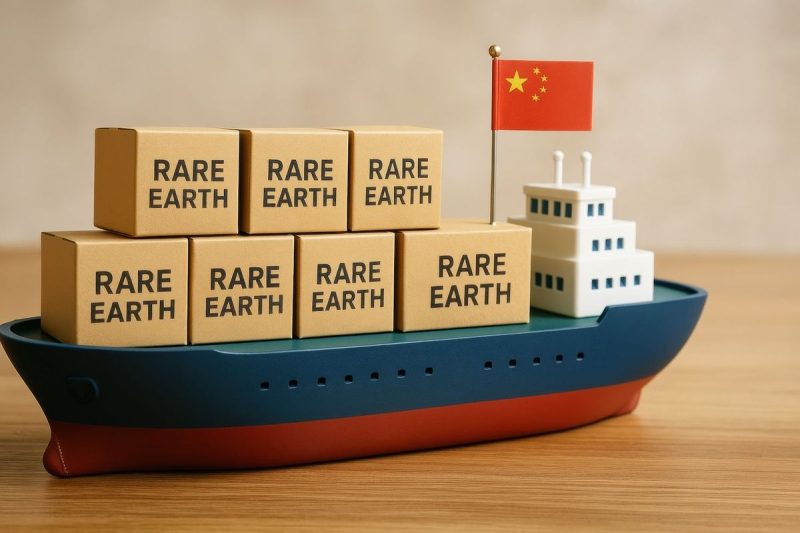
In response to ever-changing tariffs levied by President Trump, in early April China flexed its grip on the rare earth market with Announcement 18, a sweeping export control measure from the Ministry of Commerce and General Administration of Customs.
The policy, framed as a national security and nonproliferation safeguard, requires exporters to obtain licenses for a slate of medium and heavy rare earths—including samarium, gadolinium, terbium, dysprosium, lutetium, scandium and yttrium—along with their oxides, alloys and compounds.
Additionally the export of permanent magnet and rare earth technology faced similar safeguards.
The move added a fresh layer of regulatory complexity for global supply chains reliant on these critical materials for high-performance magnets, electronics, defense, clean energy and advanced manufacturing.
Countering the new restrictions, President Trump issued an Executive Order to examine the security of the critical mineral supply chain into the US, with a focus on rare earths.
“President Trump recognizes that an overreliance on foreign critical minerals and their derivative products could jeopardize US defense capabilities, infrastructure development, and technological innovation,” noted the White House statement.
By June the global auto sector was feeling the pressure of China’s new restrictions.
“With a deeply intertwined global supply chain, China’s export restrictions are already shutting down production in Europe’s supplier sector,” said Benjamin Krieger, Secretary General of the European Association of Automotive Suppliers (CLEPA).
“We urgently call on both the EU and Chinese authorities to engage in a constructive dialogue to ensure the licensing process is transparent, proportionate, and aligned with international norms,” he added.
Used in both electric and internal combustion engine vehicles, CLEPA went on to warn of more auto sector shutdowns if the situation was not rectified.
To quell growing anxieties around supply security in the auto industry, trade discussions between Chinese Minister of Commerce Wang Wentao and EU Trade Commissioner Maroš Šefčovič, were held in Paris.
The meeting resulted in China introducing a “green channel” to speed up export licenses for rare earths, particularly benefiting select European Union firms, a few days later.
The diplomatic overture also extends to US automakers, through export licenses granted to rare earth suppliers serving major American auto players like General Motors (NYSE:GM), Ford Motor (NASDAQ:F) and Stellantis (NYSE:STLA).
China has long controlled the vast majority of the rare earth market, overseeing 69 percent of annual mine production, 85 percent of refining and processing capacity and 90 percent of magnet manufacturing.
Likely spurred on by China’s long standing control of the rare earth market through mining, refinement and production the US has amped up its support of a domestic rare earth supply, through investment in mining companies and permit streamlining.
Most notably was the US$400 million in funding from the Department of Defense for MP Materials (NYSE:MP) operators of the Mountain Pass mine in California, the country’s only rare earth mine.
The DoD investment announced in July, will fund the expansion of MP’s processing capabilities at the Mountain Pass site and support the construction of a second magnet manufacturing facility in the US. In turn the DoD will have a domestic source and supply of permanent magnets for defense applications.
“Rare earth magnets are one of the most strategically important components in advanced technology systems spanning defense and commercial applications. Yet today, the US relies almost entirely on foreign sources,” the MP statement read. “This strategic partnership builds on MP Materials’ operational foundation to catalyze domestic production, strengthen industrial resilience, and secure critical supply chains for high-growth industries and future dual use applications.”
A few days later the public sector also showed support, when Apple (NASDAQ:AAPL) penned a US$500 million deal with MP to produce rare earth magnets in the US using 100 percent recycled materials.
Starting in 2027, MP will supply magnets for “hundreds of millions” of Apple devices, advancing the tech giant’s push for sustainable, domestic supply chains.
Apple CEO Tim Cook called the partnership a step toward securing vital materials for advanced technology while bolstering US innovation.
Internationally, Lynas Rare Earths (ASX:LYC,OTC Pink:LYSDY) achieved a significant sector milestone in May by producing on-spec dysprosium oxide at its Malaysian facility, marking the first commercial heavy rare earths output outside China.
CEO Amanda Lacaze said the development strengthens supply chain resilience, giving customers in Japan, the US and Europe an alternative source for critical materials and positioning Lynas as the world’s only producer of separated heavy rare earth products beyond China’s borders.
These moves were applauded by industry watchers as concrete steps in reducing reliance on Chinese supply, however some argue they don’t go far enough.
During a keynote presentation at the 2025 Rule Symposium in Boca Raton, Nomi Prins, economist, author and former Wall Street executive described what she calls the “real asset uprising,” a global shift in value and power driven by hard assets like precious metals, energy metals and rare earths.
“The entire US defense system runs on China’s processing of rare earths, and that is one of the reasons why there is a current 232, investigation into the importance of critical minerals, and particularly those 17 rare earths, because this is an issue you don’t want, even in peacetime,” she said.
“You’re basically relying on China, another country, to define what you need to run your defense, also what you need to run the growing energy requirements.
Listen to Prins discuss the real asset uprising, as well as the precious metals market.
While Prins advocates for expansion of the entire supply chain, Mountain Partners’ Chris Berry, sees strategic investment in refining, processing and manufacturing as the most prolific way to expand North American supply.
“If the US government was going to fund something in the magnet supply chain, I would argue it’s either magnet process or magnet building capacity, or, more importantly, rare earth separation capacity,” he added.
Not only would the move reduce US dependence on China for rare earth magnets, Berry noted that getting refinement and processing facilities built is a much faster process than permitting mines.
“If we’re talking about building a mine, it could take 10 to 15 years — sometimes more, depending on the situation,” he said. “Refining capacity is different. From finding a site and securing permits to raising capital and building the facility, you could be looking at five years, maybe less, though it depends on the material — whether it’s rare earths, nickel or something else.”
Berry argued that boosting refining capacity is key to reducing reliance on China.
“You strike deals with raw material producers, maybe they’re Canadian, Australian, Chilean, or even from parts of Africa. The point is, refining gets you to a usable product much faster,” he explained.
Berry continued: “Ask a battery manufacturer what they can do with spodumene or raw nickel — the answer is, not much. But give them battery-quality material, and they can trial it and integrate it into their supply chain. It’s a much more realistic approach.”
While a concerted effort like Berry described is key to quickly building out and fortifying a North American supply chain, tariff tensions with many countries around the globe hasn’t fostered much allyship for the US.
However, as Berry and Gracelin Baskaran, director of the Critical Minerals Security Program at the Center for Strategic and International Studies argue, the US can’t do it alone.
“If countries continue to operate independently instead of collectively, China will retain its dominant position because no single nation has enough market leverage on its own,” Baskaran wrote in a June overview.
Raising the warning bells of an impending crisis, the report went on to note.
“Prices for neodymium-praseodymium oxide—the principal rare earth component in neodymium-iron-boron magnets—have fallen below US$60 per kilogram. If prices stay below US$60 per kilogram through 2030, approximately half of the projected supply originating outside of China is expected to become economically unviable. In fact, at this price point, only eight rare earth projects beyond China are expected to break even on direct production costs.”
According to Baskaran, China’s use of export controls has heightened the urgency of building critical mineral supply chains with allied nations.
However, she believes this won’t happen without market intervention, as China continues to flood the market.
While US tariffs on Chinese imports are one option, their impact would be limited—the US accounts for just 1.7 percent of rare earths consumption, along with similarly small shares of other key minerals.
Any price-shaping strategy would require coordination with major consuming nations such as Australia, Canada, Japan, South Korea, the UK and the EU.
According to an August report from Benchmark Source, China’s newly imposed export restrictions on heavy rare earth oxides (HREOs) have created a pronounced regional price split.
While domestic Chinese prices remain relatively stable, markets outside China are seeing significant surges, driven by increased demand for ex-China supply.
This divergence underscores how export controls can distort global price dynamics, propelling up costs where alternatives are scarce while leaving domestic markets largely shielded.
Light rare earths were also pushed higher by the broad market tailwinds.
The rest of the year could see more upward momentum in light of China “quietly” issuing its first rare earth mining and smelting quotas of the year in July.
“This low-key approach is part of China’s continued efforts to tightly control its rare earths supply chain,” the Benchmark report read. “It is likely that the impacts of this quota will further contribute to a bullish market sentiment over the next few months.”
Securities Disclosure: I, Georgia Williams, hold no direct investment interest in any company mentioned in this article.
Cobalt prices remained elevated through Q2 2025, holding strong after a sharp early-year rally triggered by the Democratic Republic of Congo’s (DRC) export ban on cobalt hydroxide.
Announced in February, the restriction quickly pushed standard-grade cobalt metal up 45 percent month-over-month to US$15.75 per pound, while cobalt sulfate prices spiked by 74 percent.
Prices held steady between US$15 and US$16 per pound through Q2, even as imports into China surged in April, fueled by material from Indonesia.
Yet, as Fastmarkets analyst Olivier Masson noted during the Lithium and Battery Raw Materials Conference in June, Indonesian output won’t be enough to offset the shortfall from the DRC, which extended its export ban into September.
After years of supply growth, with global mine output more than doubling since 2020, the second half of 2025 is expected to bring a slowdown, potentially tightening the market and supporting prices.
These tough market conditions in recent years have been reflected in the performance of cobalt-focused exploration and mining companies. However, cobalt is largely produced as a by-product of nickel and copper mining, and a number of polymetallic stocks that offer exposure to cobalt have been able to make gains in the current market.
Below, we look at the five top cobalt stocks on the TSX and TSXV by share price performance this year, including their operations and activities this year.
All year-to-date and share price information was obtained on August 12, 2025, using TradingView’s stock screener. Companies with market caps above C$10 million at that time were considered.
Year-to-date gain: 394.12 percent
Market cap: C$380.31 million
Share price: C$0.42
Talon Metals is a base metals company advancing the Tamarack nickel-copper-cobalt project in Central Minnesota, US, through a joint venture with Rio Tinto (ASX:RIO,NYSE:RIO,LSE:RIO). Talon currently holds a 51 percent stake in the project and can earn up to 60 percent.
In late March, Talon Metals announced a massive sulfide discovery at its Tamarack project, with an intercept measuring 8.25 meters containing 95 percent sulfide content located deeper than the current Tamarack resource.
A further massive sulfide discovery in May drove the company’s share price up significantly. The intercept was the thickest discovered at the site yet, measuring a total of 34.9 meters within a 47.33 meter interval starting at 762 meters depth. On June 5, Talon reported record assays from the intercept, with average grades of 57.76 percent copper equivalent or 28.88 percent nickel equivalent.
In mid-June, Talon closed a combined C$41 million in financing to advance work at Tamarack.
Shares of Talon rallied to a year-to-date high of C$0.41 on August 6 alongside results from a third hole at the discovery, which the company has named the Vault zone. It is now targeting the zone with two drill rigs.
Outside of Tamarack, Talon secured a site in North Dakota, US, for its planned Beulah minerals processing facility on May 28. The location is owned by Westmoreland Mining and previously hosted coal-mining operations. The facility will serve as a key hub for domestic processing of nickel and other critical minerals in the US. The company currently plans to begin construction in 2027.
Year-to-date gain: 77.78 percent
Market cap: C$37.15 million
Share price: C$0.16
Leading Edge Materials is developing a portfolio of critical materials projects in the European Union to supply materials for advanced technologies such as lithium-ion batteries and permanent magnets for EVs and wind power generation.
The company’s projects include its wholly owned Woxna graphite mine, the Norra Kärr heavy rare earth elements project in Sweden and the 51 percent owned Bihor Sud nickel-cobalt exploration alliance in Romania.
After starting the year at C$0.09, shares of Leading Edge Materials spiked dramatically in late February and stayed elevated through much of March, reaching a year-to-date high of C$0.30 on March 24.
The day before its peak, the company announced it is moving forward with its rapid development plan at the Norra Kärr project, aiming to fast-track production of heavy rare earth element concentrate and nepheline syenite.
The day after, however, shares fell when Leading Edge reported that Norra Kärr was not selected for the first list of strategic projects under the EU’s Critical Raw Materials Act. Leading Edge plans to reapply when a new call for applications is announced, and stated it has made significant progress since its previous application in August 2024.
As for Leading Edge’s cobalt asset, the Bihor Sud nickel-cobalt project is a brownfield early-stage exploration project at which field work has identified strong potential for the discovery of a significant polymetallic deposit. The company says its goal at the project is ‘to define a large-scale, mineable mineral resource.’
According to its June 2025 presentation, exploration work planned for 2025 at Bihor Sud’s G2 gallery includes mapping and sampling of cobalt-nickel and zinc-lead-silver mineralized zones detected visually and by hand-held XRF. Drilling targeting polymetallic mineralization at the gallery is underway.
On the financial side, Leading Edge announced a C$400,000 non-brokered private placement in June.
Year-to-date gain: 61.01 percent
Market cap: C$60.97 billion
Share price: C$132.82
Wheaton Precious Metals is one of the largest gold and silver royalty and streaming companies. It has investments in 18 operating mines and 28 development projects across four continents, including a cobalt streaming agreement for Vale’s (NYSE:VALE) Voisey’s Bay nickel mine in Newfoundland and Labrador, Canada.
The company reported its Q1 2025 financial results on May 8. The report highlighted a record US$470 million in revenue, US$254 million in net earnings and US$361 million in operating cash flow.
The cobalt segment registered year-over-year attributable production gains, rising to 540,000 pounds in Q1 2025, compared to 240,000 pounds during Q1 2024. Despite the output increase, sales from the same reporting fell to 265,000 pounds from 309,000 pounds in 2024.
According to Wheaton’s Q1 report, Voisey’s Bay is currently in a transitional phase, shifting from the depleted Ovoid open-pit to full underground production. Voisey’s Bay’s underground operations are ramping up, with full ramp-up anticipated for H2 2026.
Shares in Wheaton hit a year-to-date high of C$138.56 on August 7 coinciding with the company’s Q2 results.
Year-to-date gain: 10.64 percent
Market cap: C$80.28 million
Share price: C$0.26
FPX Nickel is currently advancing its Decar nickel district in British Columbia, Canada. The property comprises four key targets, with the Baptiste deposit being the primary focus, alongside the Van target. The company also has three other nickel projects in BC and one in the Yukon, Canada.
On February 24, FPX released results from a positive scoping study for the development of a refinery that would refine awaruite concentrate from the Baptiste deposit into battery-grade nickel sulfate and by-products of cobalt carbonate, copper and ammonium sulfate. Annual production was anticipated at 32,000 metric tons (MT) of contained nickel and 570 MT of contained cobalt.
The results showed that the process resulted in operating costs and all-in production costs near the bottom of nickel sulfate cost curves, in part due to the by-product credits. Additionally, the carbon intensity of the awaruite refinery is significantly lower than that of currently used production methods. FPX formally published the study at the end of March.
Shares of FPX reached a year-to-date high of C$0.28 on March 7.
In June, the company successfully produced a larger run of battery-grade nickel sulfate crystals from Baptiste awaruite concentrate using the same process as the scoping study. FPX plans to share the samples with potential downstream partners, including battery and EV manufacturers.
On July 7, FPX announced it received a multi-year area-based permit from the BC government, a crucial step in the renewal of drilling and exploration activities at the Baptiste project. The company stated it has commenced drilling, with targets supporting its feasibility study and the start of its environmental assessment process.
Year-to-date gain: 2.82 percent
Market cap: C$59.84 million
Share price: C$0.73
Nickel 28 Capital is a battery metals company with an 8.56 percent interest in the producing Ramu nickel-cobalt mine in Papua New Guinea. It also holds a portfolio of 10 nickel and cobalt royalties on development and exploration projects across Canada, Australia and Papua New Guinea.
Shares of Nickel 28 registered a year-to-date high of C$0.86 on January 20 and again on February 6.
On February 3, the company released its Q4 and full year 2024 results, reporting lower production year-over-year due to a planned plant shutdown in September and October.
According to the data, total cobalt production at the Ramu operation fell year-over-year in 2024, with output reaching 549 MT in Q4 and 2,625 MT for the full year, down from 706 MT and 3,072 MT respectively in 2023.
Sales also declined, totaling 488 MT in Q4 and 2,793 MT for the year, compared to 755 MT and 3,086 MT in the prior year. Average cobalt prices were also down during the period, dropping 34 percent year-over-year in Q4 to US$9.95 per pound and finishing 2024 at an annual average of US$11.26 per pound, a 29 percent decrease from 2023.
The Ramu operation also experienced a short-term production setback following a mechanical failure in one of the acid plant’s blowers in December. On February 20, Nickel 28 announced that repairs were complete and the plant was back at full capacity.
On August 11, Nickel 28 released its Q2 2025 results, noting Ramu delivered stronger cobalt output with record weekly production rates at the beginning of the quarter. The operation produced 787 MT of contained cobalt in Q2, up from 675 MT a year earlier.
Cobalt sales also rose, totaling 719 MT compared to 684 MT in the same period of 2024. While average cobalt prices climbed 18 percent year-on-year to US$15.23 per pound, nickel prices slipped 18 percent to US$6.88 per pound, though lower production costs helped offset the weaker nickel market.
Cobalt is a silver-gray metal that is often produced as a by-product of nickel and copper mining. It does not occur as a separate metal anywhere in the world, and must be produced by reductive smelting, or from the metallic ore cobaltite, which is made of cobalt, sulfur and arsenic.
Historically, cobalt oxides were used to impart a blue pigment to glass, porcelain and paints, hence the still-used cobalt blue paint. The metal is also used to produce superalloys, as cobalt imparts qualities such as corrosion and wear resistance, which are useful in applications such as airplanes, orthopedics and prosthetics.
Today cobalt is most famously used in the rechargeable lithium-ion batteries that run everything from smartphones to EVs.
The majority of cobalt production comes out of the DRC, which was responsible for producing 220,000 metric tons of the material in 2024. For perspective, the second largest cobalt-producing country, Indonesia, reported output of 28,000 MT the same year; third place Russia produced 8,700 MT of the material.
As the lithium-ion battery and EV supply chains garner global attention, companies are trying to limit their exposure to cobalt produced from the DRC, which is known for human rights abuses and sometimes child labor in its mining industry.
In response to this trend, many countries with cobalt are attempting to create domestic cobalt and EV supply chains in the hope of attracting companies looking to avoid DRC-sourced cobalt. This can be seen in the up-and-coming battery corridor in Ontario, Canada, as well as in the US-based Idaho cobalt belt.
Securities Disclosure: I, Georgia Williams, hold no direct investment interest in any company mentioned in this article.
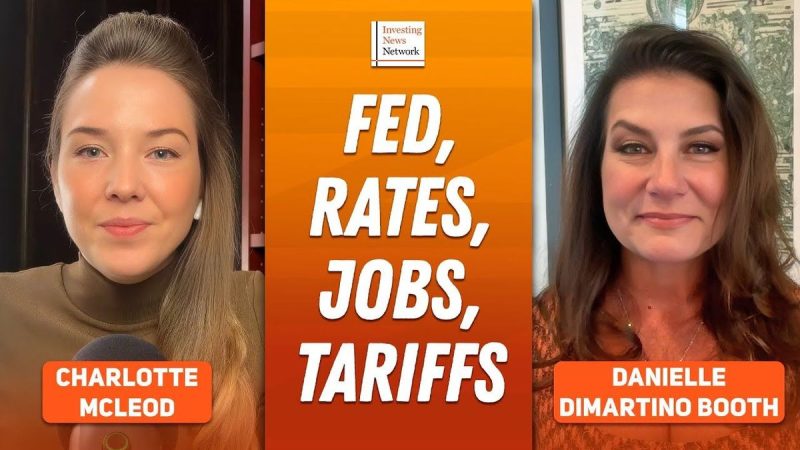
Danielle DiMartino Booth breaks down the latest US consumer and producer price index data, saying it’s important for investors to pay close attention to the American consumer.
The CEO and chief strategist at QI Research also discusses dissent at the US Federal Reserve, and how many times the central bank may cut interest rates in 2025.
Securities Disclosure: I, Charlotte McLeod, hold no direct investment interest in any company mentioned in this article.