Lithium Universe (LU7:AU) has announced Completion of PV Solar Cell Recycling Acquisition
Download the PDF here.
This post appeared first on investingnews.com

Lithium Universe (LU7:AU) has announced Completion of PV Solar Cell Recycling Acquisition
Download the PDF here.
American Rare Earths Limited (ARR:AU) has announced Project Update – Optimisation Underway Halleck Creek
Download the PDF here.
The global transition to a green economy has been a boon for the cleantech market — it’s helping investment in renewable energy and clean technology continue to grow, allowing the sector to keep building momentum.
Though cleantech’s long-term outlook is stable, the industry is facing challenges in Western markets as US policy shifts have sparked climate finance concerns. With US leadership on climate finance appearing to recede, there’s an opportunity for the Canadian market to take a leading role.
As we enter the second half of 2025, here’s a look at the best-performing Canadian cleantech stocks on the TSX and TSXV year-to-date; CSE companies were considered, but none made the list at this time.
Data for this article was gathered on July 14, 2025, using TradingView’s stock screener. Only companies with market capitalizations greater than C$50 million were considered.
Year-to-date gain: 76.32 percent
Market cap: C$179.48 million
Share price: C$3.35
Tantalus Systems provides technology that gives utilities greater control and insight into their electric grids.
This includes advanced metering infrastructure (AMI), load management systems and grid analytics, all of which contribute to a more efficient and reliable power grid.
One of its key products, TRUConnect AMI, provides real-time data on energy consumption and grid conditions. The TRUFlex Load+DER Management system helps manage energy demand and integrate distributed energy resources like solar power, while TRUGrid Automation optimizes grid operations and improves response to events like power failures.
On July 7, Tantalus announced that it was extending its partnership with EPB in Chattanooga, Tennessee, to deploy 20,000 TRUSense Ethernet Gateways over the next five years, integrating with EPB’s fiber network to enhance grid modernization and operational efficiency.
Year-to-date gain: 44.68 percent
Market cap: C$229.36 million
Share price: C$1.36
Anaergia is a global company that specializes in converting waste, including wastewater and agricultural and municipal solid waste, into renewable energy, clean water and organic fertilizer.
In July 2024, Anaeriga announced the completion of a strategic investment, saying it had closed the third tranche of a C$40.8 million investment deal with Marny Investissement that gave Marny a controlling interest of about 60 percent in Anaergia. The investment supported Anaergia’s strategic pivot to prioritizing capital-efficient growth and streamlined operations, with a greater focus on technology sales and operation and maintenance contracts.
The company has operations in 17 countries spanning North America, Africa, Asia and Europe. So far in 2025, Anaergia has expanded its global reach through partnerships with companies in Italy and Spain, as well as through a partnership agreement to build a biogas facility in South Korea.
Year-to-date gain: 18.82 percent
Market cap: C$148.28 million
Share price: C$1.01
CVW CleanTech is focused on making the Canadian oil sands industry more sustainable.
The company’s Creating Value from Waste (CVW) technology recovers bitumen and valuable minerals like titanium and zircon from oil sands tailings ponds, reducing the environmental impact of oil and gas production.
In 2024, the company transitioned to a royalty-based model, investing in other cleantech companies in exchange for a share of their revenue. Its first royalty investment was in Northstar Clean Technologies (TSXV:ROOF,OTC:ROOOF), a company with technology that processes end-of-life asphalt shingles into components including liquid asphalt, as well as aggregate and fiber for industrial use. The deal was finalized in September.
Now, the company is seeking shareholder approval to change its name to CVW Sustainable Royalties and switch its TSX Venture exchange listing from a technology issuer to an investment issuer, further solidifying its change in focus. However, it is still committed to commercializing its CVW technology.
Securities Disclosure: I, Meagen Seatter, hold no direct investment interest in any company mentioned in this article.
Dr. Nomi Prins of Prinsights Global discusses the real asset uprising and how to invest.
‘The uprising actually means that real assets don’t have value just for what they are in terms of price — they have value for their positioning in the geopolitical power battle,’ she explained.
Securities Disclosure: I, Charlotte McLeod, hold no direct investment interest in any company mentioned in this article.
Brightstar Resources (BTR:AU) has announced Operations update with mine production up 25% QoQ
Download the PDF here.
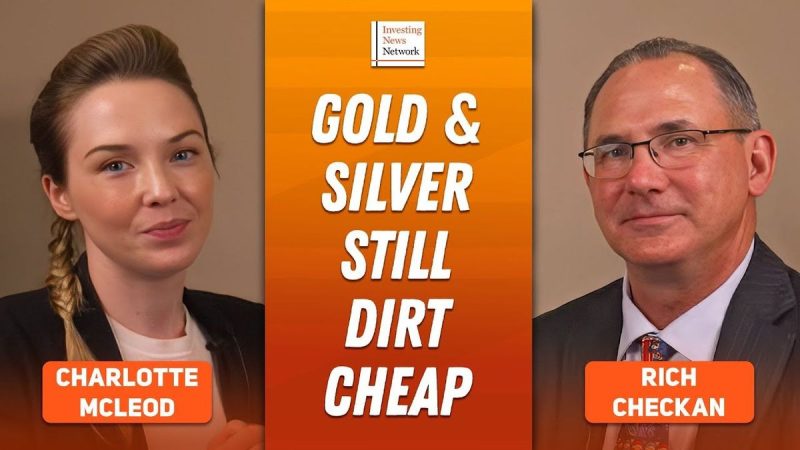
Rich Checkan, president and COO of Asset Strategies International, sees plenty of room for gold and silver prices to run, and he encouraged investors to consider the different ways the precious metals can provide portfolio support.
In his view, gold is key for wealth insurance, while silver offers profit potential.
Securities Disclosure: I, Charlotte McLeod, hold no direct investment interest in any company mentioned in this article.
The gold price soared to new record highs during the second quarter of 2025, the most recent coming when it climbed to C$4,663.85, or US$3,433.47, on June 13.
Several factors fueled gold price momentum toward the end of the second quarter, including an escalation in Middle East tensions as Israel and Iran entered into direct conflict. Although a cease fire was announced, it came after the United States dropped several 30,000 pound bombs on key Iranian nuclear sites.
Additional support for gold has come from continued uncertainty in global financial markets as the US’s tariff strategy continues.
Since the beginning of the year, investors have sought the relative safety of gold and gold-backed investment products, which have pushed the price up more than 25 percent.
Against that backdrop, which TSX-listed gold stocks have performed the best? The companies listed below have been the top performers this year. Data was retrieved on July 2, 2025, using TradingView’s stock screener. Only companies with market capitalizations greater than C$50 million are included.
Year-to-date gain: 276.47 percent
Market cap: C$144.68 million
Share price: C$0.32
Belo Sun Mining is an exploration and development company focused on advancing its Volta Grande gold project in Brazil.
The property covers approximately 2,400 hectares within the Tres Palmeiras greenstone belt in Pará State, Brazil. The company has been working on the project since 2003, and acquired necessary development permits in 2014 and 2017.
A 2015 mineral reserve estimate demonstrated a proven and probable reserve of 3.79 million ounces of gold from 116 million metric tons of ore with an average gold grade of 1.02 per metric ton (g/t).
Development at the site stalled in 2018 after a federal judge ruled that the Federal Brazilian Institute of the Environment (IBAMA) would be the competent authority for issuing environmental permits. The decision was overturned in 2019, with the Secretariat of Environment and Sustainability of the State of Pará (SEMAS) reassuming its permitting authority. The decision was once again reversed in September 2023, returning authority to IBAMA.
On January 23, Belo Sun announced that the Federal Court of Appeals had reassigned SEMAS as the permitting authority for the Volta Grande project. The company said it was pleased with the decision, as the agency is familiar with the project and enjoys a constructive and transparent relationship with it.
The most recent news came on June 23, when the company announced that shareholders had approved a renewal of the company’s governance structure and elected four new directors to the board. Four of the board’s six members are now either Brazilian or have spent significant parts of their careers working in Brazil.
Shares in Belo Sun reached a year-to-date high of C$0.35 on June 16.
Year-to-date gain: 200 percent
Market cap: C$53.71 million
Share price: C$0.135
Euro Sun Mining is a development-stage company advancing its Rovina Valley copper-gold project in Romania. The project’s mining license received full approval for 20 years in 2018, with the option to renew it in five year increments.
An updated feasibility study from March 2022 demonstrated the project’s economics, showing a post-tax net present value of US$512 million and an internal rate of return of 20.5 percent, assuming a base case gold price of US$1,675 per ounce and a copper price of US$3.75 per pound.
Proven and probable mineral reserve estimates for the site include 1.84 million ounces of gold and 197,522 metric tons of copper from 123.3 million metric tons of ore with an average grade of 0.47 g/t gold and 0.16 percent copper.
Shares in Euro Sun saw their most significant gains around the same time as a March 25 announcement that the EU included Rovina Valley on its first list of strategic assets. The inclusion, which Euro Sun applied for in May 2024, will enable the company to expedite permitting at Rovina Valley and shorten the development timeline.
On May 7, Euro Sun reported it met with Romania’s Minister of the Environment to discuss the advancement of the project. Both parties agreed that a single point of contact was needed to ensure compliance and fulfill requirements under the CRMA framework. The company plans to submit an updated environmental act in the near future.
On June 20, Euro Sun reported it signed a copper concentrates prepayment facility for up to US$200 million with private metals trader Trafigura, with the funding going towards the necessary permitting and investment to advance Rovina over the next 18 months.
Shares in Euro Sun reached a year-to-date high of C$0.145 on June 2.
Year-to-date gain: 165.05 percent
Market cap: C$1.26 billion
Share price: C$15.85
Collective Mining is a gold, copper and silver exploration company with focused interests in Caldas, Colombia.
Its two projects, Guayabales and San Antonio, consolidate large portions of a mineral belt that surrounds Aris Mining’s (TSX:ARIS,NYSE:ARMN)Marmato mine and within a region with 10 operating mines.
The Guayabales project comprises 26 claims spanning a total area of 4,780.98 hectares. Collective Mining has conducted extensive exploration at the property in 2025, with a primary focus on expanding the Apollo zone. The company also drilled multiple look-alike targets.
The most recent exploration report was released on June 30, when the company announced the discovery of a new high-grade vein system, with a highlighted assay of 534 g/t gold over 0.67 meters. However, the company stated that drilling was retargeted after results from a gravimetric survey indicated that the drill hole was outside the mineralized breccia body.
On June 23, Collective accelerated its agreement to acquire a 100 percent stake in the Guayabales property. Under the original agreement, Collective had until 2032 to make the required payments and incur the necessary exploration expenditures.
The company reported that the financial considerations remained the same under the amended agreement, but C$2 million would be paid immediately, with an additional C$2 million paid within one month of the title transfer request being filed and C$2.3 million after two months. The remaining C$3.5 million will now be paid out in six equal installments over a three-year period from the date of the amended agreement.
Shares in Collective Mining reached a year-to-date high of C$15.85 on July 2.
Year-to-date gain: 150 percent
Market cap: C$19.06 million
Share price: C$0.325
Starcore International is a gold exploration and mining company with assets in Mexico, Canada and Côte d’Ivoire. Its primary asset is the San Martin mine in Queretaro, Mexico.
In the company’s fourth-quarter production results, released on May 13, it reported reaching a significant commissioning milestone in the new processing circuit and milling 5,000 metric tons of stockpiled ore.
The mine produced 3,242 gold-equivalent ounces during the quarter, up 3 percent from 2,268 ounces during the previous quarter. The company added that it was continuing to explore and develop a new area in the southern section of the mine.
Outside its Mexican operations, the main focus throughout 2025 has been its Kimoukro gold project in Côte d’Ivoire.
On April 9, Starcore reported results from 2024 exploration work at the project and an update on its activities at the project. In 2024, the company completed 55 line kilometers of induced polarization geophysical and ground magnetic surveying, along with a 355 hole, 2,988 meter auger drilling campaign.
Based on the results from the drilling, which aimed to confirm an identified gold anomaly in the topsoil, the anomaly is about 2.5 kilometers long and 500 to 800 meters wide, with an average grade of more than 20 parts per billion gold.
In the update, Starcore reported it established a field office during Q1 2025 and is completing a soil sampling program covering 5.5 square kilometers and 1,300 samples up to a depth of 1 meter.
Shares in Starcore reached a year-to-date high of C$0.325 on June 4.
Year-to-date gain: 139.9 percent
Market cap: C$272.7 million
Share price: C$0.69
Troilus Gold is advancing its namesake property in Northern Québec, Canada.
The project is situated within the region covered by Plan Nord, a 25 year, C$80 billion development initiative focused on mining launched by the Government of Québec.
A May 2024 feasibility study revealed financials with a post-tax net present value of US$884.5 million, an internal rate of return of 14 percent and a payback period of 5.7 years based on a gold price of US$1,975 per ounce.
The included mineral resource estimate reports a probable mineral reserve of 6.02 million ounces of gold from 380 million metric tons of ore at an average grade of 0.49 g/t gold. It also hosts probable copper and silver reserves of 484 million pounds and 12.15 million ounces respectively.
Troilus has spent much of 2025 raising funds for the project’s development. The most significant came on March 13, when the company announced that it executed a mandate letter for a non-binding term sheet for a debt financing package of up to US$700 million.
The company noted that it had followed up on four letters of intent, resulting in a total potential funding of up to US$1.3 billion.
More recently, Troilus announced on June 18 that it had entered into an offtake agreement for gold-copper concentrate with German smelting company Aurubis (OTC Pink:AIAGF,XETRA:NDA).
The agreement is being executed in connection with the previously announced letter of intent for US$700 million in funding. According to Troilus, this includes a loan guarantee of up to US$500 million from a firm representing the German Federal Ministry of Economic Affairs and Climate Action.
Shares in Troilus reached a year-to-date high of C$0.73 on June 17.
Securities Disclosure: I, Dean Belder, hold no direct investment interest in any company mentioned in this article.
Governments and militaries around the world are beefing up their defense budgets as geopolitical and trade tensions mount. Unsurprisingly, aerospace and defense stocks are looking more attractive to investors.
The aerospace and defense industry comprises covers a large array of products, including aircraft, autonomous vehicles, marine vessels, satellites, electronic systems, software, missiles, drones and tanks.
Global defense spending increased by 9.4 percent in 2024 to US$2.72 trillion, led by the United States, China, Russia, Germany and India.
For its part, Canada spent US$29.3 billion on defense in 2024, making it the 15th highest spender globally. The country has yet to meet NATO member country spending targets of 2 percent of gross domestic product (GDP), coming in at 1.37 percent last year. However, this is expected to change in 2025.
In June, the Canadian government announced plans to invest an additional C$9 billion in the Canadian Armed Forces for the 2025/2026 fiscal year. The funds will go towards a wide array of improvements, including new aircraft, armed vehicles and drones.
“In an increasingly dangerous and divided world, Canada must assert its sovereignty,’ Prime Minister Mark Carney stated. ‘We will rapidly procure new equipment and technology, build our defence industrial capacity, and meet our NATO defence commitment this year. Canada will seize this opportunity with urgency and determination.”
Canada’s aerospace and defense industry plays a large role both domestically and through exports. The Canadian Armed Forces prioritizes domestic equipment and services procurement, with 55 percent of expenditures made to Canadian suppliers in 2022.
The Canadian defense sector has historically outperformed the broader manufacturing sector in terms of industrial growth, according to a Government of Canada report.
Exports represent a significant portion of revenues for land and marine military goods and services. GlobalData reports that naval vessels and surface combatants, military fixed-wing aircrafts and military satellites are currently the most attractive segments of the country’s defense market.
Market cap: C$12.33 billion
Established in 1947, CAE manufactures simulation technologies and digitally immersive training services for the aerospace, defense and healthcare industries. The company’s defense and security business unit provides training and mission support solutions for air, land, maritime, space and cybersecurity operations.
The company has regional defense and security training facilities in many countries and regions globally, namely the US, Canada, the United Kingdom, Europe, the Indo-Pacific and the Middle East. CAE’s annual revenue for its 2025 fiscal year ending March 31, 2025, was C$4.71 billion, up 10 percent year-over-year.
Market cap: C$11.57 billion
A global leader in aviation, Bombardier is headquartered in Québec, Canada, and operates aerostructure, assembly and completion facilities in Canada, the US and Mexico. Although best known for its business jets, the company has also earned the distinction of being a trusted designer and manufacturer of military special-mission aircraft under its Bombardier Defense unit.
Bombardier Defense has a multi-year US$465 million contract to sell its Global 6000 jets to the US Air Force under the Battlefield Airborne Communications Node program, which began in 2021 and extends through 2026. Under the contract, Bombardier is selling modified Global aircrafts to the US Air Force. These aircrafts are specialized communications platforms that help bridge voice and data between forces on the ground and in the air.
Bombardier reported US$8.7 billion in revenue for 2024, up 8 percent year-over-year.
Market cap: C$4.25 billion
MDA calls itself “an international space mission partner and a robotics, satellite systems and geointelligence pioneer.” The company is responsible for Canada’s first military satellite, Sapphire, which is designed to monitor Earth’s orbit and surveil outer space for man-made space debris and other satellites. Classified as a Space Situational Awareness small-satellite system, Sapphire was created for Canada’s Department of National Defence. MDA also provides satellite capabilities to the Department of National Defence’s Polar Epsilon satellite ground stations.
MDA reported strong top-line growth in 2024, with revenues of C$1.08 billion, up 34 percent year-over-year. The company expects 2025 full year revenues to be between C$1.5 billion and C$1.65 billion.
Market cap: C$1.06 billion
Magellan Aerospace designs, manufacturers and services aeroengine and aerostructure assemblies and components for the global aerospace market, as well as proprietary products for the military and space submarkets.
In April of this year, the company signed an amendment to an important long-term revenue sharing agreement with GE Aerospace (NYSE:GE). The amendment includes the production of major components for the F414-GE-400K aircraft engine over a seven-year period for the Korean KF-21 fighter aircraft program for South Korea’s national arms procurement agency.
Magellan’s total revenue for 2024 came in at C$942.37 million, up 7.1 percent over the previous year.
Market cap: C$767.92 million
Marine technology company Kraken Robotics provides advanced subsea sonar and laser systems, as well as batteries and robotics systems for unmanned underwater vehicles used in the military and commercially. According to Kraken, it is best known for its high-resolution 3D acoustic imaging solutions and services.
In February of this year, Kraken announced plans to open a new battery production facility in Nova Scotia, stating it aims to meet increasing demand for uncrewed underwater vehicles from the defense sector.
Kraken’s consolidated revenue for 2024 reached C$91.3 million, up 31 percent year-over-year. The company’s guidance for 2025 revenue is C$120 million to C$135 million.
Exchange-traded funds (ETFs) are marketable securities that track an index, a commodity, bonds or a basket of assets like an index fund. Investors can diversify their portfolio and lower the risk of investing in individual stocks with defense ETFs.
ETF Portfolio Blueprint has identified two Canadian Defense ETFs worthy of investor attention. All data was current as of June 30, 2025.
Assets under management: C$50.57 million
iShares U.S. Aerospace & Defense ETF launched in September 2023, and has an expense ratio of 0.44 percent. This fund replicates the iShares U.S. Aerospace & Defense ETF (BATS:ITA) and tracks the Dow Jones US Select Aerospace & Defense Index.
These defense stocks are typically stable companies in the sector whose revenues are mainly tied to long-term government contracts. Top holdings include RTX (NYSE:RTX), The Boeing Company (NYSE:BA), Lockheed Martin (NYSE:LMT), General Dynamics (NYSE:GD) and L3Harris Technologies (NYSE:LHX).
Assets under management: C$28.88 million
Launched in April 2025, the Global X Defense Tech Index ETF is the Canadian version of the Global X Defense Tech ETF (NYSEARCA:SHLD). Like its US equivalent, the ETF tracks the proprietary Global X Defense Tech Index, meaning this ETF differs from XAD by offering exposure to a mix of US and global defense stocks. As it is a brand new ETF, an expense ratio has not yet been calculated, but it has a management fee of 0.49 percent.
Its only holding is the US Global X Defense Tech ETF, which includes some of the biggest defense stocks such as Lockheed Martin and General Dynamics, and is also heavily weighted in Palantir Technologies (NASDAQ:PLTR) and L3Harris Technologies.
Securities Disclosure: I, Melissa Pistilli, hold no direct investment interest in any company mentioned in this article.
Andy Schectman, president of Miles Franklin, lays out his takeaways from the latest BRICS meeting, saying he sees a reset happening now.
He also weighs in on the implications for gold and explains why he sees massive potential in silver.
‘The word that I think of is asymmetrical — low downside, high upside,’ he said.
Securities Disclosure: I, Charlotte McLeod, hold no direct investment interest in any company mentioned in this article.
Silver took some luster from gold in Q2 as its price climbed to 14 year highs.
Many of the same contributors that affected the gold price were also in play for silver.
Uncertainty in financial markets, driven by a chaotic US trade and tariff policy, coincided with rising tensions in the Middle East and continued fighting between Russia and Ukraine, prompting investors to seek safe-haven assets.
Unlike gold, however, silver also saw gains as industrial demand strained overall supply.
The quarter opened with the price of silver sinking from US$33.77 per ounce on April 2 to US$29.57 on April 4. However, the metal quickly found momentum and climbed back above the US$30 mark on April 9.
Silver continued upward through much of April, peaking at US$33.63 on April 23.
Volatility was the story through the end of April and into May, with silver fluctuating between a low of US$32.05 on May 2 and a high of US$33.46 on May 23.
Silver price, April 1 to July 17, 2025.
Chart via Trading Economics.
At the start of June, the price of silver soared to 14 year highs, opening the month at US$32.99 and rising to US$36.76 by June 9. Ultimately, the metal reached a year-to-date high of US$37.12 on June 17. Although the price has eased slightly from its high, it has remained in the US$36 to US$37 range to the end of the quarter and into July.
Various factors impacted silver in the second quarter of the year, but industrial demand was a primary driver in both upward and downward movements. Over the past several years, silver has been increasingly utilized in industrial sectors, particularly in the production of photovoltaics. In fact, according to the Silver Institute’s latest World Silver Survey, released on April 16, demand for the metal reached a record 680.5 million ounces in 2024.
Artificial intelligence, vehicle electrification and grid infrastructure all contributed to demand growth
At the same time, mine supply has failed to keep up, with the institute reporting a 148.9 million ounce production shortfall. This marked the fourth consecutive year of structural deficit in the silver market.
“(We have) flat supply, growing demand — demand that’s nearly 20 percent above supply,’ he said. ‘And our ability to meet those deficits is shrinking because we’re tapping into these aboveground stockpiles that have shrunk by about 800 million ounces in the last four years, which is equivalent to an entire year’s mine supply. So it’s the perfect storm.’
But industrial demand can send the silver price in either direction.
The chaos caused by Trump’s on-again, off-again tariffs has caused some consternation among investors.
While gold and silver have traditionally both been viewed as safe-haven assets, silver’s increasing industrial demand has decoupled it slightly from that aspect. When Trump announced his ‘Liberation Day’ tariffs on April 2, silver was impacted due to fears that a recession could cause demand for the metal to slip.
Although the dip in silver was short-lived, it was one of its steepest falls in recent years.
“If a global recession really starts, silver will most likely nosedive momentarily. In terms of its 2025 performance, silver growth has been largely bolstered by consolidated precious metals group appreciation, additionally beefed up by relative USD weakness.’
Adding to the tailwinds is a growing east-west divide. Due to its usage in industrial components, particularly those related to the military and energy sectors, and its role as a safe haven, silver is being influenced by geopolitics.
June’s price rally came alongside growing speculation that Israel was preparing to attack Iranian nuclear sites. Investors became concerned that war could disrupt international trade and oil movements in the region.
Ultimately, their concerns were proven right, and Israel launched attacks on June 12; the US then bombed key nuclear facilities on June 21. While the escalation is new, the underlying politics have been simmering for years.
Sanctions against Russia have strengthened support among the BRICS nations, which have been working to reduce their reliance on US dollar assets, such as treasuries, and increase trade in their own currencies.
But they may also be working to separate themselves from western commodities markets. In October 2024, Russia floated the idea of creating a precious metals exchange to its BRICS counterparts. If established, it could shake up pricing for commodities like silver, allowing Russia to circumvent sanctions and trade with its bloc partners.
While the exchange is still just an idea, a bifurcated world is not. While the US has targeted most nations with tariffs, it has singled out China. Much of the first half of the year saw the world’s two largest economies escalate import fees with one another, with China even restricting the export of rare earth elements to the US.
Discussions on national security and critical minerals have been at the forefront for the last several years. Still, they have become even more pronounced with the US and China on tense footing.
“Even if that’s going to happen, industrial use value — building infrastructure, building national security, national energy priorities — needs a lot of silver, and there just simply isn’t enough supply out of the ground to meet the demand. That’s long-term demand above the ground. This has been a thing, but right now, because of these geopolitical forces and realignments, silver is going to drop more into that industrial role,” she said.
Overall, the expectation is that without new mine supply and dwindling aboveground stockpiles, silver is likely to remain in deficit for some time. Other factors, like Trump tariffs and geopolitics, aren’t likely to disappear either.
Demand could ease off if a global recession were to materialize, but safe-haven investing could offset declines.
For his part, Krauth thinks the silver price is likely to remain above the US$35 mark, but it could fluctuate and he suggested a rally in the US dollar could push the silver price down. However, he also sees some pressure easing on the recession side of the equation if the US signs tariff deals that would eliminate some uncertainty.
“US$40, let’s say by the end of this year,’ he said, adding, ‘Frankly, I could see something really realistically above that, maybe an additional 10 percent if the scenario plays out right.’
He doesn’t think that’s the end. In the longer term, Krauth sees silver going even higher. He pointed to the current gold-silver ratio, which is around 92:1, compared to an average of 60:1 over the last 50 years.
“So we could go to, who knows, somewhere like maybe 40 or 30 to one in the ratio. That would be tremendous for silver — that could bring silver above US$100. I’m not saying that’s happening tomorrow, but in the next couple of years I would say that’s certainly something that could easily be in the cards,” Krauth said.
Fundamentals and geopolitics aligned for silver in the first half of 2025, and barring a recession, they are likely to provide tailwinds in the second half. Whether the price climbs or continues to find support at US$35 is yet to be seen.
Securities Disclosure: I, Dean Belder, hold no direct investment interest in any company mentioned in this article.